DEZZI AND BOOYCO ENGINEERING TACKLE HEAT AND DUST HEAD-ON

As health and safety standards in mining and related industries become increasingly stringent, heavy equipment manufacturer Dezzi Equipment is ensuring compliance by equipping its machines with customised HVAC systems from Booyco Engineering – engineered to meet the demanding requirements of end-users.

According to Gordon Postma, Sales Manager at Booyco Engineering, the two South African companies have collaborated since 2023 to develop bespoke HVAC solutions tailored to Dezzi Equipment’s customer needs. Operating from a factory in Port Shepstone with over 120 employees, Dezzi Equipment manufactures mobile machinery for the sugar, forestry, construction and mining sectors. The company supports its equipment through 20 branches across South Africa and a network of dealers throughout Africa.

With over 40 years of experience in specialised HVAC systems for mobile applications, Booyco Engineering customises its standard units to meet the specific requirements of individual customers and operating conditions.

“Dezzi Equipment was seeking a reliable local supplier with both design and manufacturing capabilities to deliver a bespoke rooftop HVAC system capable of withstanding the harsh conditions on their customers’ work sites,” says Postma. “The systems we supplied were engineered to perform in extremely hot environments with high dust levels, while also offering resistance to vibration and protection against debris that could cause damage.”

Postma notes that Dezzi Equipment frequently supplies machines to the mining sector, where stringent health and safety standards require a comfortable and controlled working environment for operators. In hot and dusty conditions, an effective HVAC system is essential to maintaining safe and comfortable conditions inside the operator’s cab.

“Modern standards and legislation allow operators to stop work if the HVAC system fails to function effectively, as cab temperatures can become dangerously high on many surface mining sites,” Postma explains. “This is why Dezzi Equipment turned to us to develop a solution that not only delivers high performance, but also ensures reliability to minimise unplanned downtime and maintain productivity.”

The collaboration to develop a bespoke HVAC solution for a specific vehicle began in early 2023, with the first prototypes designed and delivered by July that same year.

“In one overseas application, Dezzi Equipment’s machines were operating in ambient daytime temperatures exceeding 50°C,” says Postma. “We customised our standard units to ensure they could deliver the required performance and reliability when operating in these extreme environments.”

Booyco Engineering also adapted its HVAC design to suit an application where heavy mobile machinery was operating at low engine speed, ensuring effective performance even under reduced power conditions.

“Our air conditioning systems are ISO 5151 T3-rated, meaning they are designed to operate in ambient temperatures of at least 46°C unlike many competitor systems which are ISO 5151 T1-rated for just 35°C,” says Postma. “This higher rating ensures our products maintain the specified performance in extremely demanding environments.” 

Postma notes that Booyco Engineering’s customisable HVAC systems can now be fitted to 90% of Dezzi Equipment’s machine range, with different versions available to suit specific applications. Key customisations include the removal of heating functionality on some versions and vehicle specific refrigerant hose kits to meet the unique requirements of each machine model and operating environment. 

“The initial system we supplied to Dezzi Equipment was a 24-volt unit that provided both heating and cooling,” says Postma. “Over the course of our collaboration, we have expanded the range to include 12-volt versions, cooling-only versions and systems specifically designed for high ambient temperature applications.”

Explaining the value of Booyco Engineering’s bespoke solutions, Shane Gutzeit, Dezzi Equipment’s Director for After Sales and Technical, says :“Partnering with a local specialist like Booyco Engineering allows us to offer our customers robust reliable HVAC systems that are purpose-built for tough working environments. Their ability to customise and respond quickly to our needs ensures we can maintain high equipment availability and meet the operational demands of our clients across various industries.”

SMART WEBA CHUTE SOLUTIONS DRIVE PERFORMANCE GAINS AT GAMSBERG MINE

On the strength of its first transfer chute installation at Vedanta International Zinc’s Gamsberg mine in the Northern Cape, Weba Chute Systems has steadily expanded its footprint at this dynamic operation.

According to Arnold Archer, Regional Manager Northern Cape at Weba Chute Systems, the company’s involvement began early in the mine’s development with a custom-engineered chute to feed the semi-autogenous (SAG) mill.

“Over time, we collaborated closely with the mine to enhance the chute’s performance,” says Archer. “This included optimising the composition and thickness of the cast liners to extend their wear life.”

To simplify and speed up liner replacement during shutdowns, Weba Chute Systems redesigned the liner pattern on the spout. The company also introduced a standby spout system that could be swapped out through a simple bolt-off, bolt-on procedure – enabling maintenance to be done even outside of scheduled shutdowns.

“As we demonstrated our expertise and added value, the mine invited us to assess other transfer points where they were experiencing operational challenges,” Archer explains. “These included the jaw crusher feed chute and the apron feeder discharge chute, both of which handle large run-of-mine ore lumps up to 800–1200 mm.”

Material arriving at the jaw crusher was also moving at high velocity, leading to excessive wear and damage. After analysing the application, Weba Chute Systems proposed a solution.

“We replaced the existing jaw crusher feed chute with one of our custom-engineered designs incorporating swing doors to absorb the energy of incoming material, reducing impact and wear,” says Archer. “We later implemented the same swing door concept in the apron feeder discharge chute. Today, swing doors are also installed on the vibrating grizzly feeder and directly above the crusher – all effectively controlling flow and reducing wear.”

Weba Chute Systems went a step further by modifying the impact bed on the grizzly feeder. By raising the impact bed, incoming material begins to slow down before reaching the first swing door.

“These innovations made a significant difference, particularly in managing the impact from oversized lumps,” he notes. “We also finetuned door weights to optimise material flow, prevent build-up and reduce the risk of blockages.”

The mine also commissioned Weba Chute Systems to install a SAG mill discharge chute, which Archer reports has been operating “like clockwork” since commissioning. This chute accommodates a 4 m transfer height, tapering from a 2.4 m wide screen opening to a 600 mm wide conveyor belt.

“The success of this bespoke unit lies in the careful placement of dead boxes within the chute to promote material-on-material flow,” he explains. “It was equally important to manage the discharge speed to avoid damaging the conveyor belt.”

Archer credits the Gamsberg plant’s professional and solution-oriented culture where the emphasis is on resolving root causes rather than symptoms and on working collaboratively with trusted suppliers to overcome technical challenges.

ENGINEERING EXCELLENCE BUILT ON DECADES OF EXPERIENCE

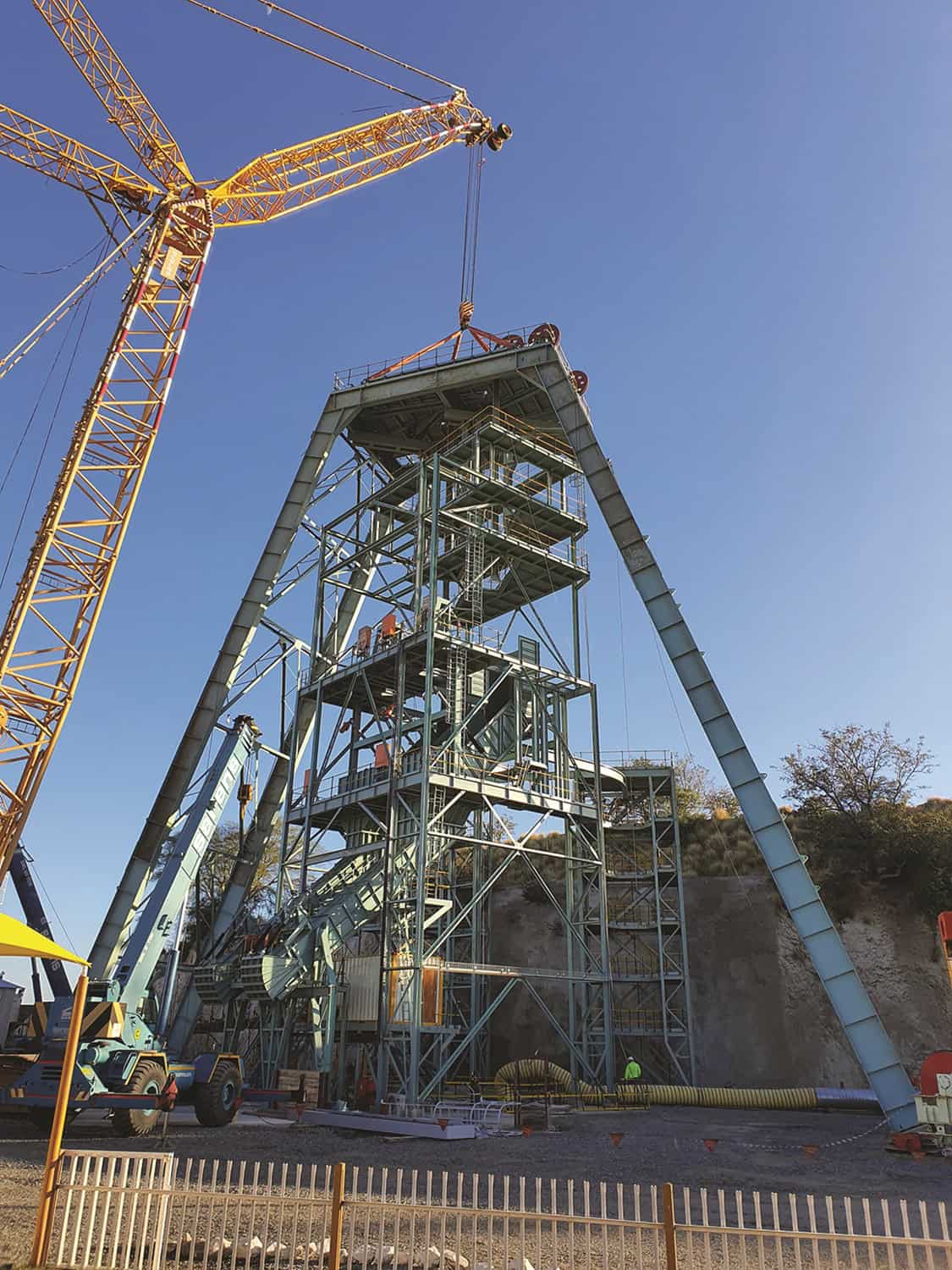
Cementation Africa’s reputation as a global leader in shaft sinking and mine development is underpinned by decades of engineering experience and deep technical capability, residing with the company’s Mine Engineering team.

The company’s strong design and engineering foundation enables it to engage at any stage of the project life cycle – from concept and feasibility through to detailed design and execution. According to John Goulding, Study Manager in the Mine Engineering department at Cementation Africa (formerly Murray & Roberts Cementation), the early integration of multiple engineering disciplines significantly enhances both design quality and project execution.

“Our expertise allows us to collaborate with clients from the outset, supporting concept studies, trade-offs, feasibility analysis and detailed design,” Goulding says. “We bring a broad skillset to the table, combined with a collaborative approach to find optimal solutions for each unique challenge.”

He emphasises the value of iterative design and client engagement. “Design is inherently an evolving process. We apply our professional integrity to ensure each option is evaluated thoroughly – always focused on achieving the best possible outcome.”

A key strength lies in the depth of institutional knowledge within the team. In the Mine Engineering department alone, nine out of ten professionals have over ten years of service with three-quarters having spent more than 15 years with the company. This depth of experience delivers significant value to clients through innovative thinking and practical problem solving.

“Our structural, civil, electrical and mechanical engineers are not only technically proficient but deeply familiar with implementation realities on site,” says Louis du Plessis, Project Engineer in Mine Engineering at Cementation Africa. “They bring insight into not just the ‘what’ and ‘why’, but the ‘how’ – which is critical to successful project delivery.”

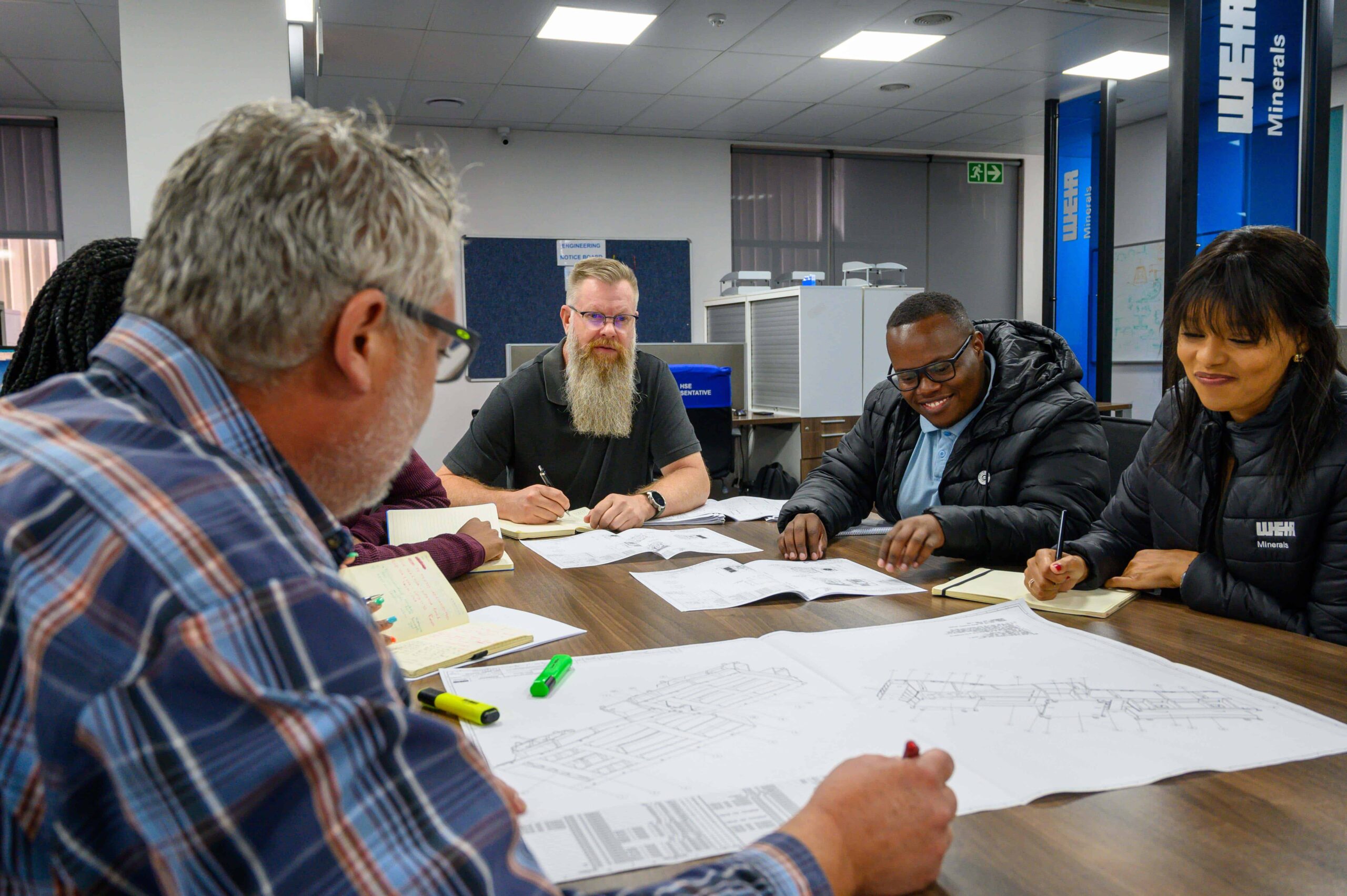
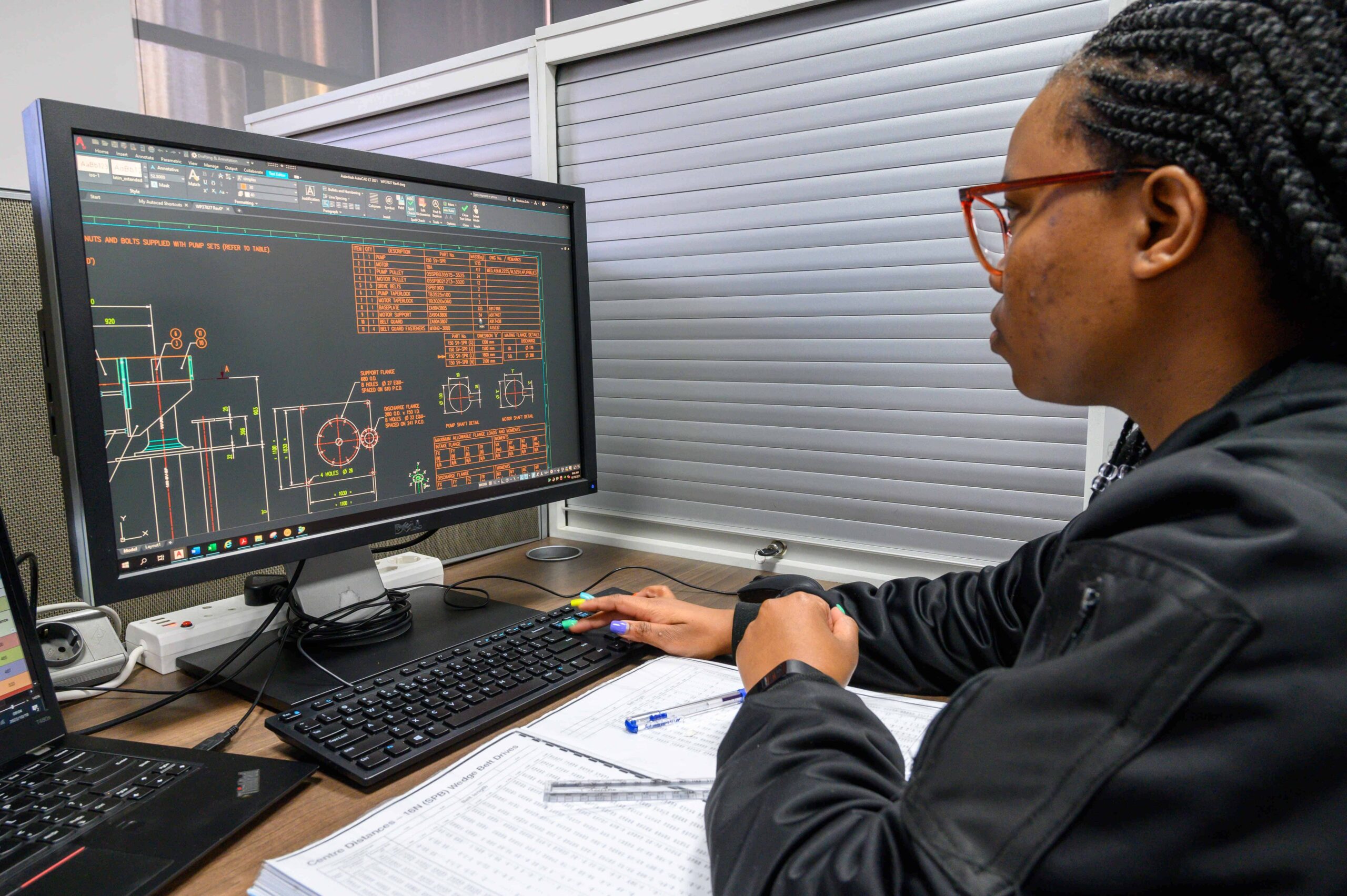
Cementation Africa has the capacity to handle a broad spectrum of projects, from large-scale developments for Tier 1 miners to more focused interventions for junior operations. In one major project, the team produced over 3,000 detailed drawings, all subject to rigorous review by client engineers at both site and head office level.

“But the same standards apply to smaller jobs,” notes Du Plessis. “For example, a recent project involved designing a two tonne skip for a Zimbabwean mine producing just a few hundred tonnes per day. Our size and close-knit structure mean we can respond quickly, even to unexpected changes.”

The company’s engineers use 3D intelligent software to create digital twins and interactive 3D models. These can be accessed online via QR codes by site teams and fabricators to improve drawing interpretation. Importantly, fatal risk protocols are embedded directly into these models to support safety during fabrication and construction.

“In one large South African platinum project, we went from concept to detailed design in under two years – a timeline that required fast-tracking solutions and closely integrating procurement with execution,” says Du Plessis.

Cementation Africa’s engineering depth has been built through years of innovation and successful project delivery. The company has also played a role in growing the sector’s knowledge base, regularly contributing to industry journals and conferences locally and abroad.

“We are committed to sharing our learnings and best practices,” he concludes. “It is part of how we live our values of Care, Ownership, Integrity, Innovation, Partnership and Resilience, and how we continue to deliver value to our clients and the broader mining industry.”

WHY CUTTING QUALITY IS CUTTING CORNERS ON SOUTH AFRICA’S FUTURE

In a construction landscape where cost pressures are rising, AfriSam’s Amit Dawneerangen is raising a red flag cautioning contractors that cutting corners on material quality may appear cost effective in the short term, but it compromises the long term performance and value of infrastructure. 

As Executive: Sales & Product Technical at AfriSam, Dawneerangen sees worrying signs of a growing trend – across both public and private sector projects – where the drive to reduce costs is resulting in widespread ‘buying down’ on material quality.

Dawneerangen argues that the foundation of any durable and cost effective infrastructure project lies in the quality of materials used. Cement, aggregates and readymix concrete must meet rigorous standards if structures are to withstand time and usage. “Quality is the basis for longevity in construction projects,” he says. “And yet, there is an increasing appetite for lower quality alternatives that may meet the immediate budget but not the design intent or long term performance requirements.”

Infrastructure investment remains one of the most powerful tools for economic growth, with a proven multiplier effect. But the benefits only materialise if the projects built are sustainable – both structurally and financially. 

Dawneerangen points to AfriSam’s own commitment to quality assurance, noting that all its cement products are produced in ISO 9001-certified facilities and conform to SANS 50197 requirements. 

On road projects especially, material testing is critical. AfriSam applies globally recognised methodologies such as Los Angeles Abrasion, Polished Stone Value and California Bearing Ratio tests. Its quarries produce a range of products from G1 to G7 for layerworks in line with COTO and other relevant specifications and most also supply stone and crushed sand for asphalt production.

Yet despite the availability of tested compliant materials, Dawneerangen is seeing a shift in specifications that opens the door to lesser products. From an aggregate perspective, the traditional ‘blue’ rock – competent material mined from deeper layers – has always been preferred for its high compressive strength. Increasingly, however, this is being blended with overburden or ‘brown’ material, resulting in downgraded specifications. These blends are being embraced as a cheaper alternative even though they may compromise structural integrity.

The practice has also led to a rise in illegal mining operations where unregulated borrow pits offer free-dig material with minimal processing costs. “There is no drilling or blasting required. It is a quick fix for contractors chasing margins,” says Dawneerangen. “But it undermines legal operators who invest in compliance and quality.”

The same trend is evident in the readymix sector. AfriSam, traditionally known for supplying premium strength concrete upwards of 35 MPa, has seen demand shift below the 30 MPa mark. “The drop in average strength tells its own story. Affordability is driving decisions but at what long term cost?”

Dawneerangen emphasises that using subpar materials often results in hidden costs. Inconsistent properties can lead to rework, premature failure and costly delays. “The right material used in accordance with design specifications eliminates the need for unscheduled corrective work,” he says. “So-called cheap materials can end up being very expensive.”

Working with a reputable supplier, he believes, is non-negotiable. AfriSam’s vertically integrated offering – from quarry to cement plant to readymix site – ensures that quality is consistently monitored throughout the value chain. The company’s SANAS 17025-accredited Centre of Product Excellence collaborates closely with customers to tailor solutions to specific applications, backed by in-house labs and quarterly testing.

Dawneerangen also notes the importance of sourcing aggregate from legally registered quarries recognised by industry bodies like ASPASA, which helps regulate surface mining practices. ASPASA conducts audits and drives continuous improvement through its technical committees, providing vital industry oversight. 

Unfortunately, no such structure exists in the readymix industry which, he says, has become highly deregulated. This has created space for opportunistic suppliers who under-yield or engage in questionable practices, often undercutting responsible operators on price while delivering poor product quality.

Ultimately, Dawneerangen’s message is clear. South Africa cannot afford to sacrifice infrastructure integrity for short term savings. “Adherence to quality control guarantees successful execution of projects on time and within budget. With the role that infrastructure plays in our country’s future, we must stop seeing quality as optional. It is the smartest investment we can make.”

WEIR PARTS ENGINEERED FOR EFFICIENCY

Using genuine parts enables Weir customers to achieve higher equipment efficiency and extended lifespan, thanks to ongoing enhancements integrated into every component.

“With our continuous investment in research and development, along with our commitment to quality design and manufacturing, we ensure that customers benefit from improved energy efficiency and longer-lasting spare parts,” says John West, Regional Manager Slurry Aftermarket at Weir. “In many cases, replacing an old generation part with a newly designed one actually enhances the overall performance and efficiency of the equipment.”

West highlights that energy consumption represents an ongoing and significant portion of a pump’s total lifecycle costs, yet many users remain focused solely on the purchase price of spare parts.

“Our global studies show that the capital cost of a pump and spare parts represents less than about 10% of its total cost of ownership (TCO) over its lifespan,” says West. “Since energy accounts for nearly 60% of this lifetime cost, opting for a cheaper but less efficient pump can quickly lead to significantly higher operating expenses.”

Weir not only guarantees that its spare parts meet world class design and manufacturing standards, but also fine-tunes their performance to help customers reduce energy consumption and operational costs. West says that this is done through correct equipment selection as well as on-site process fault finding. “Manufacturing standards in many non-OEM supplied pump parts are not adhered to, which also presents potential safety risks to the customer,” he says. 

“The OEM part incorporates all of our latest technological advancements, enhancing efficiency, optimising hydraulics and extending wear life,” he says.

Precisely engineered to fit perfectly, the original parts also boost the equipment’s production capabilities, supporting smooth operation and maximising uptime.

“The extended service intervals our parts provide contribute directly to the overall efficiency and profitability of our customers’ operations,” he explains. “They also help minimise the risk of unplanned downtime due to premature component failure.”

He points out that users who source non-genuine replacement parts often overlook the significant costs associated with emergency repairs and unplanned production downtime. However, a growing number of customers are adopting a TCO approach, leveraging Weir’s technical studies to identify more effective ways to reduce long-term operational expenses.

“Many of our larger customers ask us to carry out formal assessments to help reduce the operating costs of specific equipment,” West explains. “In many cases, we collaborate directly with their dedicated reliability engineers. For smaller companies without such specialised roles, we step in with our expertise and insights to help lower running costs while enhancing both production efficiency and safety.”

One such example was a tailings recovery plant in South Africa, where profitability was closely tied to controlling operational costs. The plant’s owners sought to reduce their total equipment ownership costs by cutting downtime and energy usage. After discovering that replicator parts on the wet end of their Envirotech® Alpha D-Frame pumps were lasting only two months, Weir recommended upgrading to its Wear Resistance Technology – WRT® impeller and throatbush for improved durability and performance.

“These WRT parts are a great example of how advanced materials and enhanced hydraulic design can significantly improve efficiency, net positive suction head (NPSH) performance and wear life,” he says. “In this particular application, the OEM parts lasted twice as long, reduced power consumption by drawing lower amperage and delivered a higher head.”

West notes that Weir also provided a service technician to support the installation of the upgraded parts and deliver training on general maintenance. This collaboration with the OEM not only ensured proper implementation but also helped enhance the plant’s skill base, contributing to improved equipment longevity and reliability.

“The efficiency benefits of OEM parts are even more significant in remote operations powered by diesel generators, where grid energy is unavailable,” he notes. “In such cases, the high cost of energy can be substantially lowered by ensuring all equipment operates at peak efficiency.”

Power consumption directly correlates with carbon emissions, which mining companies are increasingly required to reduce to meet their corporate sustainability targets, further underscoring the environmental value of using high-quality OEM parts.

SEW-EURODRIVE LEADS WITH NEXT-GEN PLANETARY GEARBOXES

Leading the way in planetary gear unit innovation, SEW-EURODRIVE is extending its reach across a growing range of industries, delivering the advantages of this powerful technology through locally engineered solutions that ensure faster lead times.

Nick McKey,  Business Development Representative at SEW-EURODRIVE, explains that planetary gear units are perfectly suited to applications demanding low speeds and high torque. SEW-EURODRIVE has tailored its solutions to meet the needs of heavy-duty sectors like sugar and mining as well as diverse industries including automotive and food processing.

“Our SEW P2.e planetary units, for example, are the first in their class to feature a planetary head directly coupled to an electric motor,” McKey says. “This design maximises one of their key advantages – a compact footprint and reduced weight – making them easy to integrate into a wide range of applications.”

Their smaller size and lighter weight allow these planetary gear units to be installed in tight spaces and overhung applications, while also simplifying installation and lowering associated costs.

“On top of these benefits, SEW-EURODRIVE enhances energy efficiency by equipping all our units with premium efficiency motors,” McKey adds. “Planetary gears already achieve an impressive 96 to 98% efficiency and by pairing them with our IE3 motors we help customers further reduce power consumption and operating costs.”

SEW-EURODRIVE has also boosted the efficiency and longevity of its geared motors and industrial gearboxes through the use of its specialised gear oil, which has been well received by local customers.

“We now use this oil across all our gearboxes, and it is enabling them to run at cooler temperatures – delivering improved efficiency and extending service life for our customers,” McKey says.

McKey notes that SEW-EURODRIVE’s planetary gear units are designed for easy installation, offering multiple interface options such as torque arms or flange mounting whether vertically, horizontally, or at various pivoting angles.

“With our technological advancements making these units significantly more compact, they now integrate seamlessly into a wide range of end-user applications,” he explains. “It is a major evolution from the older-generation planetary drives which were typically large, bulky and heavy.”

McKey highlights the increasing demand for shorter lead times in supplying planetary gearboxes – an area where SEW-EURODRIVE stands out thanks to its substantial stockholding at its expansive Aeroton facility in Johannesburg. The company is currently advancing a second phase of development at the site to further strengthen its local engineering, training and manufacturing capabilities.

“With the wide variety of components we keep in stock locally, we are able to offer a broad selection of planetary heads in different sizes,” he says. “This allows us to meet specific gear ratio and power requirements and assemble complete solutions right here in South Africa.”

McKey underscores SEW-EURODRIVE’s strong focus on project planning and engineering to ensure each planetary gearbox is precisely matched to the customer’s application in terms of size and torque. Unlike many off-the-shelf offerings in the market, every unit assembled at the Aeroton facility is custom built to meet exact specifications.

“We maintain tight control over our local parts inventory, allowing us to deliver solutions quickly without compromising on quality,” he says. “Our engineering department plays a central role in the design of our industrial gearboxes including our planetary units, ensuring optimal performance and reliability.”

As part of the design process, customers receive CAD drawings, detailed data books and comprehensive project plans, giving them full visibility into the solution being developed. SEW-EURODRIVE’s engineering team can also run performance simulations to show exactly how the gearbox will operate under site-specific conditions.

“This level of technical support gives our customers real peace of mind,” says McKey. “They know they are not only getting a fast turnaround but also a solution engineered to deliver maximum value and reliability for their operations.”

INTEGRATED PUMP TECHNOLOGY SECURES GRINDEX DISTRIBUTION DEAL FOR WEST AFRICA

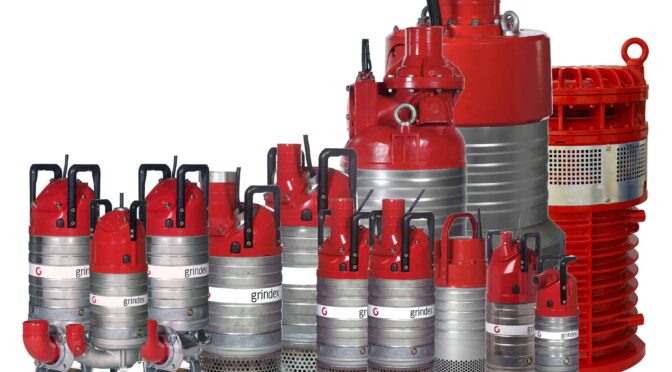
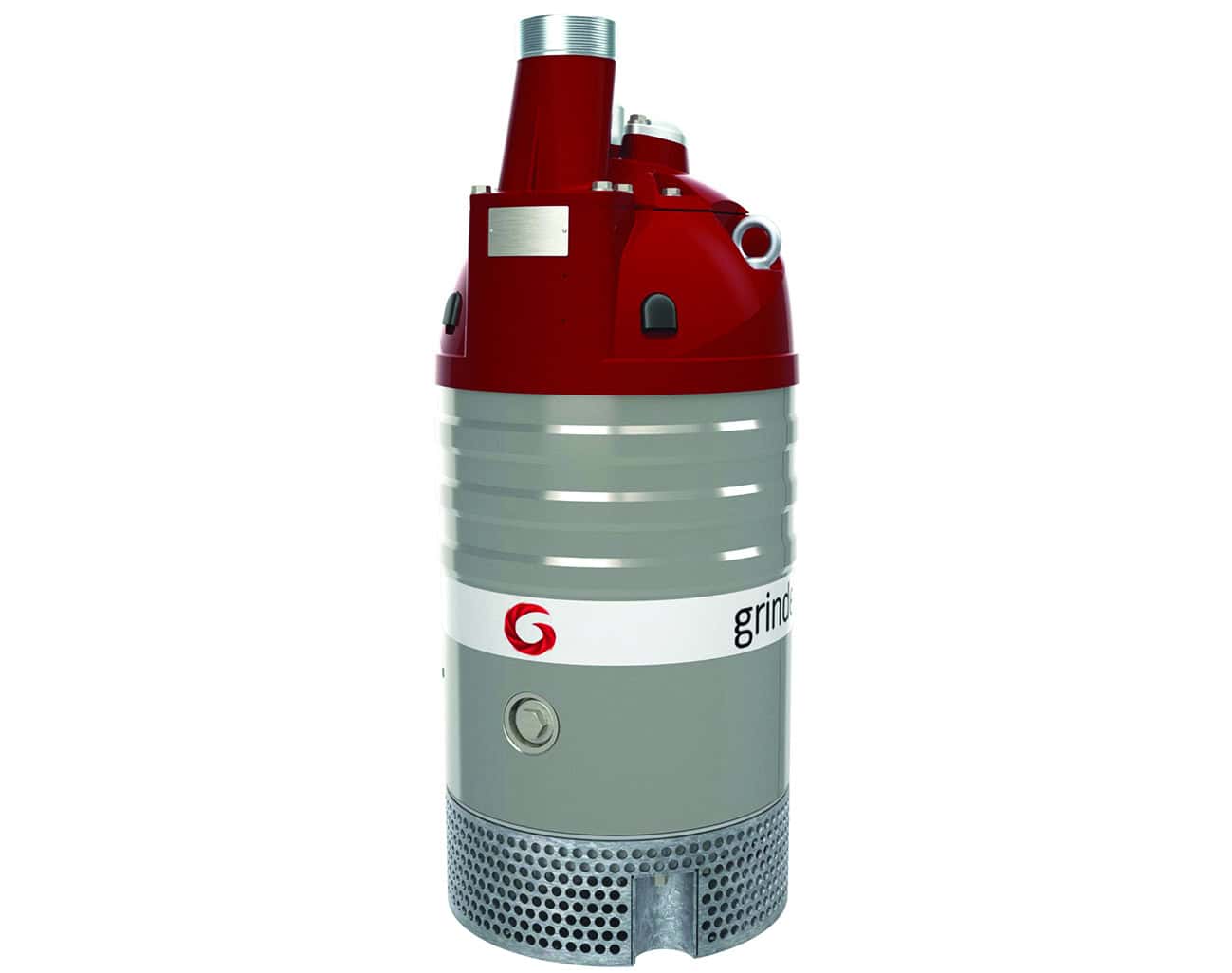
Integrated Pump Technology has been officially appointed as the distributor for Grindex submersible pumps in West Africa, building on its already strong presence in the region and marking another major milestone for the South African-based dewatering specialist.

The appointment – effective July 2025 – follows the company’s recognition as the largest Grindex distributor worldwide, a title earned through consistent growth and performance in key African mining markets. Integrated Pump Technology has an extensive footprint in South, Central and East Africa with both Grindex electric submersible dewatering pumps and Godwin diesel-driven pump solutions, and expanding this offering with official Grindex distribution rights to West Africa is the next logical step.

“We see substantial opportunity in the West African market which is characterised by high rainfall and a large number of wet mining operations,” Jordan Marsh, Managing Director of Integrated Pump Technology, says. “The need for reliable and efficient dewatering is continuous and we are well positioned to support customers with proven technology and deep application expertise.”

Although the distributorship covers all West African countries except Ghana, a bonded warehouse has been established in Ghana to facilitate fast turnaround and reduce lead times. The first stock consignment of Grindex pumps is already en route to this facility. According to Marsh, stock selection was informed by the company’s close working relationships with customers on mines across the region and a deep understanding of day-to-day dewatering demands.

Included in the shipment are high performance models such as the Grindex Maxi rated at 37 kW, ideal for moderate to high flow applications in underground and surface mines. The powerful Grindex Mega at 90 kW which is engineered for the most demanding dewatering conditions, including deep level mines. These units have a proven track record in tough African mining environments and are favoured for their robust construction, low maintenance requirements and energy efficiency.

Complementing the electric submersible offering, Integrated Pump Technology will also continue to support customers in West Africa with its established range of Godwin diesel or electric driven dewatering pumps. The Godwin HL150 is already hard at work at an open pit mine operation in Senegal, delivering reliable high head dewatering performance in some of the region’s most demanding operating conditions.

“The Godwin and Grindex ranges give us a comprehensive dewatering portfolio to meet virtually any pumping requirement, from high volume pit dewatering to underground sump clearance,” Marsh says. “Our approach in West Africa mirrors our successful operating model in Southern and Central Africa which includes local stockholding, rapid technical support and a strong customer-first philosophy.”

As mining operations across West Africa continue to deepen and expand, the demand for reliable, efficient and field-proven dewatering solutions is set to rise. Integrated Pump Technology’s appointment as the Grindex distributor affirms its capability to deliver not only world class equipment but also the technical support and service excellence that mining operations rely on.