As mining operations across Africa continue to focus on productivity, improved sustainability and operational efficiency, FLS is strengthening its regional strategy through closer customer engagement, expanded service capabilities and a continued focus on delivering full flowsheet technology and solutions tailored to African mining conditions.
FLS will reinforce this approach at the upcoming Electra Mining Africa 2026, showcasing proven technologies, digital solutions and lifecycle service offerings designed to help mining operations improve performance while reducing energy consumption, water usage and operating costs.
With mining remaining one of Africa’s most important economic sectors, FLS continues to see strong opportunities across both established and emerging mining regions including Southern, Central and West Africa. The strategy is centred on supporting mines throughout the full operational lifecycle, from comminution and flotation through to filtration, tailings management and aftermarket support enabling customers to optimise the entire processing circuit reducing total cost of ownership and improving long-term asset performance.
A key focus for FLS in Africa is supporting mining companies balance production targets with increasingly stringent environmental and sustainability requirements. This includes supporting customers with technologies that improve energy efficiency, optimise water usage, reduce emissions and extend equipment life while also enabling safer and more reliable operations across the mine lifecycle.
African mining operations are increasingly seeking strategic partners capable of delivering integrated solutions rather than standalone equipment. This trend is driving demand for full flowsheet optimisation, digital technologies, predictive maintenance solutions and stronger regional service support.
FLS’s strategy is therefore focused not only on equipment supply, but also on strengthening long-term partnerships through deep process knowledge, proven innovation and a strong local service presence supporting customers throughout the full lifecycle of their operations.
FLS also continues to invest in skills development and technical support structures across the region, recognising the importance of local expertise in ensuring sustainable mining operations and long-term operational success.
At Electra Mining Africa 2026, FLS will engage directly with mining companies, engineering firms and industry stakeholders from across the continent using the exhibition as a platform to demonstrate how innovation, digitalisation and service capabilities are empowering the future of mining. The event remains one of Africa’s largest mining and industrial exhibitions, attracting thousands of visitors and exhibitors from across the mining value chain.
FLS will exhibit in Hall 5, Stand D16 at the show.
As mining operations across West Africa place increasing pressure on plant reliability, cost control and long-term asset performance, FLS is strengthening its regional presence by positioning lifecycle services at the centre of its customer offering.
Rather than operating solely as an equipment supplier, FLS continues to evolve into a long-term services partner focused on improving operational continuity, reducing total cost of ownership and helping mines maximise the value of existing assets.
This approach is particularly relevant across West Africa, where limited greenfield development means many operations are extending the life of brownfield plants and seeking ways to unlock additional capacity without significant capital investment.
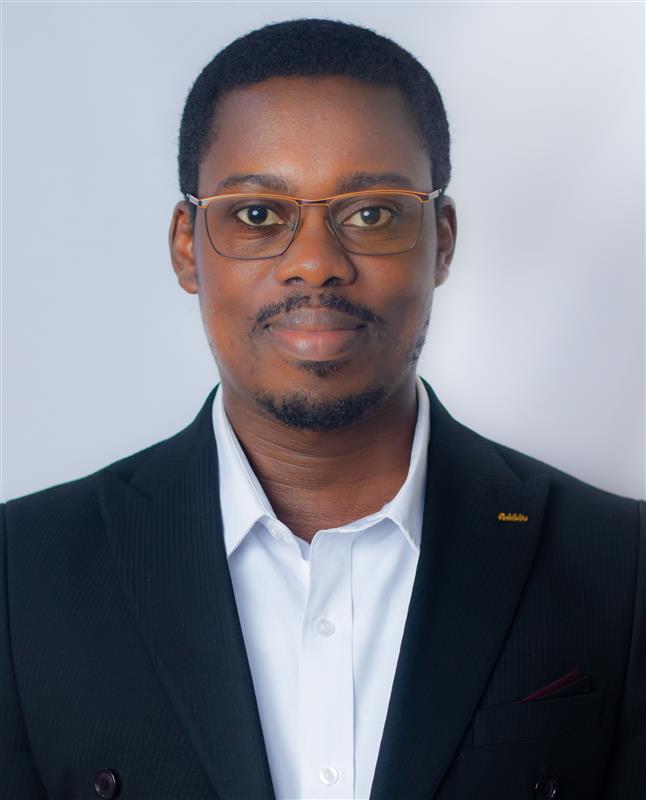
According to Elvis Acheampong, Head OF Site & Service Sales, West Africa at FLS, the focus has shifted from equipment supply to sustained performance improvement through service-led interventions.
“Mining companies are under constant pressure to improve throughput, reduce downtime and manage operating costs more effectively. Our role is increasingly about working alongside customers to optimise existing assets through audits, process optimisation, upgrades and retrofit solutions that deliver measurable performance improvements without major capital expenditure,” Acheampong says.
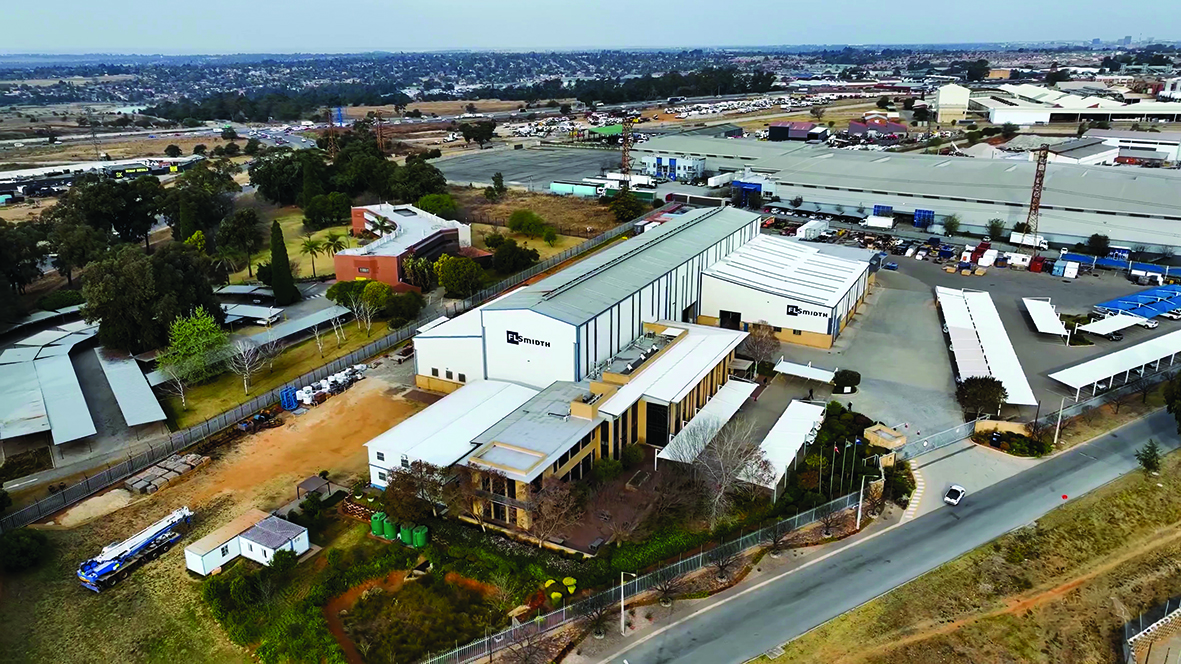
FL Smidth Engineering works Johannesburg
FLS supports this strategy through a dual parts offering that combines premium high performance components with cost effective consumables, allowing customers to balance performance, durability and budget requirements.
“This flexibility is particularly important in West Africa where supply chain complexity and margin pressures require practical solutions that maintain plant performance while managing cost exposure,” he says.
Acheampong says that to strengthen operational resilience, FLS is also expanding its regional distribution footprint and local stocking strategies to improve parts availability and reduce response times. Faster access to critical spares helps minimise downtime and supports production continuity in often challenging logistics environments.
Digital services are becoming an increasingly important part of this model. Through condition monitoring, predictive maintenance tools and remote support capabilities, FLS is helping operations move towards smarter data-driven maintenance strategies that improve reliability and reduce the risk of unplanned shutdowns.
Service delivery also plays an important role in local skills development. By investing in technical training, knowledge transfer and in-country expertise, FLS supports regional local content priorities while building stronger long-term customer relationships.
Safety remains closely linked to this service philosophy. Reliable equipment performance reduces operational risk, while proactive maintenance improves both plant availability and workforce safety.
“In mining, reliability is not only a production issue, it is also a safety issue. A strong service model helps customers maintain safer operations while creating the consistency needed for sustainable performance, especially during periods of market volatility,” he says.
“As commodity prices, energy costs and supply chain disruptions continue to challenge the mining sector, we believe that FLS’s service-led model is helping West African operations remain resilient, competitive and better positioned for long-term success,” Acheampong concludes.
From apprentices to graduate engineers, the FLS Training Academy in Chloorkop, Gauteng, has been building its capabilities and linkages to strengthen the mining sector’s skills base – not only in South Africa but across Africa and the globe.
Demonstrating FLS’s commitment to skills development is the facility’s recent accreditation by the National Artisan Moderation Body (NAMB) as an official assessment centre for artisan testing. According to Steve Parkinson, Head of the FLS Training Academy, this has been another important step in its mandate to “develop exceptional skills in Africa for Africa”.
FL Smidth Engineering works JohannesburgFL Smidth Engineering works JohannesburgFL Smidth Engineering works Johannesburg
“This accreditation allows us to conduct full testing for three vital trade categories: fitters, turners and fitter-and-turners,” Parkinson explains. “It means we can now train, assess and qualify both FLS apprentices and those from other companies in the region, creating a regional hub of technical excellence.”
He notes that this status positions the FLS Training Academy as a key player in training and qualifying artisans for the mining and minerals sector – not only within FLS but across the broader industry. The outcome is the culmination of years of focused investment in technical capability and educational quality.
Established in 2018, the FLS Training Academy has become central to the company’s business strategy and a cornerstone of its social responsibility commitments. Beyond producing a pipeline of skilled artisans, the well-equipped facility supports FLS’s goal of maintaining its BBBEE Level 1 status and advancing its Women in Mining initiative.
“We are proud that over half of our learners are women,” he says. “It is part of our commitment to diversity and empowerment, ensuring that technical careers – especially in traditionally male dominated industries like mining – are accessible and attractive to everyone.”
In 2025, for example, 33 of the 61 students were women and a majority of the total were from historically disadvantaged backgrounds. At any given time, the Chloorkop facility hosts between 60 and 90 learners, offering a wide range of programmes – from apprenticeships and learnerships to graduate internships, employee development and customer training.
FL Smidth Engineering works JohannesburgFL Smidth Engineering works JohannesburgFL Smidth Engineering works Johannesburg
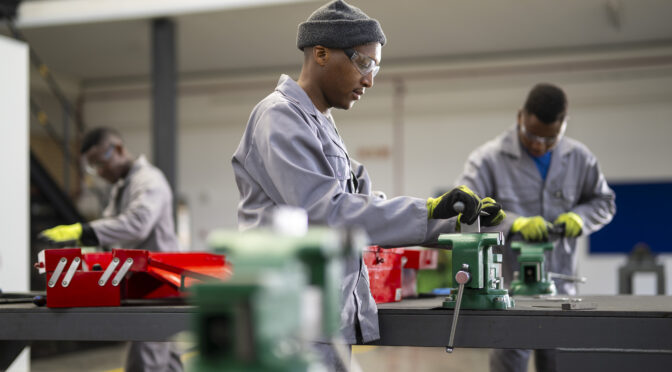
“Our technical apprenticeships focus on trades such as mechanical fitting and metal machining, providing practical, real-world experience across the FLS workshop, machining and field services departments,” Parkinson says. “Learners spend their first 11 months at the facility gaining foundational skills before moving into operational environments.”
Partnerships also play a key role in the FLS Training Academy’s impact, he explains. For instance, it collaborates with private vocational training college Sol-Tech, hosting millwright apprentices for practical field experience. The facility’s two-year commercial apprenticeships – known as learnerships in South Africa – include specialisations in supply chain, information technology, business administration and health and safety.
“Our apprentice programme has become well recognised within FLS, to the extent that we have been requested to assist other regions with their apprenticeship programmes,” he says. “There is also scope to deploy our apprentices in other FLS service centres globally, as and when required.”
defaultFL Smidth Engineering works JohannesburgFL Smidth Engineering works Johannesburg
Wherever possible, the latest digital technologies are leveraged to enhance the learning experience, including ‘virtual reality welding’ through sophisticated equipment that records results as if a conventional welder were being used.
The FLS Training Academy is also making advances in the professional registration of graduate engineers. Collaboration is ongoing with the Engineering Council of South Africa to become an accredited training facility for the development of professional engineers.
“We have already designed a development programme and logbook for this purpose,” he says. “Our aim is to ensure that graduates receive systematic support for their engineering careers in the mining industry – but also for general industry.”
With an extensive network of skilled service engineers, technicians, and artisans, FLS ensures that customers benefit from expert support to maintain optimal plant performance.
According to Mikhail Kirienko, Head of Field Services for Europe, Middle East & Africa at FLS, the value of the company’s site services lies in the confidence that customers place in its technical teams.
“By remaining close to our customers and maintaining a regular on-site presence, we build strong trust-based relationships,” says Kirienko. “This gives customers the assurance that we can identify challenges early and implement effective solutions.”
FLS’s regional field services footprint includes teams located in South Africa, Germany, Italy, Serbia, Saudi Arabia, Ghana, Mauritania and Zambia.
Kirienko notes that FLS’s field services are focused on delivering a wide spectrum of services, focusing on maximising equipment availability and minerals recovery while minimising the total cost of ownership for the customer.
“This goes beyond simply being available for maintenance or repairs,” he explains. “Our priority is to help customers keep their equipment in optimal condition, which requires regular assessments benchmarked against OEM standards.”
While global FLS service teams manage the installation and commissioning of new equipment, regional teams are dedicated to supporting customers’ operational needs. These teams conduct on-site inspections and provide expert recommendations – whether for minor repairs or complete rebuilds – to ensure equipment consistently delivers maximum performance.
“The delivery, installation and commissioning of equipment is just the beginning of the customer’s journey with FLS,” says Kirienko. “Our field service teams play a vital role in equipment availability and continuous operation optimisation, through regular maintenance and, where appropriate, equipment upgrades or optimisation.”
He highlights that effective maintenance relies on more than just skilled personnel – it also requires the right component or spare parts stock at the right time. This, in turn, depends on a deep understanding of wear patterns and component lifecycles, guided by ongoing equipment condition monitoring.
“This is where an OEM can deliver real value,” he explains. “We not only help customers develop effective strategies for monitoring equipment performance and organising effective maintenance to minimise unplanned downtime but also support customers with process and operation optimisations based on worldwide FLS equipment installations experience leading to more profitable and sustainable business.”
Such proactive support contributes to greater stability in plant performance, laying the foundation for ongoing metallurgical and process optimisation. As Kirienko notes, equipment performance and mineral recovery can often be improved through upgrades to components such as mill linings, crusher linings or screening media.
“However, you can’t assess the impact of these upgrades if plant performance is erratic due to poorly maintained equipment,” he says. “This is why condition monitoring and preventative maintenance are so critical to unlocking a mine or mineral processing plant’s full productivity potential.”
Safety and sustainability are also integral to the value delivered by FLS’s field services. All engineers and technicians working on site comply with strict internal safety protocols – often exceeding mine standards – and are required to hold formal safety certifications.
“We embed sustainability across our service offering, from product stewardship and responsible sourcing to supporting flowsheet efficiency that reduces energy and water consumption,” Kirienko adds. “Our site services ensure these sustainability benefits are maintained and measurable over time.”
“Recognising that each customer and site has its own operational preferences, FLS offers flexible service models. These range from remote support and once-off site visits to regular inspections, shutdown maintenance support and comprehensive service level agreements,” he concludes.
FLS has completed a significant upgrade to its polyurethane manufacturing facility in Delmas, Mpumalanga, positioning the site as a key global hub for the production of its advanced NexGen wear -resistant material. This development forms part of a wider modernisation programme by FLS, aimed at strengthening supply chains, increasing manufacturing efficiency and enhancing sustainability across its global footprint.
Brad Shepherd, Director Service Line – Screen and Feeder Consumables at FLS, says the investment at Delmas aligns with the company’s global strategy to standardise and optimise production processes.
“This is a milestone for us,” says Shepherd. “We are integrating cutting edge technology and modern manufacturing methodologies across all our polyurethane plants, and Delmas is leading the way. The upgrade enables us to respond more quickly and reliably to customer needs across Africa, the Middle East and Europe.”
The centrepiece of the upgrade is the introduction of purpose-built infrastructure to produce NexGen screen media – a polyurethane material developed by FLS to deliver extended wear life, reduced maintenance and improved operational efficiency. In on-site trials, screen panels made from NexGen have demonstrated up to three times the wear life of conventional rubber and polyurethane products, making it a gamechanger for industries that rely on high performance screening solutions.
Warren Walker, Head of Global Manufacturing – Polyurethane Operations at FLS, explains that Delmas is the first of the company’s five global polyurethane plants to complete this transition. “We have installed new, latest generation polyurethane machines, precision tooling and dedicated preheating ovens for inserts,” he says. “This allows us to significantly increase our output while ensuring consistent quality.”
The facility now includes two trommel screen media stations and three screen media stations, each tailored to produce NexGen products. One of the standout technologies introduced is a programmable auto-calibrating polyurethane machine capable of adjusting material hardness to suit specific applications.
“The flexibility to produce varying hardness levels is critical,” Walker notes. “It means we can tailor our screen media precisely to the customer’s application, ensuring optimum performance and longevity.”
To complement this, a high capacity polyurethane machine capable of pouring up to 42 kg per minute is in operation at the facility. This system is particularly suited to applications requiring large volume pours, such as flotation spare parts and vertical mill components.
The Delmas facility already benefited from a significant upgrade in 2019, when a state-of-the-art six-axis machining centre was introduced for tooling precision, along with robotic welding systems for manufacturing screen media panel inserts and a CNC controlled spiral welding machine to produce wedge wire products. The latest round of investments builds on this foundation and brings the facility to the forefront of global polyurethane production capability.
Energy efficiency was a key consideration in the new layout and equipment design. “We have incorporated smart energy saving features like individual temperature control on each casting table station,” Walker says. “This avoids the need to heat large surface areas unnecessarily and contributes to our carbon reduction goals.”
Further supporting these goals is the installation of 300 kW of solar generation capacity at the Delmas site, completed in 2024. Plans are already in place to expand this by another 500 kW in 2026, along with the integration of a battery energy storage system (BESS), enabling greater energy independence and resilience.
FLS’s offering from Delmas extends beyond screen media manufacturing. The facility is equipped to handle the complete fabrication of vibrating screens, from raw material processing and in-house machining to assembly and factory acceptance testing. This vertical integration allows the company to deliver customised solutions with tighter control over quality and lead times.
Shepherd emphasises that FLS operates both as an original equipment manufacturer (OEM) and a screen media specialist, supplying screen panels for all types and brands of vibrating screens, feeders and trommel screens.
“We don’t just supply products,” he says. “We work closely with our customers through our network of on-the-ground specialists to assess site conditions and select the best screening media for their specific needs.”
He notes that many older processing plants are treating materials that differ from their original design specifications. In these cases, screen efficiency can often only be improved by optimising the screen media. “This is where NexGen makes a real difference,” Shepherd says. “Combined with the correct aperture design, it allows customers to get more life and better performance from their screens.”
Unlike injection-moulded polyurethane, which can compromise the structural integrity of screen panels, FLS’s proprietary process retains superior mechanical properties, resulting in a tougher more durable product. “We have never used injection moulding because it reduces the quality of the end product,” Shepherd explains. “Our process delivers a product that stands up to the toughest operating conditions and offers lasting value.”
Walker adds that the expansion at Delmas not only supports FLS’s global operations but also contributes meaningfully to the South African economy. “Our commitment to local manufacturing is evident in the scale of our investment and the jobs we have created,” he says. “We have expanded our workforce, prioritised local recruitment and significantly grown our apprenticeship programme.”
A strong focus has also been placed on developing female artisans. In 2024, six women from the local community were recruited into a three year trade apprenticeship programme, receiving training in welding, fitting and boilermaking.
“Our investment during a period of economic uncertainty underlines FLS’s long term commitment to South Africa and to our customers in the broader EMEA region,” says Walker. “We are not just building products – we are building skills, opportunities and partnerships that will power sustainable growth for years to come.”
Strong partnerships between mines and their supply partners are based on optimising the health of their productive assets, which remain at the core of operational efficiency. This is according to Alistair McKay, FLS Vice President for Capital Sales in Europe, Arabia and Africa.
“Collaboration and partnership really need to add value to both sides,” McKay explains. “If there is insufficient value being created in the relationship, there can be very little collaboration or partnership.”
FLS’s strategy begins with a strong regional footprint ensuring that the company is close to its customer base to enable not only quick response times but also proactive maintenance strategies. McKay stresses that this approach enables regular visits to support asset health, rather than only being reactive to issues arising.
“Our proactive stance means that mining operations benefit from our ongoing performance monitoring, training and skills transfer – all of which contribute to long-term productivity and asset performance,” he says.
Following the capital acquisition stage, a productive partnership enhances the adaptability of the operation to the changes in ore body characteristics that invariably occur over time. This affects key aspects of the feed parameters, while also influencing the consumption of water, power and reagents, for instance.
McKay highlights that such a partnership is also based on a shared commitment to sustainability principles and to reducing the environmental impact of mining and processing activity. This includes limiting carbon emissions through energy efficiency.
“This means making the most of equipment capacity through technology that enhances efficient operation while increasing throughput,” he says. “The use of LoadIQ, our mill scanner technology, is one example of how we help customers to use mill capacity to the fullest extent – delivering more from the same asset and power draw.”
It is also critical to have a research and development component to drive sustainability efforts, he argues. Technological advancement behind FLS’s next generation polyurethane screen panels, for instance, are enabling wear life to be extended by up to four times.
“This supports efficient operations by allowing longer periods between replacement and maintenance, thereby boosting plant uptime and general efficiency,” says McKay. “Better production levels from the same asset base means that capital investment delivers the best value and operating costs are kept to a minimum.”
He also points to recycling of wear parts as another important element of responsible asset management. While FLS invests continuously in technologies like composite liners for longer life, there is a time when liners need to be replaced.
“As part of our circular economy approach, we have ways of recycling these worn liners so that there is less wastage in the value chain,” he says. “These initiatives support our partnership with customers, as they also need to report on their sustainability performance in increasing detail.”
He also emphasises digital advancements with FLS’s PerformanceIQ® providing a holistic platform that integrates asset health and performance monitoring.
“Condition monitoring and asset health are often seen as separate silos, but linking the two ensures optimal performance,” McKay explains. These tools help shift asset management from a reactive to a proactive approach, reducing unexpected downtime and improving overall productivity. By monitoring equipment continuously, operators can identify trends and potential failures before they occur.
“We encourage customers to monitor assets on an ongoing basis, leveraging AI and digital solutions to enhance decision making and ensure proactive maintenance,” he concludes.
An African mine will be among the first adopters of the innovative Rail-Running Conveyor (RRC) technology, commercialised by full flowsheet provider FLS in collaboration with the University of Newcastle, Australia
“Designed to dramatically reduce energy consumption, improve safety and cut capital and operating expenditure, Rail-Running Conveyors are a gamechanger for mines which must rely on extended conveying distances to move material,” says Martin Lurie, FLS Global Product Line Manager for Rail-Running Conveyors (RRC). Any mine that carries substantial tonnages over more than 500 to 1,000 m can achieve far higher efficiencies using this technology.
“The first full-scale operational system will be commissioned in southern Africa in mid-2025,” he says. “It is designed to carry 5,000mtph of copper ore over a 3,25 km run, and is expected to save approximately $1 million each year in power costs when compared to a conventional trough conveyor.”
A second system, destined for the same mining customer at a mine in the Americas, has also been under construction and will carry around 13,000 mtph, also delivering significant power savings and safety improvements. Lurie describes the customer as visionary in looking ahead to the technologies that will empower the future of mining, and also as an indispensable partner in bringing the RRC to full-scale maturity.
Lurie highlights that the energy losses incurred by an RRC is anything between one-fifth to one-tenth of those experienced by traditional trough and pipe conveyor systems respectively. “The friction losses on a conventional long distance conveyor,” he points out, “largely determine the power capacity that must be installed, the size of the structures required and the downtime incurred to maintain and replace pulleys and drives. Reducing these energy losses therefore has a positive knock-on effect on the costs of a range of other aspects.”
“Customers achieve savings on the scope of the conveyor equipment itself, the cut-and-fill civils requirements, the volumes of concrete used, the strength of the belt and the number of drive stations necessary,” he says. Due to the lower tension acting on the conveyor belt, a lower rating of belt is possible. Faster speeds and a deeper trough also mean that a narrower belt may suffice for the same throughput. Importantly, the rating of the drives does not need to be as high.
“Where a 6 MW drive may be specified for a conventional conveyor, for instance, this technology may allow a 2 MW drive to be installed,” he says. “This then has further positive impacts on the ratings required for motors, transformers, E-houses and power supply.”
The head and the tail of an RRC remain the same as in traditional systems, he explains, with the rail-running section making up the bulk of the distance. The basic mode of transport is steel-wheel-on-steel-rail instead of a belt running over idlers. This fundamental difference is what cuts energy consumption so drastically.
The system uses small carriages to carry the belt and these are automatically exchanged at maintenance houses when required. This removes the safety risks associated with personnel changing out idlers out along the length of the conveyor. Having fewer transfer points also has a safety benefit as these can be sources of injury during maintenance as well as health threats from dust exposure.
“The RRC system has been a decade in development, drawing heavily on two established technologies,” he says. “These are underground mining rail technology on the one hand and overland conveyor systems on the other.”
Lurie explains that the University of Newcastle’s Dr. Craig Wheeler and colleagues obtained patents on the family of designs and FLS has an exclusive license with the University to exploit similar technology that FLS had also been developing.
The FLS/University of Newcastle team believe that the RRC innovation is a paradigm shift for conveyor systems – not only in terms of energy saving and carbon footprint reduction but also in terms of the distance that a conveyor can travel and the challenging terrain through which it can operate. Thanks largely to the way the belt sits stationary in the cradle, an RRC can negotiate tighter curves and can also climb steeper angles without the material on the belt rolling back and spilling.
“Our straightforward calculations of the potential impact on existing mining operations shows unprecedented savings resulting from this system,” he says. “One study, for instance, investigated the benefits for a customer who has to move material over 15 km between the pit and the plant. Where seven conveyors were currently required we could do the same job with three – while consuming only a quarter of the energy.”
Lurie adds that the customer’s comparisons to other high efficiency bulk haulage modes available to the mining industry reveal unmatched efficiency ranging from pit to plant, across the plant and onwards for the next 50 or 100 km, if needed.
Driven by its MissionZero strategy, FLS invests in sustainable technology development to underpin increased mining output – especially of those minerals in growing demand by economies moving toward a lower carbon future.
One such mineral is copper, which is essential for a vast array of decarbonising technologies, according to Alistair McKay, FLS Vice President for Capital Sales in Europe, Arabia and Africa. The European Union has recognised the importance of these commodities in its Critical Raw Materials Act, which defines both strategic and critical minerals.
“In the category of critical minerals, there are 16 commodities which are vital,” says McKay. “A shortage of these minerals could derail economic activity, so we have put our weight behind industry efforts to raise levels of sustainable production.”
FLS therefore commits over 50% of its substantial research and development budget to technology that will have a noticeable impact on reduction of carbon emissions, as well as on water and energy consumption whilst improving plant performance. Among its innovations is the rail-running belt conveyor, which has proved itself to be a gamechanger in energy efficiency and operational flexibility. It can reduce the carbon footprint of operations by between 20% and 90% – with commensurate savings in energy costs.
“The key to this technology is the way it overcomes the friction losses that are inherent to conventional belt conveyor systems,” he explains. “While a traditional belt conveyor has friction losses of between 0,070 and 0,110 kilowatt-hours per tonne per kilometre (kWh/t/km), our rail-running conveyor can reduce these to between 0,015 and 0,030 kWh/t/km.”
In the primary crushing circuit, FLS’s Eccentric Roll Crusher (ERC®) is another efficiency-focused technology – reducing energy consumption by up to 40% while able to increase throughput by as much as 20% for the same product size. Key to its success is the design integration of grizzly and crusher, and its high reduction ratio of 1:6.
FLS has also taken its High Pressure Grinding Roll (HPGR) solutions another step forward, with the release of the HPGR Pro. McKay points out that HPGRs have gained considerable popularity for their energy savings, which the HPGR Pro has enhanced.
“ The key attribute of the HPGR Pro is the innovative rotating side plates, which can also be retrofitted onto equipment already in the field,” he says. “This advance has allowed the improved feeding of material onto the rolls, to ensure a uniform pressure profile across the full width of the roll. This not only improves throughput but reduces the concentrated wear in the mid-sections of the grinding roll, thereby improving throughput and further cuts energy consumption.”
Coarse particle flotation is also making a contribution to efficiency in production, through FLS’s coarseAIR™ technology. Floating coarser particles means that minerals can be liberated with less grinding, saving on energy and grinding media, he notes. Importantly, mill capacity can be enhanced at the same time – by more than 30%.
“We are continuously progressing our technologies, leveraging the power of innovations of the REFLUX Classifiers – which are incorporated in the coarseAIR as well as our REFLUX Flotation Cell (RFC),” says McKay. “The RFC reduces residence time of material from an average of over 30 minutes to between three and four minutes – while achieving an increase in recoveries of 1 to 3% and using around 27% less energy.”
He concludes that FLS’s MissionZero drive continues to support mines’ carbon emissions and sustainability goals while allowing more ambitious production targets.
Responsiveness to customers – driven by dedicated support teams – is allowing FLS to leverage its wide selection of innovative technologies and services in addressing customers’ pain points.
According to Bhavesh Parbhoo, Head of Service Sales for Sub-Saharan Africa at FLS, the company’s success over 140 years means that it is today a large and complex organisation that is home to leading expertise and solutions. Guided by feedback from customers, the company has streamlined the way it engages with each site or customer, explains Parbhoo.
“Our wide range of offerings means that there are many touchpoints for customers – depending on whether they are looking for capital equipment, parts, consumables or professional services,” he says. “We have now simplified the way that customers can access these offerings, while keeping our focus on designing solutions that match their needs.”
Taking a unified team approach to customer relationships allows FLS to apply its wealth of knowledge and varied skill sets to a wide range of market challenges. This has been facilitated by regular value sessions between FLS and the customer, he notes, where key performance indicators are discussed and measured. These typically focus on equipment availability, maintenance predictability and skills sharing with customer personnel.
“Where we have applied this approach, we can see significant improvements in all these KPIs,” he says. “Among the technologies that have recently seen high levels of success across these measures are our nextSTEP rotor and stator, to improve performance of forced-air flotation equipment, and our screening panels, which have demonstrated much longer life.”
Interventions like these have allowed FLS customers to improve their recoveries, and to drive down their total cost of ownership of equipment. A useful tool in this engagement process has been FLS’s customer relationship management (CRM) system, which centralises customer information to avoid data silos. This keeps all team members appraised of progress in the relationship between FLS and the customer.
Team performance is enhanced by continuous skills development through the FLS Training Academy, which is situated at the FLS Service Centre at Chloorkop, Midrand. These focused training services are also offered to customers, he points out.
“Among the challenges that many of our mining customers face – especially those in remote rural areas – is finding local skills to maintain state-of-the-art equipment,” says Parbhoo. “Now they are able to send their personnel to us, for them to be trained in our fully equipped facility on the specific equipment that the mine operates.”
After the necessary period of training, FLS is able to certify the trainee’s capability, and the mine can then absorb them into the workforce. He highlights that this is an example of where FLS can address customer challenges well beyond the specification and supply of the equipment itself. Another critical customer need is safety on site, which includes any supply partners or subcontractors working on the mine’s equipment.
“Our safety culture at FLS in embedded in the training of service and other staff, ensuring that all activity on operational sites is compliant with mine health and safety standards,” he says. “Customers must always be in control of their safety levels, and can be assured of that by mature partners like FLS.”
With its service centres in strategic locations in Africa, FLS builds closer relationships with customers to help transform mine efficiency.
According to Dirk Wesselman, Head of Field Services for sub-Saharan Africa and West Africa at FLS, being geographically close to customers is a vital starting point in providing high quality service support to the mining sector. Based at FLS’s Chloorkop Service Centre in Gauteng, Wesselman highlights that the visibility and responsiveness of the company’s field service technicians underpins its support commitment to customers in Africa.
“Our strategy of continuously growing our service centre footprint, and strengthening the capability of those centres, lies at the heart of operational efficiency and equipment reliability,” he explains. “Having technicians regularly on site with customers means they can frequently check the optimal performance of our crushers, screens and other equipment.”
The service teams support the full range of FLS equipment in fields from liquid-solid separation to crushing, feeding and milling, including high pressure grinding mills, and even laboratory equipment.
“Since the acquisition of TK Mining business, we also continue to support the large installed base of ThyssenKrupp legacy mining equipment in the mining sector,” he points out. “Our presence in key mining regions ensures that we can respond rapidly to customer callouts to ensure minimal downtime. More importantly, our regular on-site presence builds our understanding of customers’ needs – so that we can work with mines to plan maintenance and avoid unscheduled stoppages.”
In addition to facilitating planned maintenance for mines, Wesselman highlights that many customers rely on OEM maintenance contracts with FLS as part of their efficiency programmes.
“These maintenance contracts are drafted to meet the customer’s specific requirements,” he says. “This arrangement puts a skilled team of specialised technicians at the service of the mine to ensure constant monitoring and rapid response. It can also be further enhanced with a ‘reliability engineer’ who focuses on detailed monitoring of all related equipment, to keep it performing optimally.”
Wesselman also highlights the company’s installation, commissioning and maintenance (ICM) contracts, which usually support a ‘plug and play’ plant upgrade involving a filter press or high pressure grinding roll (HPGR).
“Working with contracting houses, we are involved from the manufacturing stage through to installation supervision, cold and hot commissioning, and the ongoing maintenance,” he says.
The collaborative relationship between FLS service centres and mining customers is often built on the regular audits and inspections that the OEM’s technicians conduct on the equipment on-site. This creates the baseline for understanding the equipment’s condition, so that appropriate interventions can be specified to keep the equipment operating at OEM standards.
“We have developed our depth of infrastructure and expertise with exactly this goal in mind,” he says. “With the information gathered from our inspections, we can support customers as they systematically plan and prioritise their repair and maintenance requirements.”
Where components and equipment need off-site repair or refurbishment, these can be taken to the company’s well-equipped service centres where specialised artisans conduct the work with state-of-the-art equipment in accordance with OEM standards.
Philip McCormick, Head of Service Centres – Chloorkop and Stormill, highlights that these centres’ depth of capability represents the company’s commitment to supporting customers with cost effective refurbishment and repair services that can be delivered in short turnaround times. McCormick also emphasises the value of FLS’s Training Academy in producing artisans and technicians who are specialised in the range of FLS offerings.
“With their specialisation in our products, our technicians are also able to identify any non-operational equipment on customers’ sites which could still be refurbished,” he says. “We even have examples where equipment like girth gears and mill drive pinions has not been stored correctly, and now requires refurbishment. Our workshops can add considerable value by restoring these items to functionality, so that they don’t need to be replaced with new units.”