CEMENTATION AFRICA: A NEW NAME FOR A NEW ERA IN UNDERGROUND MINING

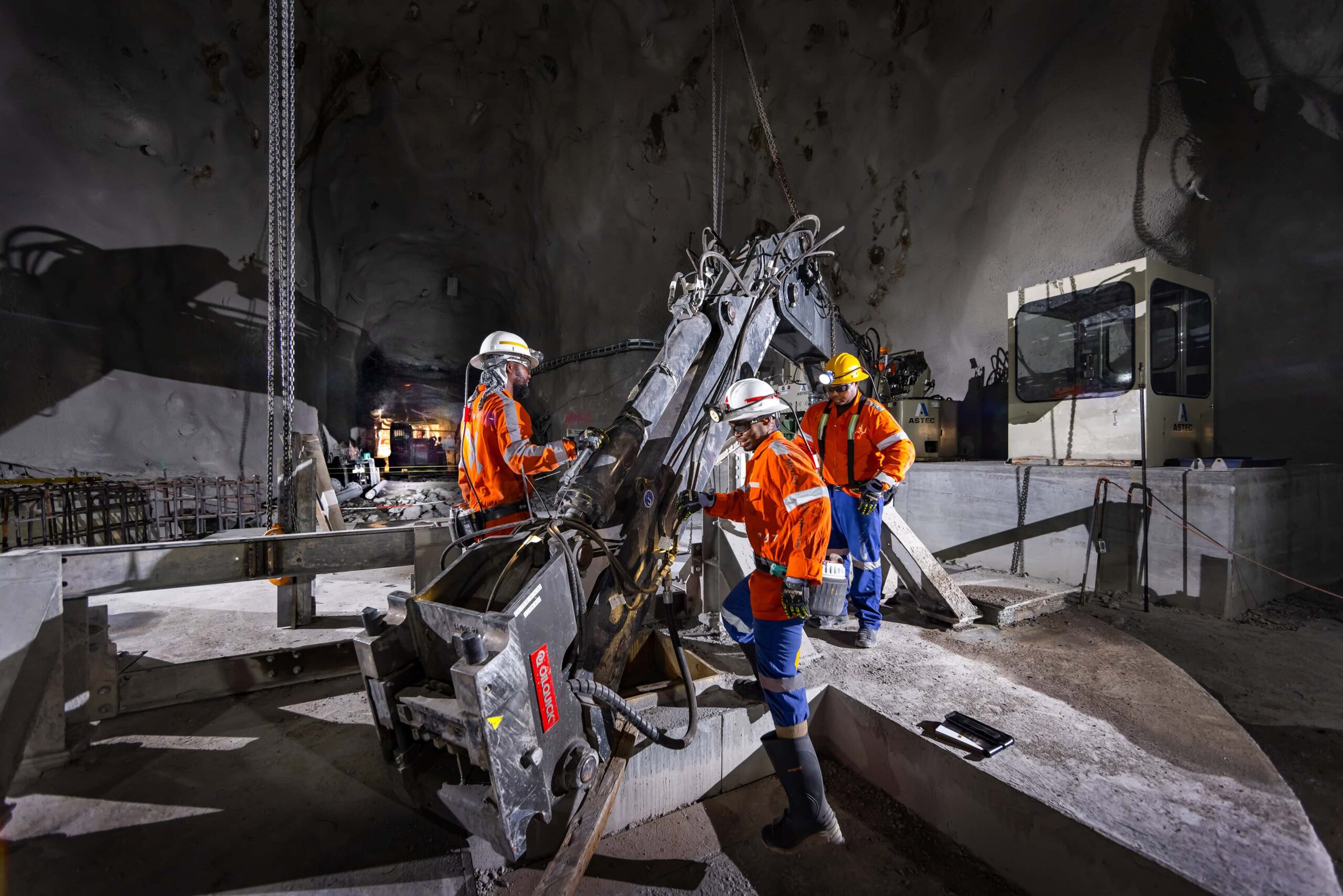
In a defining moment for one of Africa’s most respected underground mining contractors, Murray & Roberts Cementation has officially rebranded as Cementation Africa. This new name signals the start of an exciting and independent future, following the company’s acquisition by a consortium of investors led by Differential Capital.

Coinciding with its 21st anniversary, the rebrand reflects not only a proud legacy but also a renewed drive to innovate, expand and deliver even greater value to the continent’s mining sector.

“Turning 21 is not just a symbolic coming of age – it is a powerful inflection point for the business,” says Japie du Plessis, Managing Director of Cementation Africa. “As an organisation we have a solid foundation built on more than five decades of trust, technical excellence and safe project delivery. Now, as Cementation Africa, we step into the future with greater agility, independence and focus.”

While the name has changed, the company’s leadership team, skilled personnel and values remain firmly in place. Clients and partners can continue to expect the same high standards of safety, performance and professionalism for which the company is known.

Formed in 2004 through the merger of Murray & Roberts RUC and The Cementation Company (Africa), the business has grown well beyond its origins as a conventional mining contractor. Over the past two decades, it has delivered more than 15,000 metres of vertical shaft sinking and 72,000 metres of raiseboring, averaging 300 metres per month. These achievements have been made possible through the use of advanced technologies, such as the Rotary Vertical Drilling System (RVDS).

A standout application of this technology is the 950 metre deep ventilation shaft at Ivanplats’ Platreef project in Limpopo, which recorded a deviation of just 0.5% over nearly a kilometre -a world class result.

The company’s in-house Mine Engineering team plays a critical role in shaping these outcomes. From mine design and infrastructure layout to construction sequencing and execution planning, the team ensures every project is underpinned by robust technical and operational foundations. Their close integration with project teams and use of digital modelling tools enables smarter faster decision making and reduces risk across the project lifecycle.

Cementation Africa has also built a strong reputation for its role in complex greenfield mining projects, supporting clients from development through to operational readiness. “These transitional contracts are complex and challenging, and we take great pride in having completed several of them successfully,” adds du Plessis.

The company’s fully accredited Training Academy at Bentley Park remains central to its strategy and social investment. As the only facility of its kind on the continent, it plays a vital role in addressing skills shortages across the sector – offering training for artisans, supervisors and managers, and hosting blasting ticket examinations on behalf of the Department of Mineral Resources.

To further boost safety and productivity, Cementation Africa actively partners with original equipment manufacturers (OEMs) to test and implement the latest technologies. One example is its collaboration with Herrenknecht of Germany which has introduced mechanised caisson shaft sinking using roadheaders allowing for shaft development of up to 300 metres without a single worker entering the shaft.

“We are focused on technologies that remove people from high risk areas while increasing deployment speed,” says du Plessis. “From mechanised reef extraction to blind boring with mobile rigs, it is all about safer, faster and smarter mining.”

This forward-thinking approach extends to training where simulation and virtual reality are incorporated alongside underground mock-up facilities to enhance learning and preparedness.

Safety remains non-negotiable. Du Plessis emphasises that it is a value embedded in every aspect of the business. The company recently celebrated an industry-leading 8 Million Fatality Free Shifts over a 12 year period – a milestone that reflects Cementation Africa’s rigorous protocols, investment in people and culture of shared accountability.

Looking ahead, Cementation Africa is actively expanding its footprint across the continent with fully incorporated business structures already in place in key markets. “We are strategically positioning ourselves to support more mining clients in countries such as Zambia, Botswana, Namibia and Ghana,” concludes du Plessis. “While our name has changed, our commitment to performance, partnership and people remains as strong as ever.”

BOOYCO ELECTRONICS POWERS SAFER MINING WITH PDS TECHNOLOGY

With the mining industry under increasing pressure to prioritise safety without compromising productivity, Booyco Electronics is pushing the boundaries of Proximity Detection System (PDS) and Collision Avoidance System (CAS) technology across both underground and surface operations. Leveraging over 18 years of experience in mine safety innovation, the South African-based company continues to lead the sector in developing intelligent adaptable safety solutions that meet today’s demanding operational and regulatory environments.

A Multi-Environment Approach to Mine Safety

Whether in the confined high-risk zones of underground operations or the complex and dynamic settings of open pit mines, proximity detection and collision avoidance are non-negotiable. According to Anton Lourens, CEO of Booyco Electronics, the hazards differ in these environments but the safety requirement remains the same, i.e. Zero Harm. 

“In surface mining operations, poor visibility from dust, fog or low light and the movement of mixed fleets in large open areas create a unique set of safety challenges,” says Lourens. “Underground, the risks are amplified in narrow tunnels with minimal escape space, making early warning and rapid intervention absolutely vital.”

Booyco’s PDS solutions are designed to be effective across these conditions, providing scalable site-specific technologies that respond to real-world risks. “We have developed systems that work in both surface and underground mines, ensuring safety performance across multiple environments,” Lourens adds.

Driving Innovation with Multi-Technology and AI Integration

Booyco Electronics has remained at the forefront of innovation by developing PDS solutions that integrate multiple technologies – such as RFID and GPS – into a single intelligent platform. These systems are designed to deliver high-accuracy detection, reduce false alarms and ensure that operators receive only the most relevant alerts.

“False alarms are one of the biggest challenges to adoption,” says Lourens. “Our systems are engineered to issue graded alerts based on severity to inform and warn operators.”

Booyco Electronics’ latest developments also support interoperability across mixed OEM fleets, a critical requirement as mines rely on a diverse range of equipment. “Our solutions are OEM-agnostic, which means a mine doesn’t need to retrofit or replace existing machinery to achieve a unified PDS deployment,” explains Lourens.

Data-Driven Decision Making with BEAMS

A cornerstone of Booyco Electronics’ ecosystem is its BEAMS (Booyco Electronics Asset Management System) software platform which enables mines to harness operational data. By tracking near-misses, safety incidents and operator behaviour, BEAMS can potentially identify high-risk areas and implement proactive safety measures before incidents occur.

“In both underground and surface mines, access to actionable data is becoming essential,” Lourens notes. “BEAMS transforms data into a strategic tool helping mines optimise safety without compromising throughput.”

Smarter, Safer, More Autonomous

The company’s roadmap for 2025 and beyond reflects its commitment to the next evolution of mining safety. Current R&D efforts focus on incorporating advanced AI for smarter risk analysis, enabling engineering control intervention such as automatic braking or speed control and expanding remote diagnostics through IoT-enabled connectivity.

“As we move toward Level 9 safety systems, where intervention is automated, the role of AI and machine learning becomes even more important,” Lourens explains. 

Integration with autonomous and semi-autonomous vehicles is also a priority, ensuring that Booyco Electronics’ systems continue to safeguard human-machine interactions as mining shifts toward automation.

Pioneering the Next Generation of Mining Safety

Lourens says that as digital transformation reshapes the mining industry, Booyco Electronics will be playing a central role in creating safer more efficient working environments underground and on surface. 

“Our latest intelligent data-driven approach to proximity detection and collision avoidance is giving mines the tools they need to meet tightening safety regulations and reduce incidents,” he says. 

“Safety doesn’t need to come at the expense of productivity,” Lourens concludes. “With the right technology and user adaptation, the two go hand in hand.”

CUSTOM WEBA CHUTE SOLUTION TRANSFORMS MATERIAL FLOW AT SAUDI MINE

A custom-engineered chute has been delivered by Weba Chute Systems to a mining operation in Saudi Arabia, following more than a year of close collaboration to assess the customer’s operational challenges and identify opportunities for improvement.

According to Faizal Mahomed, Client Services Manager at Weba Chute Systems, the relationship with the mine began in 2023 when the company was invited to the site to evaluate performance issues on several existing chutes and propose potential solutions.

“The recent installation of our first chute at this mine follows earlier site visits where we were asked to provide input on possible improvements,” says Mahomed. “The operation had long been facing issues with its existing chutes, which failed to adequately control material flow, resulting in excessive wear and equipment damage.”

One of the major challenges was frequent blockages that interrupted production and caused costly downtime and maintenance. During his initial site visit, Mahomed was able to assess the operation directly and made a key observation regarding the lump size of the material being transferred. This led to a recommendation to widen the discharge opening of the existing chute – effectively resolving one of the main issues.

“There was still a problem with material falling freely through the chute for nearly three metres, gaining velocity and causing severe impact damage,” Mahomed explains. “As we built a relationship of trust with the customer, they requested a feasibility study on one of their most problematic chutes. This ultimately led to the first order in late 2024 for one of our custom-designed solutions.”

The problematic chute was feeding a conveyor into a surge bin and included a bypass function that was not working effectively. This design flaw frequently caused blockages, forcing shutdowns for manual clearing. 

Critically, Weba Chute Systems also identified that the chute’s positioning in relation to the head pulley required modification to improve overall performance.

“Our recommendation was to implement our 2.3 metre custom-engineered chute design in conjunction with repositioning the head pulley,” says Mahomed. “This required the construction of a new head frame, modifications to the gantry and a slight elevation of the conveyor. These changes enabled the successful installation of the Weba Chute in March, and it has since performed exactly as expected.”

Mahomed highlights that controlling the material flow was central to the chute’s design, particularly to enable effective bypass when the surge bin was full – something Weba Chute Systems was able to demonstrate through detailed CAD models and simulations. Both the existing chute and the proposed solution were digitally modelled, allowing the customer to compare the performance and clearly visualise how the new design would address their issues.

“The optimised angle of repose in our chute, combined with the use of a dead box, were key elements in the final design, selected after evaluating several alternatives,” he says. “Our solution also reduced the need for additional equipment, while lowering wear, noise levels and dust emissions.”

This is achieved by ensuring that incoming material lands on a bed of material already present inside the Weba Chute, formed by the placement of the dead box, effectively shielding the liner and significantly reducing maintenance requirements.

The successful implementation of this custom-engineered chute marks a significant milestone in Weba Chute Systems’ ongoing collaboration with the Saudi Arabian mining operation. 

“By combining on-site analysis, advanced modelling and a custom-engineered design, Weba Chute Systems delivered a solution that not only resolves longstanding operational challenges but also enhances efficiency, reduces maintenance and improves overall plant performance. This project underscores the value of engineered transfer point solutions and the importance of close customer engagement in achieving lasting results,” Mahomed concludes. 

TRU-TRAC REVITALISES EUROPE NETWORK WITH NEW PARTNERS

Having built a strong customer base across Europe over the past two decades, Tru-Trac Rollers is now strengthening its regional presence with the appointment of three master distributors.

According to Tru-Trac COO Shaun Blumberg, the move aligns with the launch of the company’s new Apex Series Trackers which is the next generation range of belt trackers delivering significant performance benefits and attracting strong interest in international markets, as it has locally.

“We have established a solid foothold in the European market where customers value the quality and dependability of our belt tracking solutions,” says Blumberg. “There is widespread recognition that our products set the benchmark when it comes to addressing the critical challenges of belt misalignment.”

Blumberg notes that the company is excited to reignite its expansion strategy through partnerships with three well-established players in the industry, based in the Netherlands, Spain and the United Kingdom.

In the Netherlands, Cannon Belts will serve as the master distributor and distribution hub for most of Europe and maintain stock levels of Tru-Trac trackers to support efficient supply to the continent. In the UK, the appointed exclusive distributor is Brec, while Masanés Servindustria will handle exclusive distribution of Tru-Trac products across Spain and Portugal.

“These are highly respected companies in their respective regions, each with a strong service centre network to ensure our solutions are fully supported,” says Blumberg. “They have embraced our collaborative approach and we are looking forward to increased market engagement and more frequent visits with resellers as we move ahead.”

The three distributors collaborate closely with preferred partners and resellers, ensuring a consistent supply of products along with active technical support for both the reseller network and end-users.

According to Philipp Starrach, International Sales Manager at Tru-Trac, the company is looking forward to fostering proactive relationships that will enable more advanced levels of technical support and specialised training for its partners.

“In addition to our regular visits to Europe, these distributors will have direct access to the technical expertise at our head office,” says Starrach. He notes that while mining is a declining sector in the region, there are substantial growth opportunities in industries such as quarries, food processing, power generation, ports and recycling.

Blumberg emphasises the ongoing innovation and development within the Tru-Trac Rollers product range, which the company is eager to introduce more broadly to the European market. 

“With a dedicated research and development (R&D) department, we are continually refining and advancing our solutions,” he explains. “In the past two years alone, we have registered no fewer than 10 new patents.”

“With the introduction of our new Apex Series, we are taking deliberate steps to ensure customers across Europe have access to authentic Tru-Trac innovations through our officially appointed distributors,” Blumberg says “In recent years, we have become aware of look-alike products entering the market that attempt to replicate outdated designs of our earlier tracker models. For this reason, we encourage customers to engage directly with our new authorised partners to ensure they receive the latest, patented Tru-Trac technology, backed by factory-trained technical support and full warranty assurance.”

These innovations, designed to enhance both the performance and durability of Tru-Trac’s belt trackers, are built on decades of hands-on experience and rigorous field testing. Blumberg adds that the well-attended bauma 2025 expo in Munich this past April served as the official European launchpad for the company’s new Apex Trough Tracker range.

“We expect the new patented design of our Apex Trough Trackers to gain strong traction through our new distribution networks in Europe, as belt misalignment is a well-known cause of extensive damage and costly downtime,” says Blumberg. “Key enhancements include, among others, high load-bearing cantilevered wing rolls and an optimised in-line idler frame design, which together offer greater stability and improved responsiveness to belt misalignment.”

He points out that the concept of tapered wing rolls was originally pioneered by Tru-Trac, bringing added value to its tracking solutions. The Apex Trough Tracker also features adjustable wing rolls, ranging from 10 to 60 degrees, and boasts a compact footprint – ideal for tight installations beneath conveyor hoods or on tripper cars, with no protruding adjustment bolts.

COLLECTIVE STRENGTH: HOW THE BCCEI IS BUILDING SOUTH AFRICA’S FUTURE

In an industry where clarity, compliance and continuity are essential, the Bargaining Council for the Civil Engineering Industry (BCCEI) has emerged as an indispensable pillar of strength. As a statutory body tasked with regulating employment standards in civil engineering, the BCCEI provides the structural integrity needed to build both physical infrastructure and economic resilience.

The BCCEI’s work goes far beyond traditional labour relations. “We exist to support the sector’s ability to function effectively and grow sustainably,” says Lindie Fourie, Operations Manager at the BCCEI. “From dispute resolution and compliance to addressing industry challenges and collective bargaining, our mandate touches every part of the value chain.”

Its unique framework of six collective agreements offers clarity on employment terms, fair wages, retirement funding, registration requirements and dispute resolution – all carefully structured to reflect the complex nature of the civil engineering sector. Importantly, these agreements are not static. They evolve with input from the four official parties – the two employer organisations and two trade unions that govern the BCCEI – ensuring that negotiated outcomes are practical, fair and future-focused.

One of the BBCEI’s most active and essential roles is played by its Compliance Department and designated agents. Deployed nationwide, they offer on-the-ground engagement with contractors and employees including those in remote locations. These designated agents don’t just enforce rules – they serve as educators, advisors and liaisons, helping to prevent misunderstandings and promote participation in the BCCEI’s structures.

“This type of dedicated sector-specific support is invaluable,” says Fourie. “It reduces conflict, builds trust and creates a working environment where projects can proceed without unnecessary disruptions.”

The BCCEI also focuses on collaboration with external stakeholders to assist in addressing various industry challenges. Through these strategic partnerships, the Council is able to align its efforts with broader sector priorities, drive meaningful engagement and ensure that the interests of all parties are represented in decision-making processes. She says that by doing this, the BCCEI contributes to the development of sustainable solutions that support stability, promote fair labour practices and enhance the overall resilience of the civil engineering sector.

“In a sector tasked with building the infrastructure that underpins progress, the BCCEI provides the essential scaffolding of labour stability, fairness and opportunity. Our efforts are not just about today’s projects, but about securing South Africa’s tomorrow,” Fourie concludes. 

SEW-EURODRIVE BUILDS REGIONAL STRENGTH WITH GQEBERHA EXPANSION

With the Eastern Cape firmly established as a hub for key industries such as automotive manufacturing, ports, agri-processing and renewable energy, SEW-EURODRIVE is strengthening its presence in the region through an ongoing significant expansion of its facility in Gqeberha. From this strategic base, the company delivers world class drive, automation and motion control solutions tailored to the needs of local industry, backed by responsive service and deep technical expertise.

Phillip Steyn, SEW-EURODRIVE’s Gqeberha Branch Manager, says the investment is a reflection of both the company’s long-term commitment to the Eastern Cape and the growing role the region plays in South Africa’s industrial landscape. 

“The Eastern Cape province has always been a strategic priority for us,” says Steyn. “Our ongoing investment here is about more than infrastructure – it is about being closer to our customers, understanding their operations and being in a position to respond swiftly with strategic solutions.”

The new investment in a 2,400m² facility represents a substantial upgrade from the previous 850m² space, significantly increasing local capacity. The expanded operation includes purpose-built assembly stations, dedicated painting and dispatch areas and a comprehensive service centre. Equipped with overhead cranes that can handle drive units of up to 10 tonnes, the facility will also feature a high-pressure cleaning system and advanced electronic testing infrastructure to support local refurbishments and ensure equipment is returned to service in peak condition.

Steyn notes that the expansion is enabling faster turnaround times and enhanced support for customers. “We have moved from being a local service point to a fully-fledged regional hub,” he says. “We’re now able to hold more stock, assemble to order and carry out major repairs – all from Gqeberha.”

Further continued investments   planned for 2025 will include a dedicated experience centre, where customers can interact with the latest Generation C mechatronic drive solutions, conduct energy studies and test new programmes in real-world conditions. This is part of SEW-EURODRIVE’s focus on providing intelligent energy-efficient solutions that support industrial performance and sustainability.

The branch also supports major industrial projects  across the Eastern Cape including drive systems for fruit processing and packing plants and upgrades at the local Coega IDZ ports. Its engineering team works closely with customers to develop application-specific solutions, supported by a strong aftermarket network and global logistics reach.

“SEW-EURODRIVE’s continued investment in our Gqeberha branch provides a well-resourced facility that allows us to serve customers from a strong local base,” concludes Steyn. “Our focus is on delivering efficiency, flexibility and innovation to power industrial success across the Eastern Cape.”

INTEGRATED PUMP TECHNOLOGY MAKES INROADS WITH GODWIN PUMPS IN TANZANIA’S MINING SECTOR

Integrated Pump Technology has delivered its first two Godwin pump units to a major gold mining operation in north-western Tanzania, marking a milestone for the brand’s growing footprint across Africa.

“The Godwin range continues to gain traction in the region, proving its reliability and performance in harsh operating conditions,” says JD Nel, Godwin Product Manager at Integrated Pump Technology. “Given the acidic nature of the underground water at this site, we recommended a stainless steel configuration for the pump’s internal components.”

A key factor in the project was Integrated Pump Technology’s strong local presence through its fully Tanzanian-owned distributor, Pinnacle Engineering Solutions, based in Mwanza near the mine site.

The two Godwin HL250M Dri-Prime diesel-driven pumps were selected to transfer water to a holding dam at a rate of 550 m³ per hour over a 70 metre discharge head. Nel notes that the Godwin HL250M units are more than capable of this duty and can deliver up to 790 m³ per hour at the same head if conditions require.

“This additional capacity is critical during the rainy season, when underground water inflows can rise dramatically,” he explains. “The mine needed a solution that could scale up quickly without adding infrastructure or equipment, and the Godwin pumps provide exactly that.”

Integrated Pump Technology carried out a comprehensive assessment of the dewatering system to determine the most effective long-term solution for the mine. The final recommendation included the Godwin HL250M diesel driven pump, complemented by high performance high head Grindex electric submersible units.

A standout feature of the Godwin HL250M is its high pressure oil bath mechanical seal system, which allows for prolonged dry running while continuously self-priming and repriming. This, Nel says, is a critical advantage in ongoing dewatering operations.

“We are also partnering with Pinnacle Engineering Solutions to establish a fully OEM-compliant workshop in Mwanza,” says Nel. “Our Johannesburg-based workshop manager is providing support to ensure the facility meets Godwin’s global standards and we are delivering ongoing technical training to local workshop staff.”

To strengthen regional support, the Mwanza office is gearing up to significantly increase its stock of Godwin and Grindex pumps and components, ensuring rapid availability for customers in this important mining hub.

AFRISAM BUILDS CONTRACTOR SUCCESS WITH MORE THAN JUST CEMENT

In South Africa’s highly competitive construction industry, contractors are under pressure not only to deliver quality projects but to remain financially viable in the face of tight margins and unpredictable challenges. AfriSam, a leading supplier of construction materials, recognises that success requires more than just products – it calls for genuine support, technical expertise and long-term partnership.

Koena Sesele, AfriSam’s National Sales Manager – Inland, highlights how narrow profit margins leave little room for error. Delays, rework or slow payments can severely affect cash flow, making quality and efficiency crucial from the outset. Choosing the right cement, for example, can have a direct impact on cost and performance. 

“Not all cements are created equal,” says Sesele. “With AfriSam’s high quality products, you can achieve more with less, reducing the amount of cement required per mix while ensuring strength and consistency.”

AfriSam supports its products with comprehensive technical expertise. Its Centre of Product Excellence and team of technical consultants offer guidance on mix designs and material optimisation, helping builders produce durable concrete that meets project demands. Technical specifications are clearly printed on every bag of cement, and additional resources are available online to assist contractors on site.

The company is also committed to skills development. Through ongoing training programmes, AfriSam helps upskill contractors on construction methods, material use and best practices. Digital tools such as online “how-to” guides and a material calculator further support accurate planning and help prevent wastage. 

For contractors managing their own operations, the ClickToGo digital platform enables real-time account access, simplified ordering, secure payments and delivery tracking, reducing admin and improving responsiveness.

Recognising that access to working capital is often a hurdle, AfriSam offers flexible purchasing options. Contractors can apply for credit (subject to guarantees) or make secure cash purchases online. Deliveries can be scheduled in phases to conserve cash flow, and for bulk cement needs, delivery in silos enhances efficiency.

Sesele encourages early engagement with AfriSam, even from the quoting stage, to unlock the full benefit of the company’s support. “When we get involved early, we can help builders make smart choices that reduce risk, save money and improve project outcomes,” he says. “It is also about credibility – having AfriSam as a partner reassures clients of your professionalism.”

At the heart of AfriSam’s approach is a commitment to building long-term relationships. “We are not just a supplier; we are a partner in every sense,” Sesele concludes. “By combining quality products, expert advice and practical solutions we are helping contractors succeed in a tough market and build stronger businesses for the future.”

SEW-EURODRIVE ENERGY AUDITS HELP FARMERS DRIVE DOWN IRRIGATION COSTS

SEW-EURODRIVE is expanding its support to South Africa’s agricultural sector by leveraging its world class expertise in energy audits for drive systems – helping farmers unlock cost savings and improve operational efficiencies in irrigation applications.

As part of its full-service offering to the farming community, SEW-EURODRIVE not only supplies robust and energy efficient gearboxes and motors for centre pivot irrigation systems, but also conducts in-depth energy audits to identify inefficiencies and recommend optimised drive solutions tailored to each operation.

“Electricity is one of the fastest growing input costs in agriculture, placing enormous pressure on farmers who depend on irrigation for consistent crop yields,” explains Willem Strydom, Business Development Manager: Electronics at SEW-EURODRIVE. “Our energy audits take a holistic view – assessing everything from motor and gearbox performance to how effectively power is used across the system.”

The audits typically evaluate the condition of installed equipment, the suitability of motor sizes for the application and the potential for savings by upgrading to premium efficiency IE3 motors. SEW-EURODRIVE has already standardised on IE3-rated motors across its irrigation solutions – a step ahead of many competitors that still supply lower efficiency IE1 motors.

“By replacing outdated or oversized components, our customers often achieve a noticeable reduction in energy consumption and associated costs,” says Strydom. “In many cases, the investment pays for itself within just a few irrigation seasons.”

This proactive service is particularly valuable for large-scale commercial farms and irrigation-intensive operations, where even incremental gains in efficiency can translate into substantial savings. It also aligns with the Department of Mineral Resources and Energy’s recently implemented Minimum Energy Performance Standards (MEPS), which places increasing emphasis on energy efficiency in industrial equipment.

“Our customers benefit from more than just superior products,” adds Strydom. “They gain access to our nationwide network of service teams and technical specialists. We conduct on-site inspections of drive systems, identify opportunities for optimisation and provide practical cost saving recommendations.”

SEW-EURODRIVE’s ‘closing the loop’ strategy ensures a complete drive solution for centre pivot irrigation – from supply and installation to local assembly, inspection, repair and energy optimisation. This end-to-end approach is backed by extensive local stockholding and standardised internal gearing across gearbox ranges, enabling fast turnaround times for repairs and refurbishments.

“We are proud to offer more than just components; we offer long-term value,” says Strydom. “Energy audits are just one of the many ways we are helping South African farmers become more efficient, resilient and sustainable.”

Further enhancing its support capabilities, SEW-EURODRIVE is currently constructing a dedicated service and repair centre at its headquarters in Aeroton, Johannesburg to accommodate the repair and refurbishment of geared units. This new facility will significantly reduce turnaround times and extend the lifecycle of equipment through OEM-quality repairs and maintenance, reinforcing the company’s commitment to the agricultural sector and its long term success.

BOOYCO ANTI-IDLE APU SLASHES FUEL COSTS AND CARBON EMISSIONS FOR MINES AND QUARRIES

Surface mining and quarrying operations are under increasing pressure to reduce costs and operate more sustainably with calls to reduce carbon footprints becoming more pressing. This is where Booyco Engineering’s Anti Idle Auxiliary Power Unit (APU), developed specifically for mobile mining equipment, is already proving to be a highly effective solution – dramatically reducing fuel consumption, lowering carbon emissions and delivering real financial returns.

In operations where diesel is one of the largest cost drivers, the numbers tell a compelling story. On average, articulated dump trucks (ADTs) idle for around 30% of the time, assuming productive time of 18 hours a day, which amounts to roughly 4.5 hours per day. During this idle time, the vehicle can burn between 30 and 50 litres of diesel per hour, simply to keep systems like the HVAC running and operators comfortable. That equates to hundreds of litres of diesel wasted per truck per week and thousands of litres across an entire fleet.

Booyco Engineering’s APU changes the equation. By providing an independent power source to drive the cab’s air conditioning and essential electronics, the Booyco APU allows operators to shut off the main engine entirely during idle periods. 

Grant Miller, Executive Director at Booyco Engineering, says the APU consumes as little as 1.5 litres of diesel per hour – compared to the 35 to 50 litres burned by a full-sized engine doing the same job. “It is a massive saving and when multiplied across a fleet the cost reduction becomes a gamechanger,” he says.

More than just a cost saving device, the Booyco APU is also helping mines meet their sustainability targets. By reducing unnecessary idling, operations can significantly reduce their carbon footprint – a critical step in meeting environmental, social and governance (ESG) goals. And with the South African Revenue Service (SARS) offering rebates under Section 12L for every litre of diesel saved, the financial incentive is even greater. The payback period on the Booyco APU is short, making it an easy investment decision for mining and quarrying operators looking for quick tangible returns.

Booyco Engineering, a specialist in HVAC systems for mobile mining equipment, designed the APU to integrate seamlessly with its robust 24 Volt air conditioning units which are already widely used in the field. The unit is T3-rated for use in ambient temperatures up to 46°C, making it ideal for hot climates across Africa. It is built for tough conditions and can be customised to meet specific customer requirements, ensuring flexibility and performance in even the most demanding environments.

Safety has not been compromised in the pursuit of efficiency. The Booyco APU continues to power critical systems such as proximity detection systems and communication equipment, ensuring that operational safety is maintained at all times, even when the main engine is shut off.

“This is not just a nice-to-have; it is a strategic advantage,” says Booyco Engineering Managing Director Brenton Spies. “Mining and quarrying companies that embrace this technology can dramatically cut one of their biggest operating costs, while also demonstrating real progress in reducing emissions and energy use.”

The Booyco Anti Idle APU is already gaining traction in the market with forward-thinking operations recognising its value as both a cost-reduction tool and a sustainability enabler. It represents a smart effective response to the challenges of modern mining – where every litre of diesel saved counts, both financially and environmentally.