TRU-TRAC SETS NEW STANDARDS FOR BELT SCALE ACCURACY 

Conveyor belt scales are indispensable components for measuring bulk materials in mining and industrial operations – but their value is compromised if accuracy is poor.

“The ability to measure moving material in real time allows mines to monitor their mass balance and to ensure that the correct volumes are being fed by conveyor into various plant functions, for instance,” says Tinus Ludik, Sales Manager Bulk Materials Handling at Tru-Trac. “Operating under demanding conditions, belt scales must ideally remain not only functional but accurate – which is why we have developed solutions which stand out in terms of quality, repeatability and accuracy.”

Ludik notes that belt scales can also become less accurate over time, so there needs to be regular calibration to ensure that any extreme deviation is quickly rectified. When accuracy errors are high, a plant is prevented from operating at optimal productivity as plant operators can never be sure whether they are overloading critical equipment like mills. 

“To avoid these risks, Tru-Trac’s range of belt scales are designed and manufactured to the highest standards, so operators can be confident of the readings they receive,” he explains. “This allows plants to operate at their highest efficiencies, with reliable data being provided for decision making.”

The company’s offering ranges from its TTR SI-2 single idler belt scale system to the TTR DI-4 dual idler belt scale system, and on to the top of the range TTR FI-4 belt scale system with a four-load cell design. Equipped with high precision load cells and a fully floating weigh frame, the mid-range TTR DI-4 achieves accuracy errors of below 0,25%. It integrates seamlessly with Tru-Trac’s remote monitoring system.

“Our flagship TTR FI-4 system boasts a fully floating pivotless weigh frame and four-load cell design, making it ideal for critical control point applications and high-precision demands,” he explains. “With an achievable accuracy margin under 0,1%, it sets industry standards in metallurgical accounting.”

Every application requires its own assessment and solution, says Ludik, starting with the belt speed. He points out that faster speeds give the belt scale less time to assess the weight on the belt, and it is best to allow at least one second to achieve a reliable reading. The company’s rapidly growing installed base of belt scales includes installations at large plants with up to 150 belts in a single operation. 

Demand has already extended well beyond the borders of South Africa, with Tru-Trac belt scales at work in Namibia, Zimbabwe, Mali and Tanzania – and sales increasing to Zambia, Botswana, Mozambique and Ghana. International distribution of scales in regions such as Southeast Asia is also demonstrating promising demand for the Tru-Trac range of belt scales.

The robust and shock absorbent load cells are locally produced, and Tru-Trac holds extensive stock to ensure quick replacement whenever necessary. The integrator for each unit is well protected within a stainless steel housing for corrosive environments. Enclosures are designed to ingress protection (IP) ratings of 65 or higher to keep out dust and moisture.

“With our focus on quality, we are also excited to be underway with the process of accrediting our belt scales with the South African National Accreditation System (SANAS) through the National Regulator for Compulsory Specifications (NRCS),” he says. 

He emphasises that regular maintenance and calibration is vital, and Tru-Trac offers support to do this, as well as guidance on the steps and intervals. Weekly or fortnightly calibration is advised, and the company provides the necessary training to staff on site wherever required. The well equipped training facility at Tru-Trac’s factory near Pretoria includes an operational 18 m conveyor on which its belt scales are installed. Specialised training is supplied to customers by the company’s experienced team. 

“We have all the communication protocols available, so our belt scales can link to the mine’s PLC or SCADA systems,” he notes. “This allows seamless monitoring of key indicators such as totalised weight, belt speeds, load cell voltages, tonnes per hour and kilograms per metre; the data that can be reflected is also highly customisable according to the customer’s needs.”


MODERNISING FOR PRODUCTIVITY – SEW-EURODRIVE DEBUTS AT NAMPO

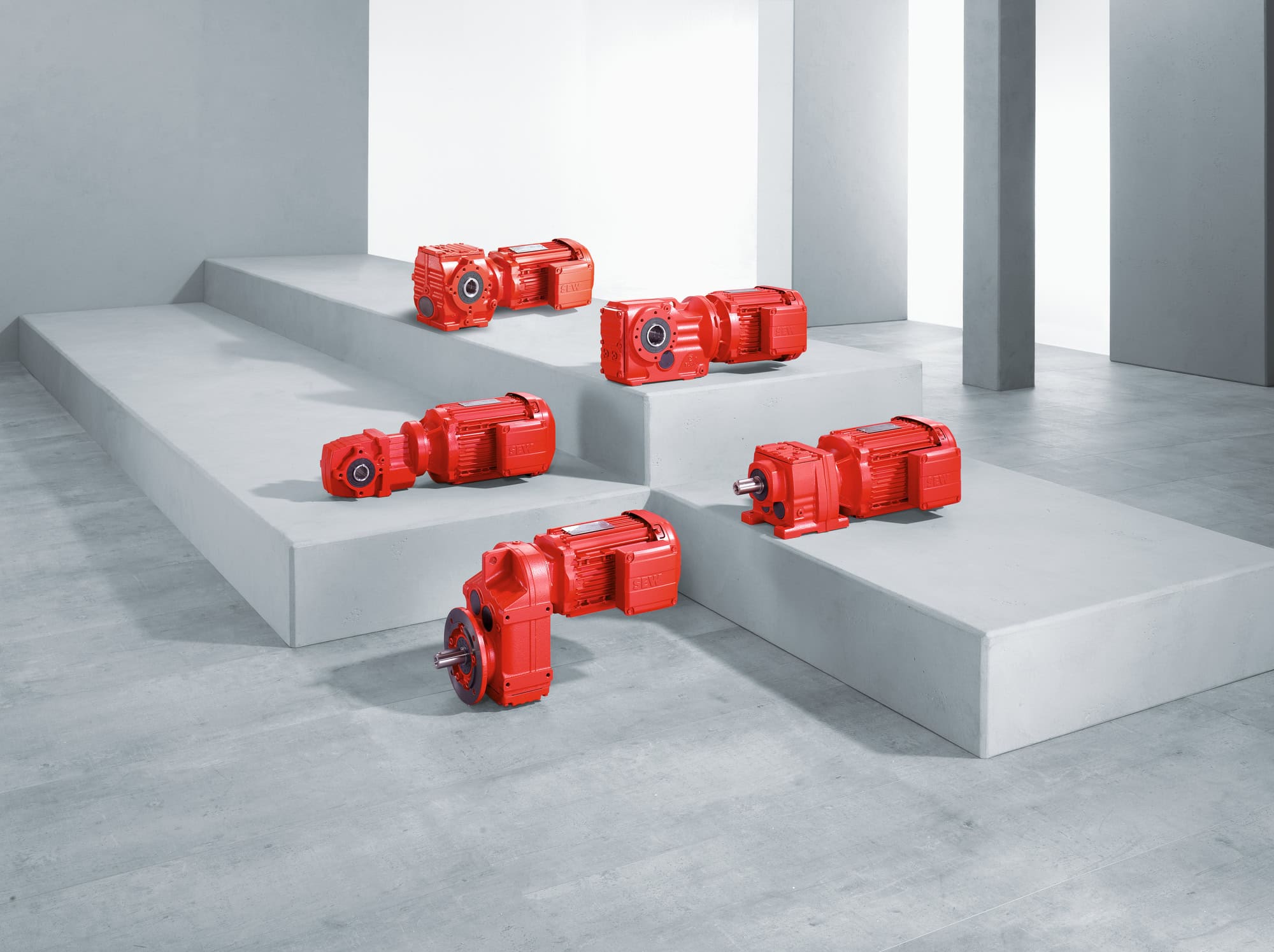
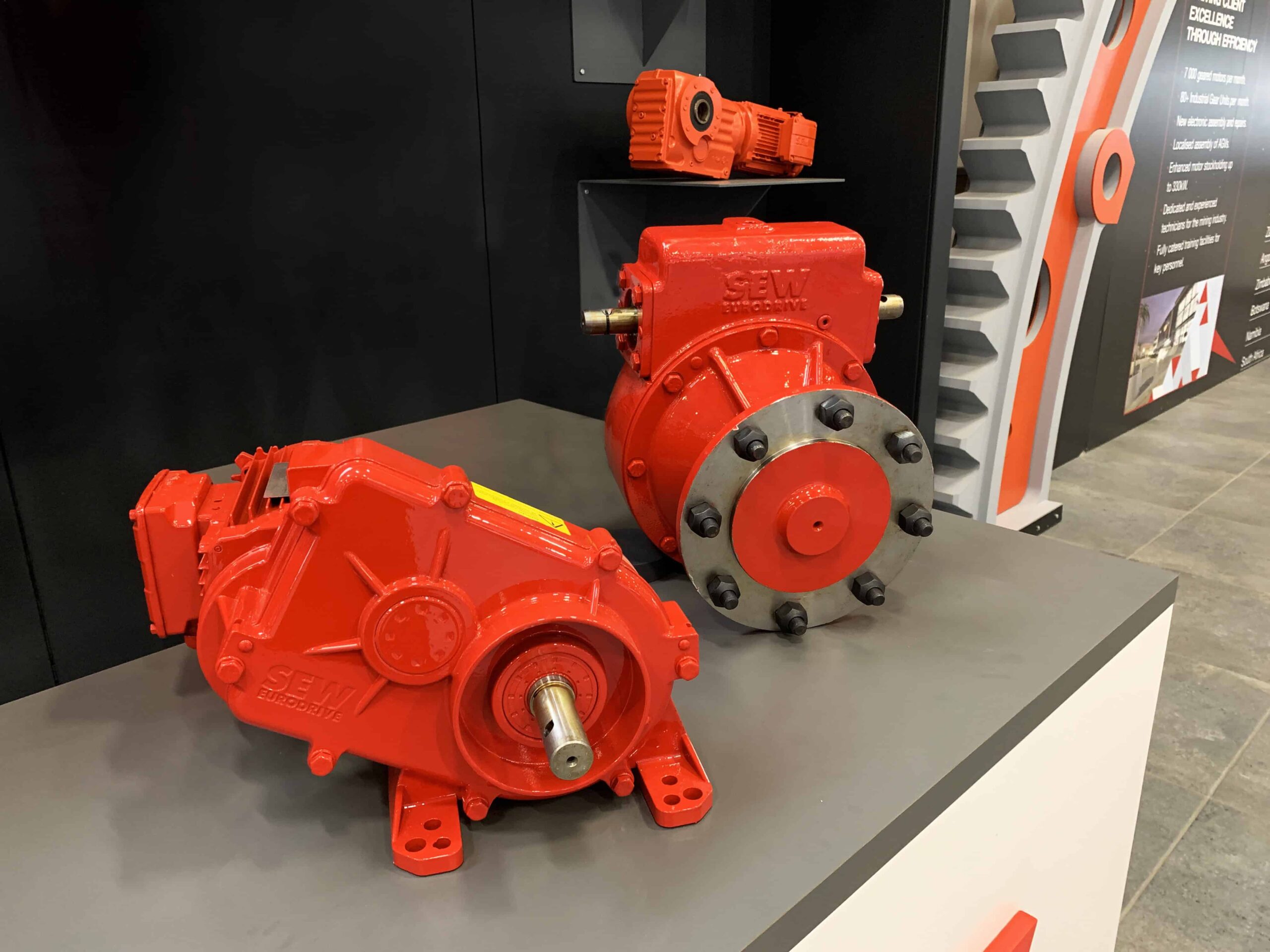
Making its debut appearance at NAMPO Cape in Bredasdorp this year, geared motor specialist SEW-EURODRIVE is all set to excite the farming community with even more solutions to drive productivity and efficiency. 

From its firm footprint in the agricultural sector – through packhouses and bottling facilities countrywide – SEW-EURODRIVE now takes its offerings onto the lands, for instance, with its quality gear units for centre pivots. Jonathan McKey, National Sales and Marketing Manager at SEW-EURODRIVE, says this is part of its continuous innovation to give farmers more energy efficient solutions for streamlined and automated operations.

“Our classic 7 Series geared motors have for many years proudly served the farming industry – in various packhouse applications including conveyors, sorters and box packaging lines,” says McKey. “These solutions have long been fitted with premium efficiency IE3 motors – which are also available as non-integral units – delivering considerable savings in energy costs.” 

Variable speed drive (VSD) technology allows for further efficiency and even the finetuning of production lines to suit the pace of demand. 

“As part of modernising packhouse facilities, VSDs allow solutions to be tailored to a changing production pattern,” he says. “Another opportunity for greater efficiency is our ECDriveS® drive system for roller conveyors in light duty materials handling.”

McKey emphasises the work SEW-EURODRIVE has done in ‘closing the loop’ to meet more of the drive requirements in farming. The company now supplies, installs and services the centre drive and wheel drives for pivot irrigation systems – as well as the drive technology to power them.

“These solutions have been popular on farms in Brazil since the 1980s,” he explains. “Similarities with South African conditions show that this offering will add value locally too.”

Aligning to the shaft sizes and flange connections on existing centre pivot irrigation equipment, SEW-EURODIVE provides a ‘plug and play’ solution of gearing, casing and motor. The concept is also more cost effective and sustainable, as the company will service and repair the drive systems – not just replace them. 

Underpinning the performance customers demand, SEW-EURODRIVE’s product quality and support means that the systems achieve the highest levels of uptime. The company’s extensive national service footprint and decentralised stocking policy means that servicing and parts are quickly available to customers within a matter of hours. 

“Every key agricultural region is well served by our comprehensively stocked facilities in Cape Town, Nelspruit and Gqeberha for current products as well it be for the pivot solution,” he says. “We appreciate that agricultural products are sensitive to time and delay, so we help ensure minimal downtime.”

McKey says SEW-EURODRIVE also recognises the importance of sustainability principles in agriculture, and builds this approach into its designs. The high performance ECO2 geared motor, for example, is made from uncoated aluminium, which forms a thin protective layer in contact with oxygen. With no coating or solvent on the surface, the result is more cost effective, environmentally friendly and easier to recycle.

The company has even developed its own premium lubricants, based on its decades of field experience. These boost operational performance by reducing friction between gear wheels, and extend the life of sealing rings. These innovations are ideal for applications in the food and beverages industry as well.

“Visit us at Stand T6 at NAMPO Cape in Bredasdorp,” says McKey. “We also look forward to talking to visitors about their aspirations to modernise their facilities, as we can walk this journey with them.”

OPTIMISE TRANSFER POINTS TO LOWER TOTAL COST OF OWNERSHIP 

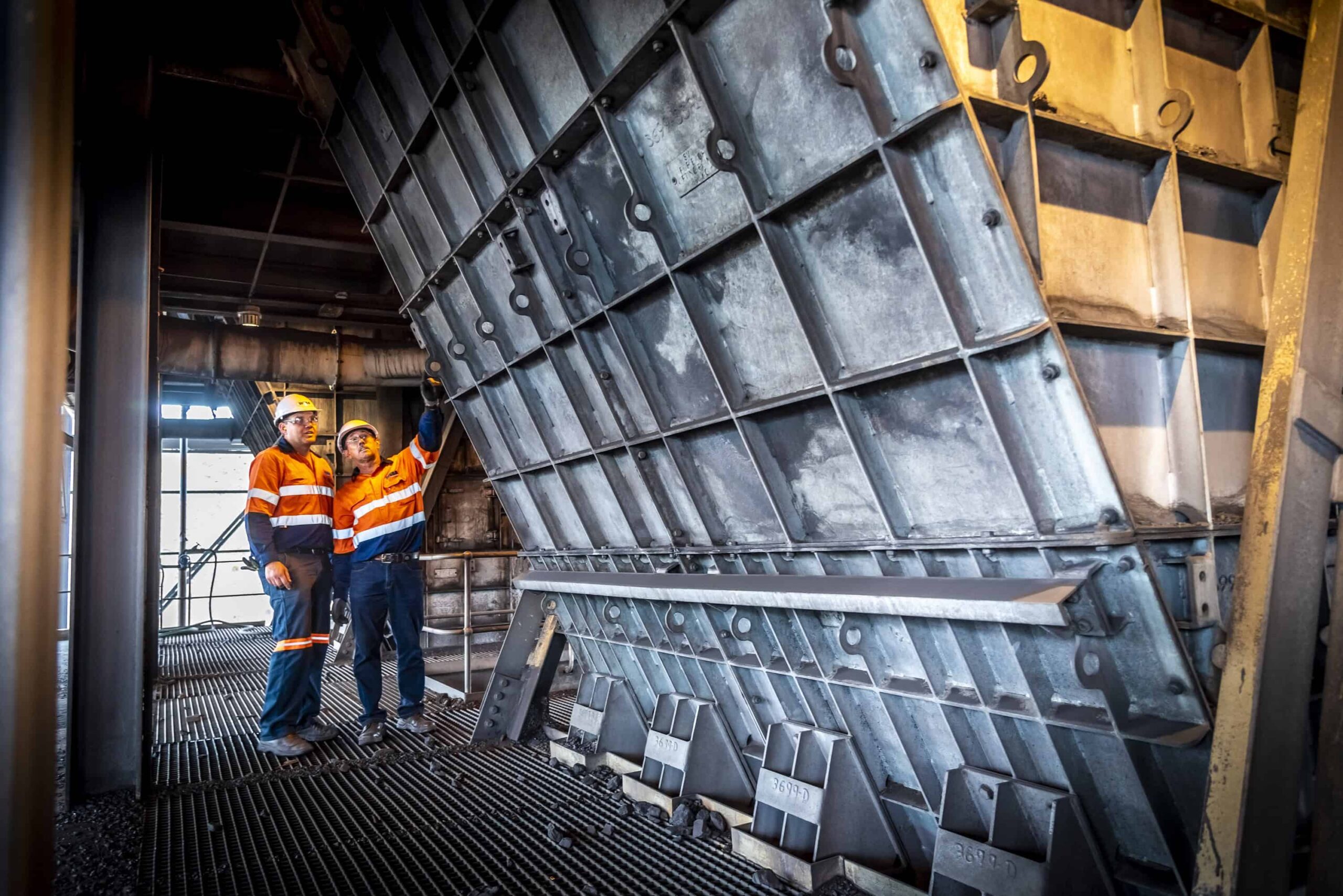
The efficiency and reliability of transfer points are pivotal in lowering the total cost of ownership (TCO) on mines and minerals processing plants. These transfer points, where materials move from one conveyor belt to another, from conveyor to equipment or into storage facilities, are critical junctions that, when optimised, can lead to significant cost savings and operational benefits.

Mark Baller, CEO of Weba Chute Systems explains that transfer points serve as the heart of materials handling systems. “Chute systems ensure the seamless flow of bulk materials such as minerals and aggregates, from one process to another. However, these points are also prone to issues like spillage, dust generation, material degradation and equipment wear. Addressing these challenges is key to reducing maintenance costs, downtime, and overall TCO.”

Weba Chute Systems, a leader in transfer point solutions, has been instrumental in assisting mining and minerals handling operations to achieve lower costs and increased reliability. With decades of experience and a deep understanding of the unique challenges in bulk material handling, the company has developed innovative solutions that address the critical issues associated with transfer points.

Baller says that optimised transfer points are designed to minimise spillage and dust creation. “Using well-engineered chutes can greatly reduce material loss through the creation of excessive finds or spillages eliminating the need for frequent clean-ups. This not only lowers labour costs but also mitigates environmental and health risks,” he says. 

Properly designed transfer points ensure a smooth and controlled material flow, which is essential to prevent material degradation, and this is where Weba Chute Systems leverages its extensive experience and expertise. Using advanced flow control techniques, such as curved chute designs and flow aid devices, the company designs transfer points that help in maintaining material integrity and consistency.

Transfer points are often sites of high wear and tear due to the impact and abrasion of materials, and Weba Chute systems prioritises the use of high quality wear resistant materials of construction. The company’s robust structural designs further enhance the longevity of transfer points, providing a substantial reduction in overall maintenance costs. This focus on durability extends to the lifespan of equipment, reducing the need for frequent replacements and maintenance. 

“Safety and operational efficiency are at the core of Weba Chute Systems’ solutions, and by minimising the risk of blockages and equipment failures, we significantly enhance safety and ensure continuous, uninterrupted operations for our customers,” Baller says. “This not only boosts productivity but also minimises downtime, leading to significant cost savings.”

“Optimising transfer points in materials handling applications is a strategic move that can significantly lower the total cost of ownership, and this applies to both greenfield and brownfield installations,” Baller says. “Investing in well-engineered transfer points is not just about improving individual processes but rather a holistic approach to enhancing the entire materials handling system’s performance and profitability.”

FROM SMART MINING TO PORTABLE CRUSHING FROM WEIR AT ELECTRA MINING AFRICA

At this year’s Electra Mining Africa exhibition, visitors will be attracted to the Weir stand by innovations such as the Weir Modular Wheeled Plant (WMWP), a fully mobile crushing and screening plant, as well as the latest in the company’s cutting edge digital solutions for smart mining.

Supporting customers to mine for a more sustainable future, Weir will showcase not only its leading range of equipment and solutions, but the digital technology to further optimise its performance and reliability.

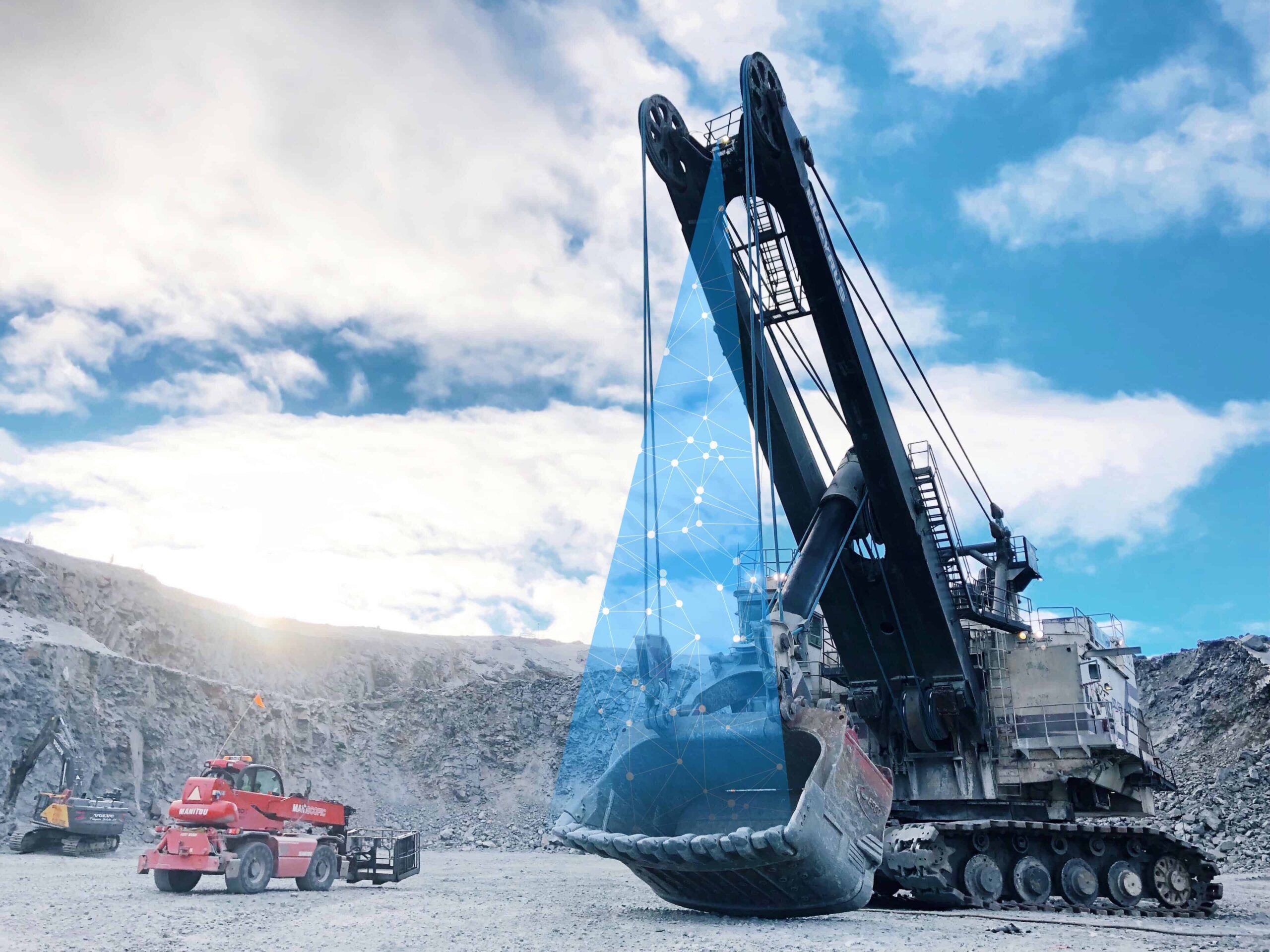
“Our exciting Motion Metrics mine operation monitoring systems will be one of the main features at the show,” says Mufaro Muzvondiwa, Process and Products Director at Weir. “These systems provide mines with real-time particle size analysis of material carried on shovels, loaders, conveyor belts and haul trucks – helping to avoid blockages at the crushing stage and optimise the mine-to-mill value chain.”

Using stereoscopic vision combined with artificial intelligence (AI), Motion Metrics™ cameras leverage machine learning to enhance its predictive capabilities and provide actionable insights to customers, says Muzvondiwa. 

Another highlight will be Weir’s intelligent solution which features condition monitoring technology. This is portrayed through 3D conceptualisation, showing all associated benefits including safety, savings and maintenance optimisation. 

“Visitors to our stand can witness the value of real-time monitoring in enhancing plant performance and optimising uptime,” he explains. “This is where Weir is supporting our customers’ ambitions to be more cost effective by driving down their total cost of ownership of equipment while driving productivity and sustainability.”

In addition to the display of its latest pumps, screens, cyclones, valves, liners and ground-engaging tools, Weir will also have its recently launched mobile crushing and screening plant at its outdoor stand. With Weir’s WMWP fully mobile plant mounted on an on-road trailer, the plant can be moved to site and set up within a couple of hours – as a ‘plug-and-play’ solution.

“This innovation has already generated great excitement in the aggregates and small scale mining sector,” he says. “The design provides a fully mobile plant, making it ideal for road projects requiring aggregate crushing at various points along the route.”

Muzvondiwa highlights that Electra Mining Africa provides a useful forum to remind visitors of Weir’s concerted focus on partnerships for sustainable mining. This includes the extensive footprint of OEM service centres and partners across Africa, ensuring technical support is always available in close proximity to mines. 

“In addition to our South African presence, we are present in countries including Cote d’Ivoire, Ghana, Botswana, Namibia, Senegal, Tanzania and Zambia,” he says. “Our three manufacturing centres in South Africa also ensure high levels of local manufacture, to promote African economies and to streamline the supply chain to our customers.”

The combination of quality products and dedicated service means that Weir can be confident in the warranties and predictions it provides to customers regarding the productivity of its solutions. “This is demonstrated by our ability to enter into cost per ton agreements with customers,” he says.

He adds that local skills development is also a priority for the company in building its service infrastructure, including its Mill Circuit University. 

Visit Weir in the Blue Zone Stand C20

OPTIMISING SAND PRODUCTION WITH A VSI

As quarries seek to meet growing demand for manufactured sand, vertical shaft impact (VSI) crushers are proving to be the ultimate solution due to their ability to produce high quality manufactured sand. With a rich heritage in the design and manufacture of VSI’s, Pilot Crushtec can cater for production requirements by using various size VSI’s with an installed power from 45kW up to 315kW    

Traditionally, cone crushers have always been the most preferred crushing solution in sand making, says Wayne Warren, Africa Sales Manager at Pilot Crushtec. However, the downside is that for a cone crusher to produce sand, it needs to be set on a very tight closed side setting (CSS), which renders it uneconomical due to the resultant excessive wear.

“A very tight CSS means that the crusher works on a liner-on-material crushing concept, which is not ideal because the wear rate increases dramatically, and the shape is generally poor,”  explains Warren.

The VSI’s rock-on-rock crushing principle is more efficient in producing manufactured sand as it directly crushes the rocks without any intermediate crushing stages. “The VSI makes use of material-on-material crushing – the stone is accelerated at a high speed into a rock box of the same hardness material, resulting in maximum breakage of the feed material,” explains Warren. “Depending on the speed, this can accomplish two things: stone shaping with some sand generation or, on a higher speed, a higher percentage of sand.”

Charl Marais, Sales Manager at Pilot Crushtec, says a VSI’s ability to achieve constant product grading makes it the ultimate crusher for sand making purposes. “If you feed a VSI constantly, it gives you a constant grading. On the contrary, with a cone crusher there is inconsistency in quality because of the way the liners wear. As soon as you have an uneven wear pattern on your mantle and bowl liners caused by intermittent feed conditions, your grading fails as well,” says Marais.

Pilot Crushtec’s VSI offering covers a broad range of kilowatt (kW) units in three shells, from 45 kW to 315 kW. The three base models comprise the VS100, VS200 and VS350, covering five different rotor diameters from 600 mm to 1 000 mm and 14 different configurations to suit differing customer needs.