FIBRE-REINFORCED SHOTCRETE GAINS TRACTION IN MINING

In recent years, the mining industry in South Africa has become a major user of fibre-reinforced shotcrete for underground support. In line with this trend, CHRYSO Southern Africa reports growing demand for its market-leading CHRYSO® CSF 6000 high performance macro-synthetic fibres.  

Fall of ground (FOG) – one of the leading causes of injuries and fatalities in underground mines – remains one of the biggest obstacles to the industry’s quest for Zero Harm in South Africa. The fight to eliminate FOG incidents is therefore one of the main reasons for the escalating use of fibre reinforcement in shotcrete, says Willie Nel, Technical Sales Consultant at CHRYSO Southern Africa. 

Having traditionally used reinforced shotcrete with wire mesh or welded mesh, the industry then moved over to fibres. These were initially steel fibres and then rigid polypropylene ‘broombrissel’ fibres took centre stage. However, the past decade has seen an accelerated switch to polypropylene homo-polymer fibres – a soft tape fibre. 

“The move to soft tape fibres gained traction from around 2012,” explains Nel. “During that period, we have experienced growing demand for our CHRYSO® CSF 6000 high performance macro-synthetic fibres which are specifically designed to satisfy the demanding requirements for modern day shotcrete reinforcement technology. In our experience, the trend is largely being driven by new mining projects.”

A major advantage of the CHRYSO® CSF 6000 is its flat, flexible nature which leads to better tensile strength than, for example, the rigid ‘broombrissel’ counterparts. In addition, it combats the formation of plastic shrinkage and plastic settlement cracking, while still providing high impact-, abrasion- and shatter-resistance. The technology, adds Nel, boasts greater ductility, which allows it to deform under tensile stress, as well as enables greater energy absorption. 

This was proven at one of the biggest copper mines in South Africa, where the client stipulated a 45 MPa shotcrete mix design. CHRYSO Southern Africa went on to achieve over 1000 joules of energy absorption by using the CHRYSO® CSF 6000 macro-synthetic fibres.

“Traditional reinforcement practices such as wire mesh and welded mesh are not conducive to high productivity and are costly due to the labour intensive process of mesh installation. In contrast, macro-synthetic fibre-reinforced shotcrete is a system capable of supporting rapid application and semi-automation,” concludes Nel.

FLSMIDTH BUILDS SOLID SKILLS BASE FOR LOCAL, GLOBAL SUCCESSION

To support its full flowsheet technology capabilities, FLSmidth is continuously developing vital skills at its well-resourced Training Academy at the company’s Chloorkop Service Centre in Gauteng.

According to the FLSmidth Training Academy Head Steve Parkinson, the training underpins the ground-up succession strategy of ensuring long term competence within the business – with the depth to embrace evolving technologies that continuously improve its offerings. 

“Our considerable investment in skills development nurtures local talent to provide us with a strong pipeline of relevant and quality expertise,” says Parkinson. “This knowledge base is shared within FLSmidth not only across the continent but globally. At the same time, we invariably train more people than we can absorb, so we provide a rich resource of trained individuals for other players in the local mining and engineering sectors – including our customers and competitors.”

Through a rigorous selection process countrywide that targets unemployed youth under 26 years old, 10 apprentices are enrolled every year at the academy. They spend three years in formalised training towards their qualification and future role as an artisan. FLSmidth employs as many as it can accommodate within its resource planning and budgeting; the company also goes the extra mile in trying to find placements for the others, either among its customers or the broader industry.  

“In this way, we develop our own specialised in-house expertise while creating a skills pipeline that supports the local economy and builds a stronger base for the manufacturing, mining and other sectors,” he explains. “This is part of our commitment to the growth of mining and industry in Africa.”

Such training is only possible because of FLSmidth’s depth of skill already at work in its advanced Chloorkop Service Centre on the same site. Here, the company conducts turnkey refurbishment and repair services, supported by infrastructure that includes a large fabrication shop, an assessment and assembly area, and a heavy machining section with both conventional and CNC equipment.

“The rules of supervising and mentoring apprenticeships require that there is at least one artisan for every three apprentices,” explains Parkinson. “We therefore leverage our existing skills base to nurture the artisans of tomorrow – ensuring that each apprentice is closely supervised and well managed to enhance the practical learning process.”

FLSmidth also hosts a two-year Engineering Graduate Internship programme, where it develops graduates in disciplines such as mechanical, chemical and metallurgical engineering. Each intern is supervised by an FLSmidth engineer working in the relevant field. 

A further training programme being offered is a unique learnership that FLSmidth conducts in collaboration with the German Chamber of Commerce. The Commercial Apprenticeship Training scheme (CATS) involves a two-year learning programme, earning the successful participant an Institute of Certified Bookkeepers (ICB) qualification at Level 5 in South Africa, as well as a German qualification – the Diploma in Industrial Management Assistant.

An information technology (IT) learnership is also offered for 20 local people with disabilities; with its focus on computer-based system development skills, the field is less inhibiting for people with disabilities, he points out. This initiative aligns well with the company’s social responsibility strategy and its sustainability goals.

“The track record of the Training Academy in South Africa has been so successful that we now have valuable experience to share with FLSmidth operations globally,” he says. “Colleagues abroad are able to draw on our model to achieve similar results in their regions. A number of our trainees have, in fact, already been placed in operations abroad, proving the world class quality of our outputs.”

Within the FLSmidth Service Centre itself, the quality of the learners from the Training Academy is already well proven. For example, the current foreman of the machining shop was an apprentice in this facility just 14 years ago. There have also been general workers admitted to the apprenticeship programme, qualifying successfully to become qualified machine operators.

The Training Centre also provides staff and customers with product training, says Parkinson. This generally covers three levels: the first level is general knowledge about products, the second level is basic operations and preventative maintenance, and the third level focuses on specialised maintenance.

THE CRITICAL ROLE OF MAINTENANCE IN TIMES OF FINANCIAL CONSTRAINTS

In the face of declining commodity prices, the mining industry has increasingly prioritised cost saving measures, often leading to the suspension of capital expenditure (CAPEX). While such strategies may yield short-term financial relief, the importance of implementing comprehensive maintenance programmes has never been more critical. 

These programmes are essential for ensuring the reliability and performance of existing equipment, timely servicing, repairs and refurbishments, preventing failures that could severely impact operations downstream.

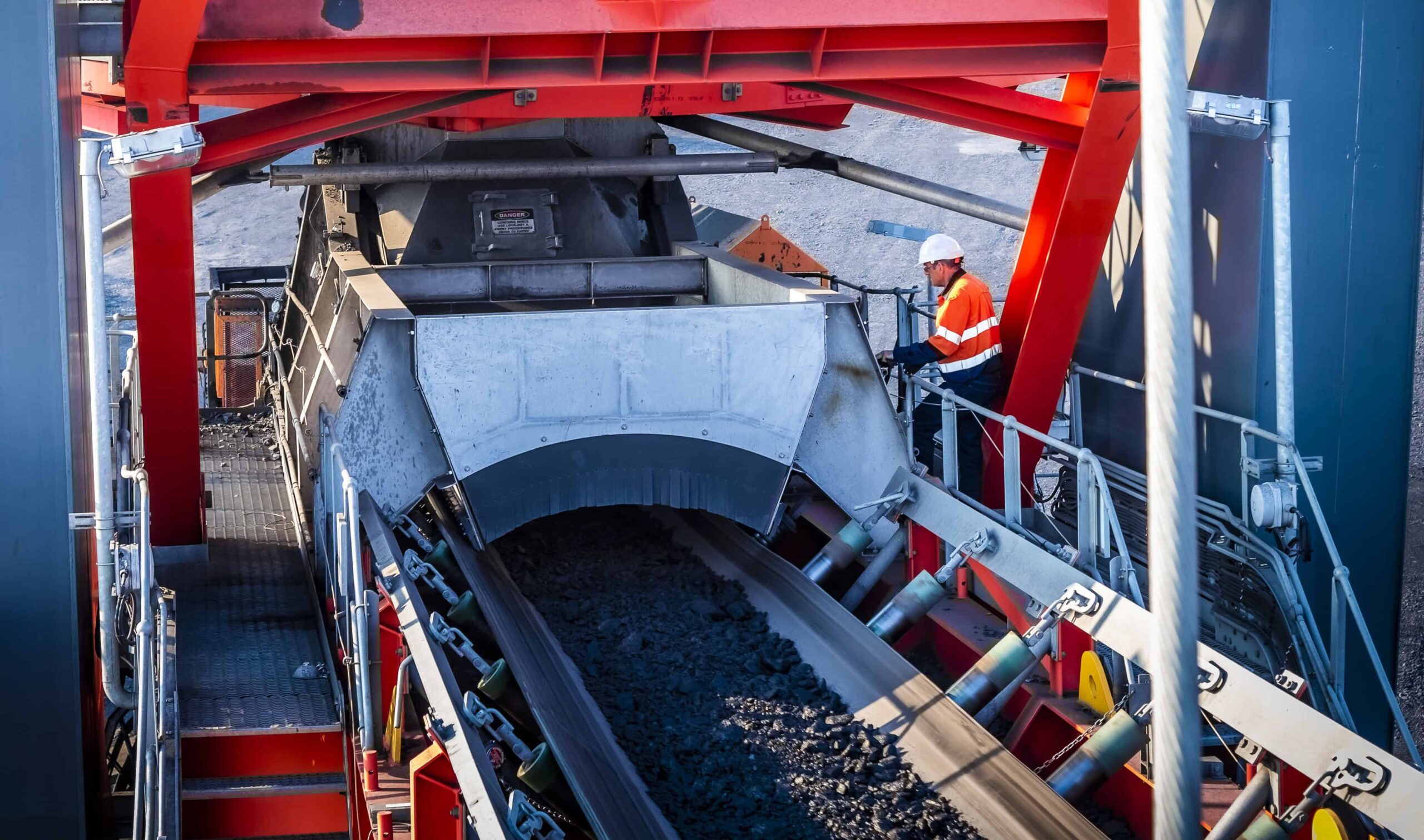
One of the more complex aspects of mining operations maintenance is measuring the wear life of transfer chutes, which involves tracking numerous components. The advantages of accurately gauging wear life are direct and substantial, contributing to enhanced operational uptime and, consequently, to the bottom line.

Mark Baller, CEO of Weba Chute Systems, sheds light on how the company’s customised reliability model plays a pivotal role in capturing key wear indicators for each chute. This model, when supplied with the correct data—including regular wear measurements—provides plant operators with invaluable insights into wear patterns. 

“Such insights are not just academic; they are practical, enabling predictions about which components will need replacement and the optimal timing for such replacements,” Baller explains. “This predictive capability facilitates meticulous planning, such as timely ordering of necessary parts to ensure they are on-site for upcoming maintenance windows. By adopting a proactive approach to maintenance, unforeseen stoppages are minimised, along with the accompanying disruptions and lost production time.” 

He emphasises the significant efficiency gains achieved through accurate predictions of component lifespan within their chutes. This efficiency is not confined to Weba Chute Systems’ maintenance contracts. The company extends the benefits of its reliability tool to all customers, offering the ability to request the service independently.

The application of reliability modelling allows for the generation of monthly reports, detailing the maintenance schedules required for each wear part within every chute. The model’s complexity accounts for differential wear levels across various parts of the chute, influenced by varying impact levels. This granularity enables chute owners to prioritise maintenance efforts on areas experiencing the highest wear, thereby optimising maintenance operations and ensuring continuous and reliable production.

ENHANCING ROAD DURABILITY WITH AFRISAM ROADSTAB CEMENT

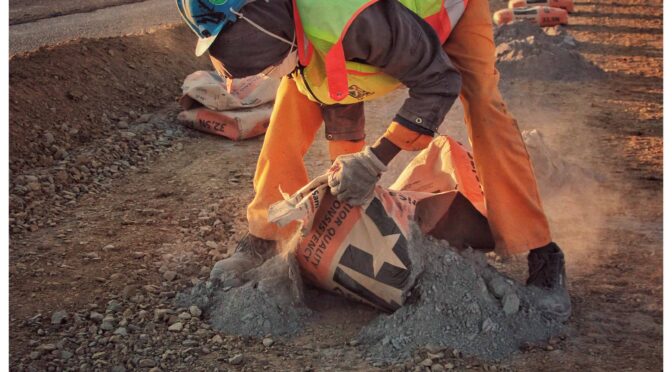
AfriSam Roadstab Cement is a specialised, high quality composite cement engineered specifically for road stabilisation tasks. Available from leading construction materials supplier, AfriSam, this cement is designed to optimise the properties of soils used in road construction, notably by reducing their plasticity and enhancing their strength and stability. 

The formulation of AfriSam Roadstab Cement aims to address the vital requirements of road construction projects by ensuring the durability and stability of road bases. The unique composition contributes to its efficacy, particularly in working with challenging soil types like clay. This addition not only improves the workability of the cement in various soil conditions but also facilitates easier handling and application during the construction process. 

Stabilisation using cement also improves the properties of granular materials. When cementitious material is mixed with granular material in predetermined portions and is adequately mixed, compacted and cured, a bound material with significant strength is the result.

An important advantage of AfriSam Roadstab Cement is its extended open working times as it provides ample time for the proper placement and compaction of materials. This type of flexibility in the construction timeline is crucial for achieving optimal results in soil stabilisation, ensuring that the stabilised layers meet the required standards for strength and durability.

Tailored to meet the demanding needs of road stabilisation, AfriSam Roadstab Cement offers superior performance across a wide spectrum of road material types. Its consistent quality and ability to reduce soil plasticity make it an essential component for constructing durable and stable roads. 

By enhancing the strength and stability of road bases, AfriSam Roadstab Cement plays a critical role in the longevity and reliability of road infrastructure.