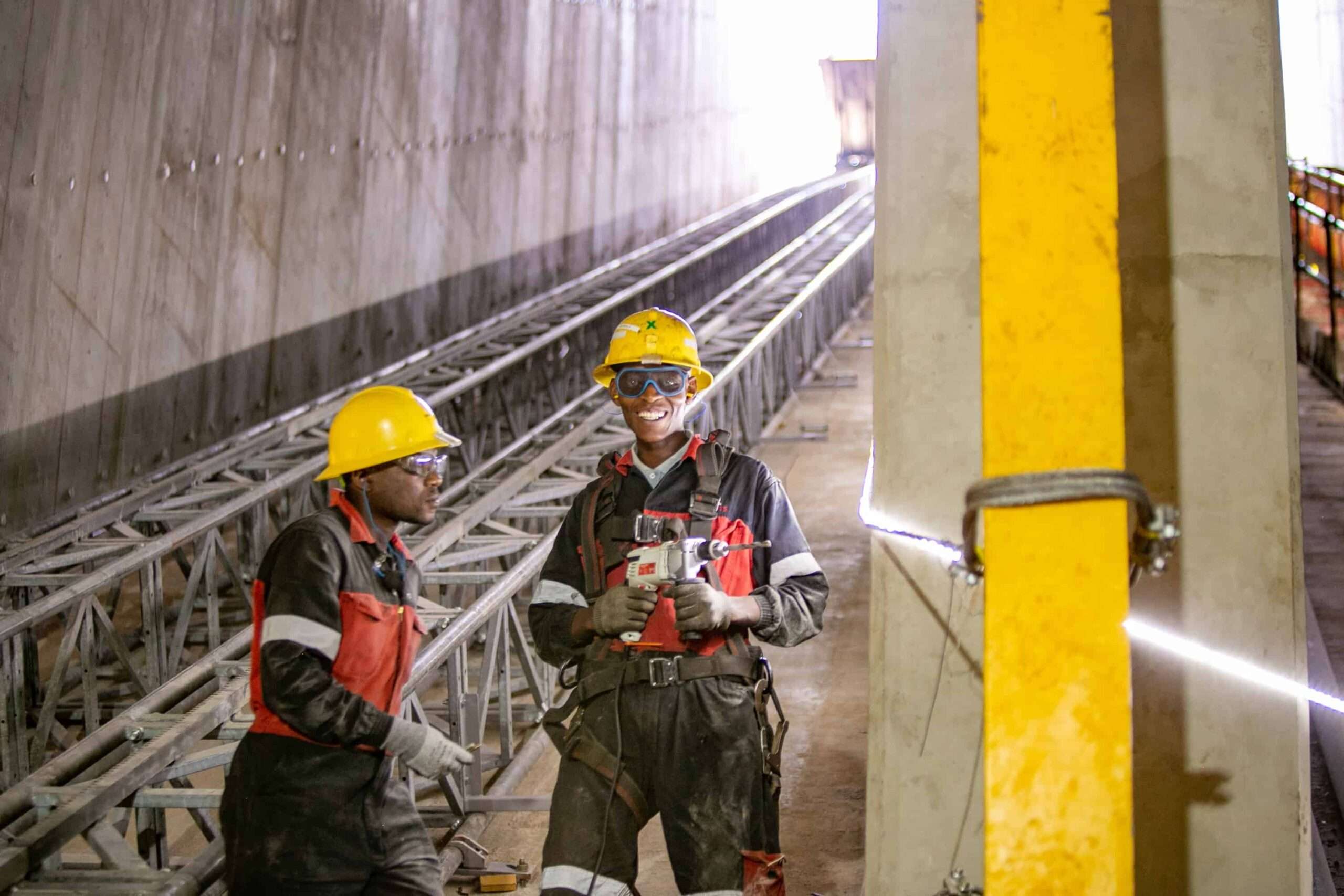
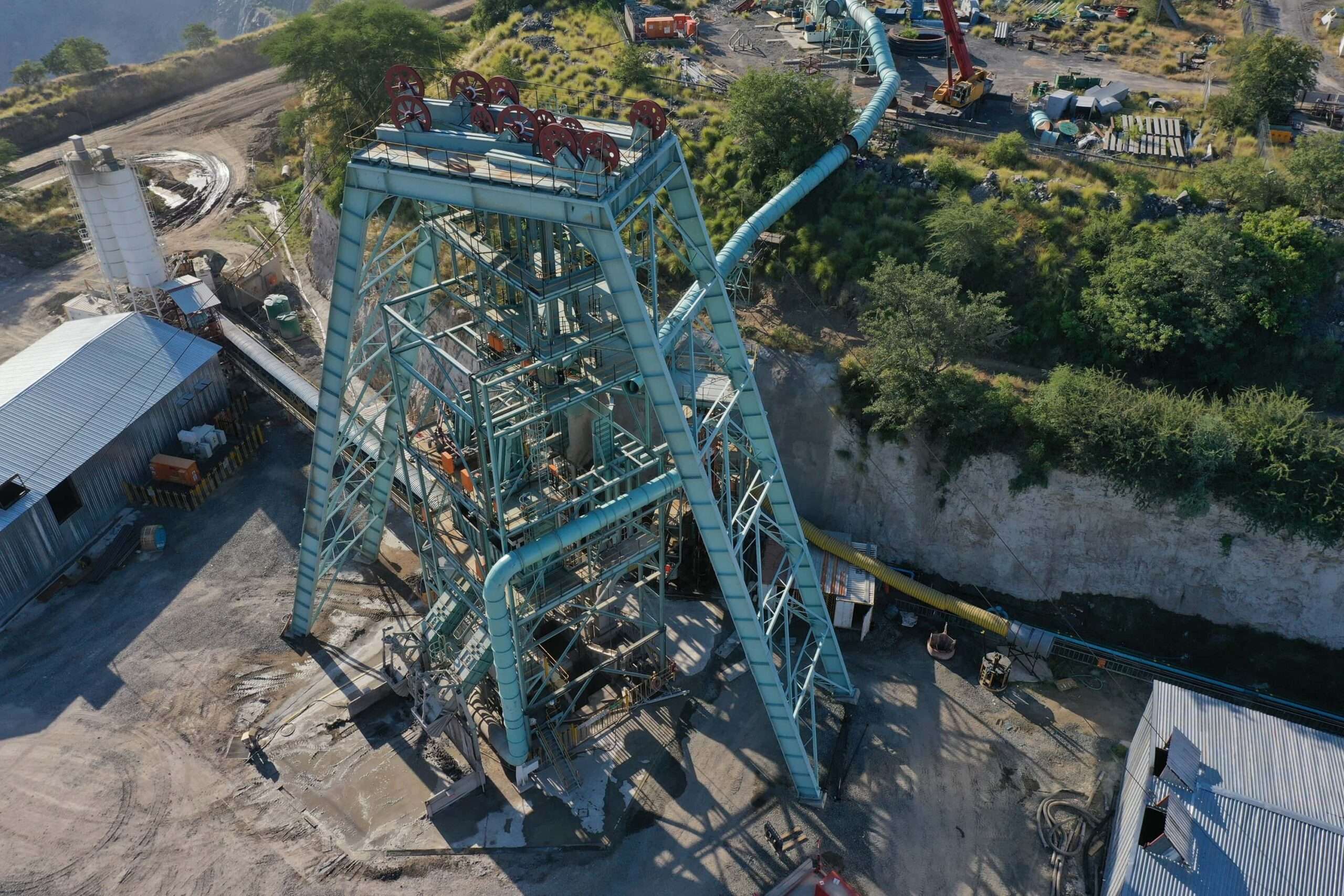
KENDAL ASH DISPOSAL FACILITY NEARS COMPLETION

The Kendal Ash Disposal Facility expansion project, responsible for the storage of ash produced by Kendal Power Station until 2023, has successfully reached over 80% completion. With a projected completion date set for March 2024, this intricate venture is rapidly approaching its final stages.
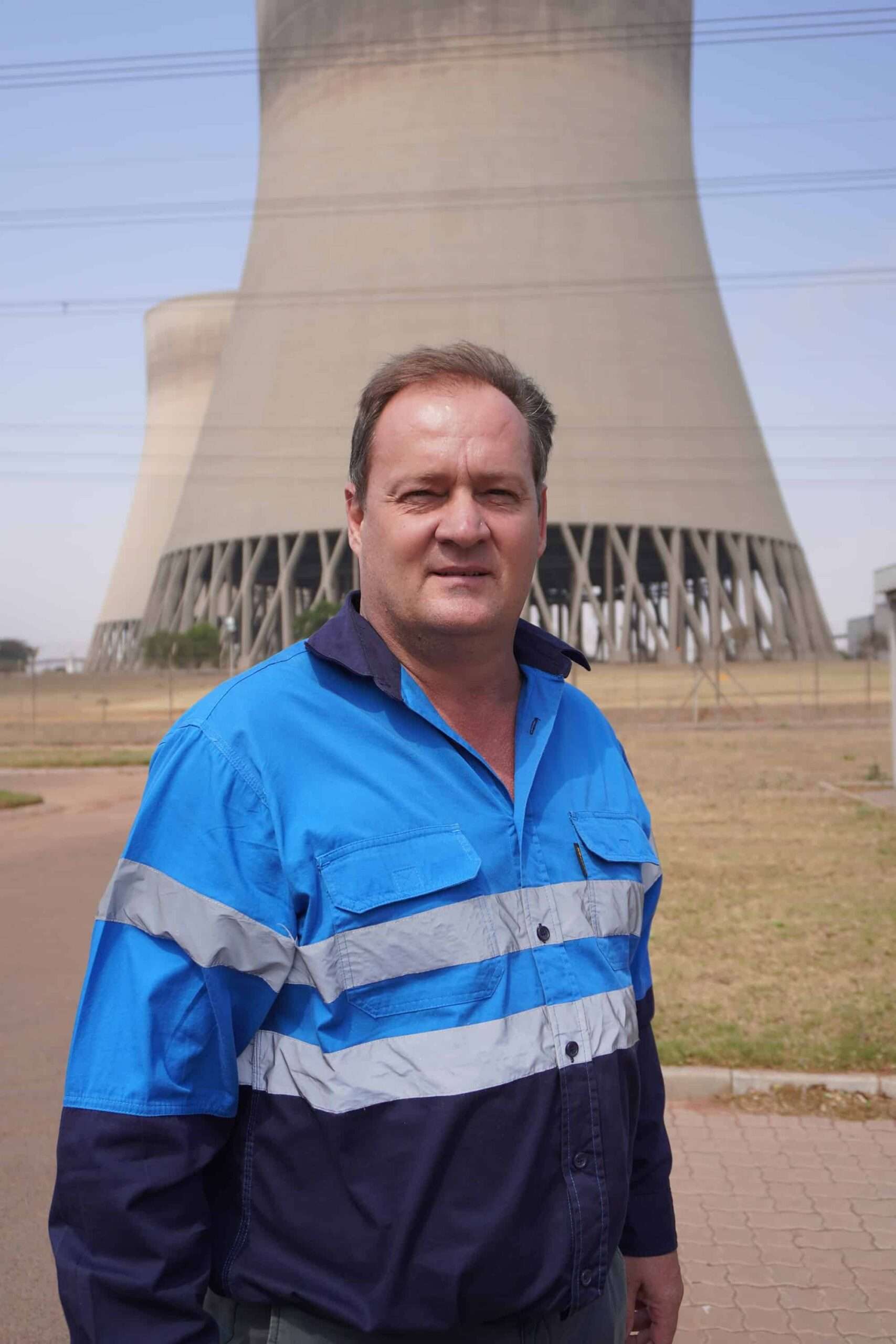
Led by joint venture partners Concor and Lubocon Civils, the project accelerated its construction schedule over the winter, capitalising on the dry conditions. Concor’s Project Manager, Pierre Jansen van Vuuren, highlights the stellar productivity in June and July when the teams committed to continuous 24-hour shifts to gain momentum before the onset of the rainy season.

Spanning a massive area of 2.5 km by 3 km, the project’s components comprise the new 65 hectare Ash Disposal Facility (ADF), two dams each for both clean and polluted water storage, silt traps, an expansive 16 km V-drain system, a significant stream diversion and access road construction.

While the stream diversion and majority of the 14 km access roads have been completed, the principal focus now revolves around the ADF and the basins. 

The in-situ material is clay soils which calls for a specific construction methodology. Selected stockpiled excavated materials are being used in a double-layered low permeability clay for base protection, topped with carefully selected river sand to prevent liner damage. Cutting-edge drainage and leachate collection systems are incorporated to manage water flow efficiently, emphasising sustainability with dirty water reuse for dust suppression and other ADF activities.

Concor’s innovative approach in basin construction employs a patented PVC concrete formwork system, boosting efficiency by accelerating the casting panel process. This technique is not only time saving but also labour efficient.

Jansen van Vuuren accentuates the rigorous quality control measures in place. Leak prevention is paramount, with electronic leak detection ensuring construction integrity. “Our teams maintain open communication, emphasising the importance of the quality and structural integrity of the project,” he adds.
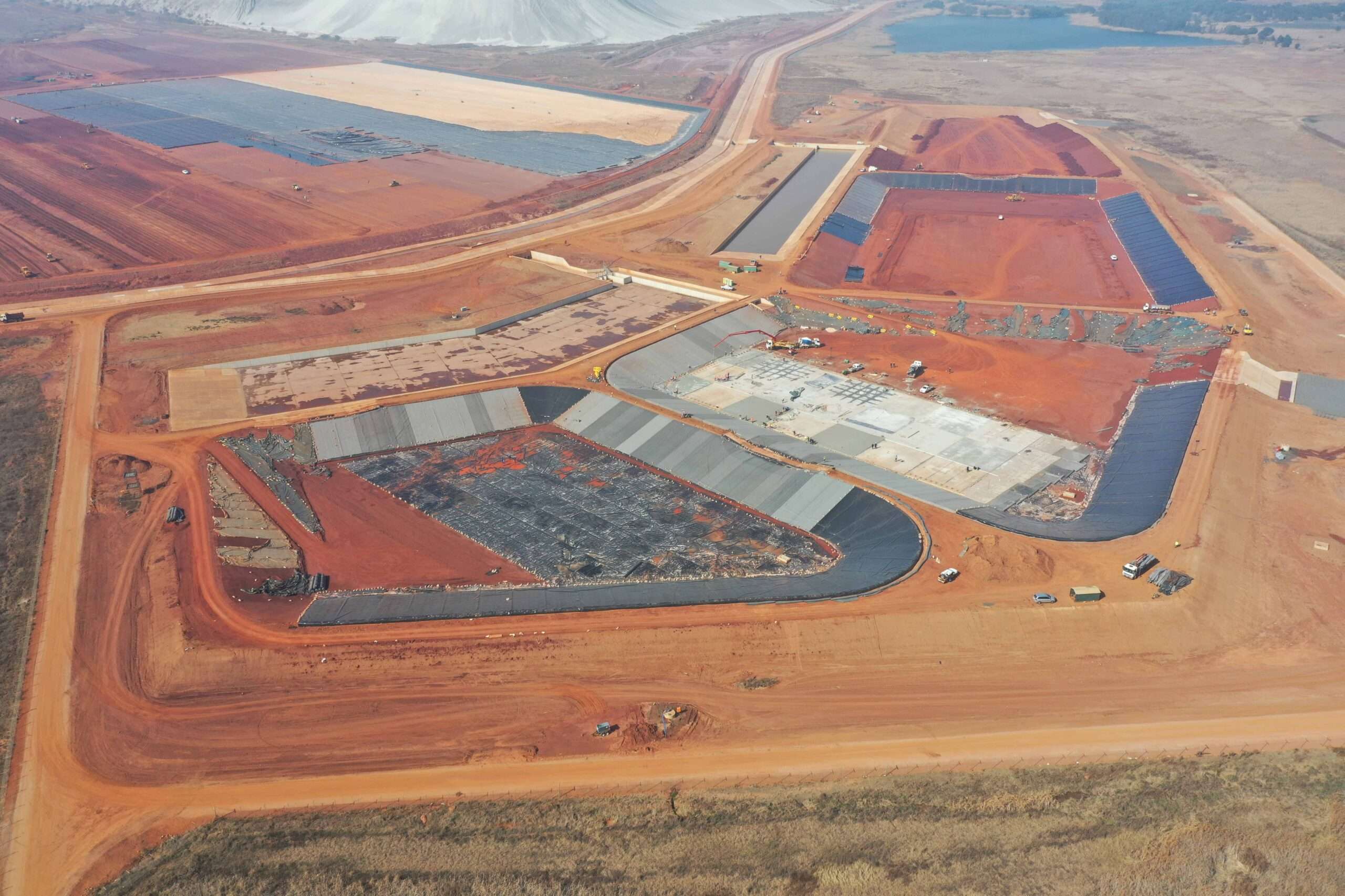
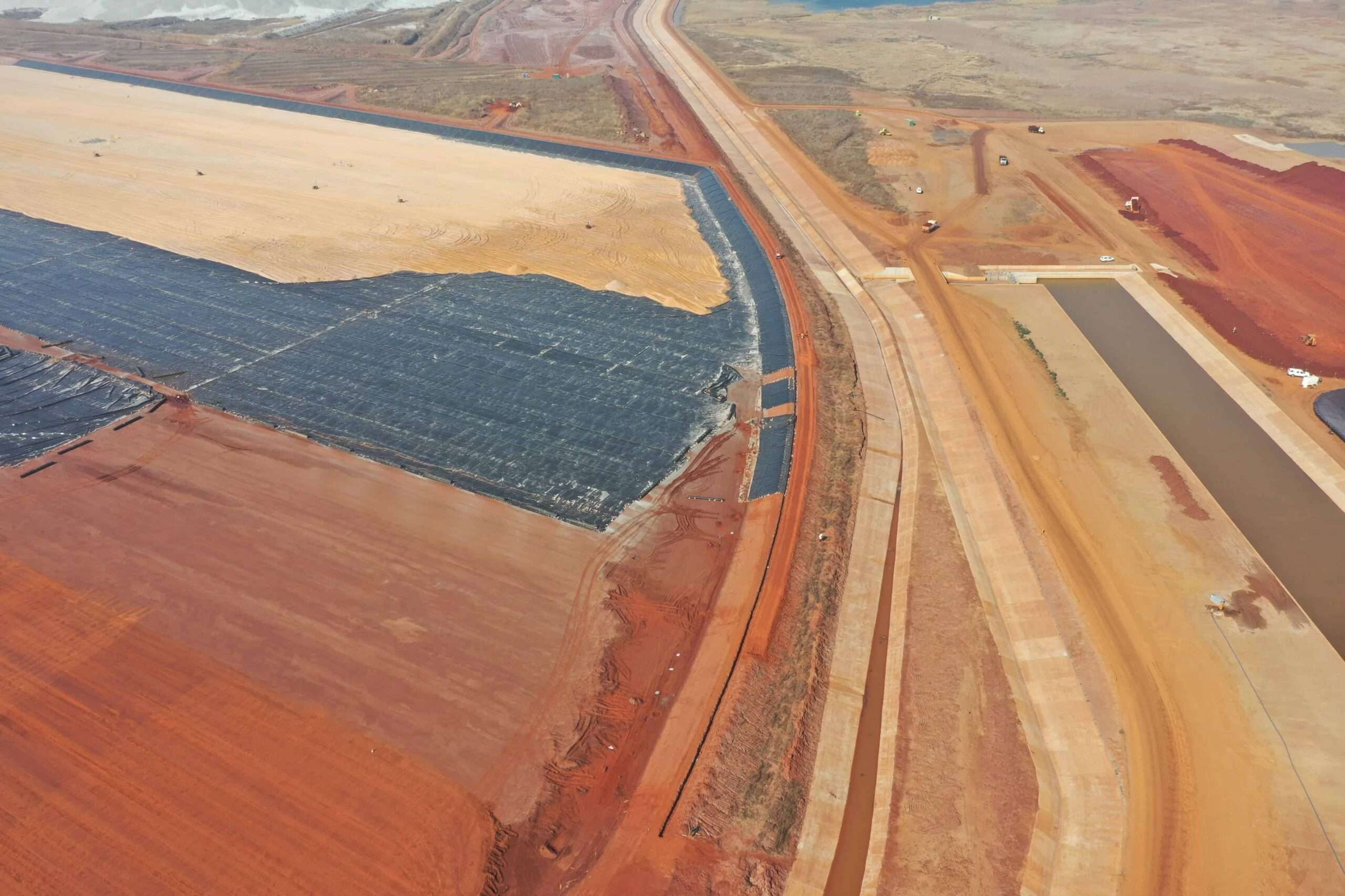
Challenges notwithstanding, the project is gearing up to finalise the liner system installation before the rainy season, with subcontractor Aquatan managing the basins and the ADF concurrently.

Highlighting the human element, Jansen van Vuuren praises the skilled workforce, noting that 852 locals have received training, and the project’s local procurement achievement stands at a remarkable 55%. 

He says this involvement extends beyond labour, and is aligned with Eskom and the Joint Venture’s CSI strategies, which are aimed at giving back to the local communities. By identifying local community recipients and working together with the contractors on its projects, Eskom ensures that the upliftment is extended beyond just employment opportunities. 

A good example associated with the Kendal Ash Dump Facility project was the adding of modular classrooms using containers and the fitting out of a kitchen at a local primary school, by the Joint Venture in conjunction with Eskom. This opportunity to give back addresses other needs within the community such as education and nutrition.
LEADING UNDERGROUND MINING CONTRACTOR SERVES SECTOR ON MULTIPLE FRONTS

Leveraging over a century of experience, Murray & Roberts Cementation is working with some of the world’s most respected mining companies to pave the way for safe and efficient underground mining.

According to Graham Chamberlain, New Business Director at Murray & Roberts Cementation, the busy pipeline of projects demonstrates the mining sector’s faith in the company’s unsurpassed industry knowledge and depth of skills. In southern Africa, the main projects underway are at De Beers’ Venetia Mine, Ivanhoe Mines’ Platreef project and Palabora Mining Company.

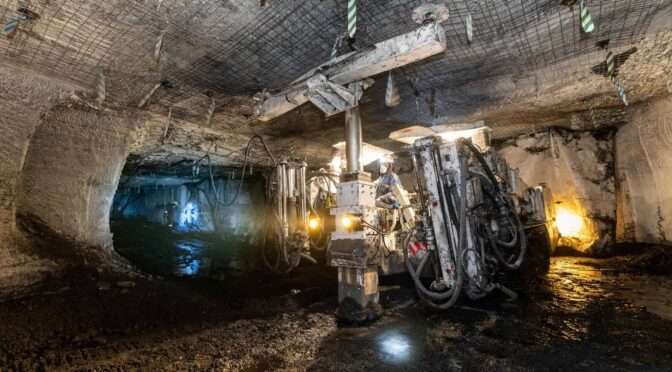
At the Venetia Underground Project near Musina, work has been ongoing since 2013 in one of the largest investments in South Africa’s diamond industry in decades. Transitioning from opencast to underground mining will extend the mine’s life until 2046. Murray & Roberts Cementation has been engaged in sinking, lining and equipping of two shafts – the production and service shafts – to a depth of 1,080 metres. The company also developed a decline tunnel and is completing associated surface and underground infrastructure, in a project whose scope included raiseboring work to establish ventilation infrastructure.  

“In this maturing project, the mine is now getting into ore and starting to develop the infrastructure levels,” says Chamberlain. “At the shaft bottom, good progress continues to be made with the construction of workshops, pumping stations, silos and loading arrangements.”

Murray & Roberts Cementation is also conducting all the infrastructure development at Ivanhoe Mines’ Platreef project near Mokopane. This includes the sinking of a 5,1 metre ventilation shaft to meet horizontal development at 950 metres below surface. To achieve the high accuracy levels demanded by the project, the raiseboring equipment was guided by directional drilling technology. 

“A unique aspect of this project is that the shaft will be hoisting ore at that same time as allowing upcast air to reach surface,” he says. 

Another vent shaft by Murray & Roberts Cementation – measuring 8,5 metres in diameter and reaching a depth of 1,200 metres – is nearing completion at Palabora Mining Company near Phalaborwa. Part of the mine’s Lift II expansion, the project has earned an impeccable safety record – being fatality free and achieving 574 days without a Lost Time Injury (LTI) in 2022. Ground conditions were among the reasons why a blind sink was chosen as the optimal method instead of raiseboring, as the side walls needed immediate support to prevent scaling.

“We also have a number of services projects underway related to raiseboring, grout plants and rehabilitation,” he explains. “Much of our work in this field is focused on old infrastructure that requires maintenance, repairs or upgrades; we also conduct extensive vertical work in ore passes and silos.”

The company carries out vital rehabilitation in ore passes where ground conditions have deteriorated to prevent ore from moving smoothly – thereby risking production targets. Innovating safer techniques for this work, it has developed the tube-and-fill method, first applied about seven years ago at an underground platinum mine in South Africa. These installations are also expected to outlast the lifespan of an ore pass rehabilitated with traditional shotcrete.

“On the engineering front, we continue conducting rebuilds of underground mining equipment at our Bentley Park facility near Carletonville,” says Chamberlain. 

He highlights the work of the company’s design department, which remains extremely busy with feasibility studies associated with vertical work. With the renewed interest in commodity segments like copper, there is also previous work that customers are asking Murray & Roberts Cementation to review and update. 

Training in underground mining and related skills at the company’s world class Training Academy on Carletonville continues to empower many thousands of learners each year, he points out. This skills development is done on behalf of clients, as well as for the company’s own requirements.

“At any one time, we can host about 420 learners, and we are generally at full capacity,” he says. “We have just recently upgraded these facilities to further enhance training technologies that allows learning to take place safely but in a realistic environment.”

In compliance with many African countries’ localisation regulations, Murray & Roberts Cementation has registered companies in eight countries in the Southern African Development Community – most of which have seen the company active with raiseboring. Chamberlain notes that there are specific opportunities in Zambia that the company hopes to capitalise upon in the near future, and is encouraged by the mining sector’s progress in countries like Namibia and Botswana. 

TRAFO POWER SOLUTIONS DESIGNS, MANUFACTURES SUBSTATIONS FOR KAMOA

Trafo Power Solutions has supplied 40 dry-type mini-substations, as well as seven standalone ring main units, to one of the Africa’s largest and fastest growing copper operations, situated in the Democratic Republic of Congo. 

“We are immensely proud to be involved in this mega project,” says David Claassen, Managing Director at Trafo Power Solutions. “Considerable design work and planning went into this contract, with very demanding lead times to keep up with the mine’s rapid expansion.”

The mini-substations include units of between 630 kVA and 1,600 kVA capacity with primary voltages of 11 kV and 33 kV. The secondary voltage configurations are 400 V, 690 V and 1,000 V – and some units have dual-ratio secondaries. Protection against the ingress of water and dust was also designed into the units, with an IP54 ingress protection rating.

Fully designed and manufactured in South Africa, the mini-substations were completed in a streamlined production process that facilitated a fast track delivery in batches of five to six units every 10 days. After the manufacturing and assembly process, each unit went through a programme of intensive testing before it was ready for dispatch.

“The units are designed to be as compact as possible,” he explains. “While many will be used for surface infrastructure, the design had to ensure that they could be used underground, where space is limited.”

The underground environment is governed by stringent safety regulations and standards, making the dry-type transformer an ideal choice. This technology uses air rather than oil to cool the windings, making it safer with less risk of fire, explosion or environmental contamination through leakage. The windings in dry-type transformers are also encapsulated with cast resin, protecting them against humidity levels up to 95%.

Undertaking both the electrical and mechanical design, Trafo Power Solutions has ensured a limited footprint through the use of air-to-air heat exchangers. Air is channelled through the transformer windings and flows over the aluminium tubes of the heat exchanger, while a fan blows air through the tubes to cool the air on their outer surface. 

“The substation design also includes arc protection, which will shut the unit down in the event of an arc occurring – before any further damage can be caused,” he says. Each mini-substation is equipped with a control system that will allow the protection functions to be monitored remotely.

The contract was conducted through a leading South African engineering, procurement and construction management (EPCM) firm, and Trafo Power Solutions ensured that all units were delivered by the end of 2023. 

“Our early engagement with the EPCM was important on this project, as it allowed our team to understand the project requirements and develop a cost effective solution,” Claassen says. During this process, all documentation was strictly managed within an online system, including designs, specifications and test certificates – to which the EPCM and end-client had easy access. In this way, designs could be uploaded, shared and signed off using this platform, further streamlining activities for the fast pace of the project. 

“The ring main units are fully motorised and controlled externally by remote pendant switching,” he says. “This enhances safety and ease of management, so that personnel seldom have to open the panel doors which requires the necessary safety equipment and protocols.”

The transformers are rated for Class H insulation – for temperatures up to 180 degrees – while the dual-voltage boards are sizeable for a relatively complex voltage distribution system on each mini-substation. 

“The detailed design and variety of solutions within the complete contract package really highlights the technical capability of the Trafo Power Solutions team,” says Claassen. “This can be seen in the mini-substation from the medium voltage side and its control and protection functionality, through to the low voltage distribution and the customised transformer design for these applications.”

He emphasises that the standard attributes of dry-type transformers allow them to operate reliably with very little maintenance. With air rather than oil for cooling, for instance, they do not require any regular oil testing or oil changing. 

The robust nature of dry-type transformers makes them well-suited for mining applications, whether surface or underground. Claassen notes that Trafo Power Solutions’ extensive experience in Africa reflects that dry-type technology is becoming more popular in the mining sector. The reasons for this trend include their inherent safety, their reliability and their ability to operate without much maintenance.

WITH BOOYCO ELECTRONICS, SOUTH AFRICA LEADS THE WAY IN PDS TECHNOLOGY

In December 2022, South Africa implemented the Mine Health and Safety regulation focused on trackless mobile machinery. This regulation aims to reduce collisions involving diesel-powered trackless mobile machinery in the mining industry, ultimately decreasing fatalities and injuries.

A decade ago, the mining sector faced a grim reality with 270 annual fatalities. However, the industry has made significant strides in reducing these numbers by 20% annually, resulting in improved safety records.

In 2021, the industry saw a slight setback with an increase in fatalities and injuries, but progress remains evident as  49 too many fatalities were recorded last year.

Booyco Electronics, an original equipment manufacturer specialising in mine safety equipment, has witnessed a surge in demand for its Proximity Detection Systems (PDS) and Collision Prevention Systems (CPS) since the regulation’s promulgation. These systems offer crucial vehicle-to-pedestrian and vehicle-to-vehicle detection capabilities.

Anton Lourens, CEO of Booyco Electronics, notes that South Africa’s mining industry has been proactive in adopting technologies and innovative products to foster behavioural changes in pursuit of safety.

With stricter mine safety legislation, the company is focused on ensuring compliance with South African proximity detection and collision prevention systems requirements.

Lourens says the Minerals Council South Africa played a pivotal role in understanding and mediating around this regulation and identified concerns related to equipment supply, installation, and maintenance. In addition to implementation of PDS systems, some mining houses are keen to take ownership of product maintenance, requiring comprehensive training for their personnel and this creates further opportunities for Booyco Electronics to expand its workforce.

“Significantly, South Africa was the first country to regulate PDS deployment in mining, attracting interest and engagement not only locally but also internationally,” Lourens says. Booyco Electronics, in business for over 17 years, has evolved its product line to meet diverse operational needs. However, Lourens emphasises that PDS alone cannot guarantee safety improvements and that overall CPS success hinges on buy-in from all stakeholders implemented through an integrated approach.

“The mining industry’s appetite for technology adoption varies, but the majority has been quick to embrace advanced technology systems, including PDS and CPS. Better connectivity and data management are also priorities, aiding in safety, efficiency, and productivity enhancement,” he adds.

The company, which is also growing its African footprint, already has a presence in Congo, Ghana, Namibia and Zambia, and has been appointing collaborative technology partners in areas that have a similar mode of operation to that of South African mines. 

Lourens says that digital twin technology is also gaining traction, enabling real-time scenario simulations for risk mitigation, traffic management and analyses and movement monitoring. Booyco Electronics remains committed to helping industries save lives and reduce injuries through its innovative technology.