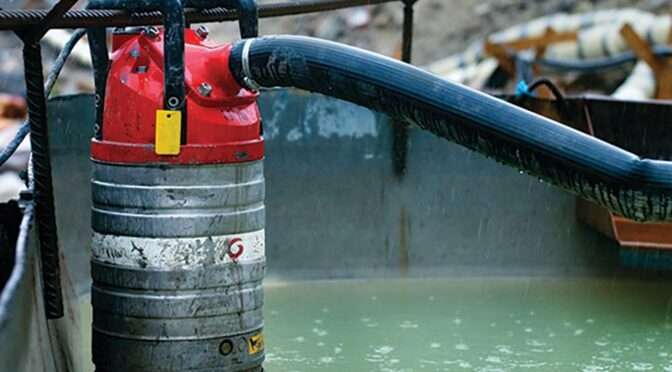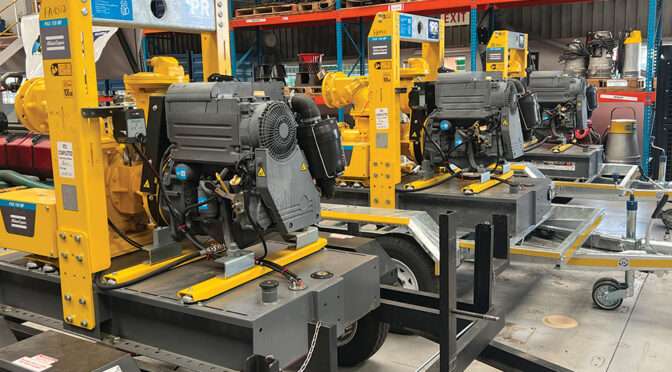
Taking another step upward as a leading dewatering pump and dredging specialist, IPR has been awarded the master distributorship for the Atlas Copco pump range in the Southern African region.
According to Lee Vine, managing director of IPR – previously called Integrated Pump Rental – the new arrangement will further enhance IPR’s offering to customers. The company has over the past eight years built a significant presence in mining, construction, agriculture and other industrial sectors.
“Representing a leading global brand like Atlas Copco reinforces IPR’s commitment to our customers, which combines the best quality equipment with our superior service levels,” says Vine. “Our extensive network in the region ensures we are close to customers, and the Atlas Copco range adds further to our capability to meet their site specific needs.”
The new range includes wet prime and dry prime diesel driven pumps, as well as submersible pumps for the three key pumping categories – dewatering, sludge and slurry. The diesel driven pumps range in capacity from a 30 metre to 150 metre head, with flow rates from 50 to 1500 cubic metres per hour. The submersible range of Atlas Copco pumps extends from 0.4 kW to 54 kW power.
“IPR has developed an unsurpassed depth of technical expertise and market knowledge since we launched in 2015,” he says. “Our skills base and connection to customers have made this collaboration with Atlas Copco a perfect fit for us – adding considerable value for our customer base.”

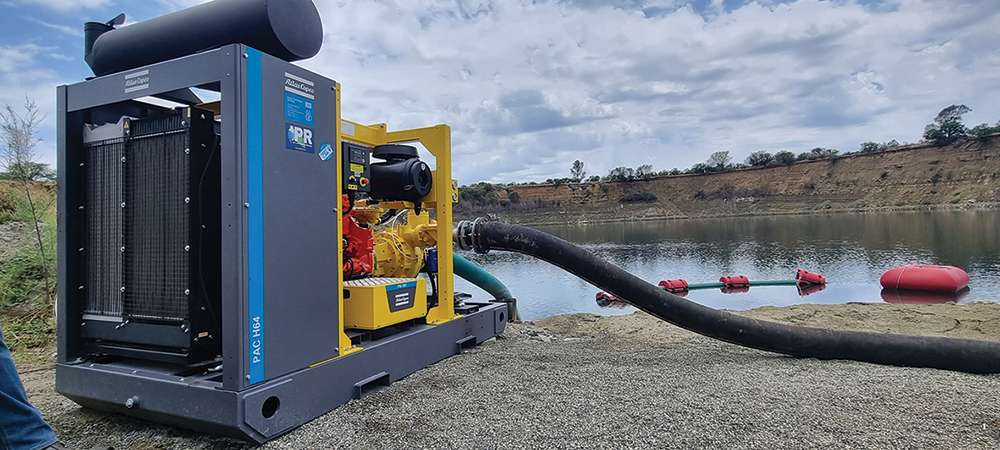
As IPR product manager for the Atlas Copco range, Steve du Toit highlights that a substantial stockholding is in place at IPR’s Johannesburg head office to meet demand. The company’s well-equipped and professionally staffed service centre is always on hand to support the market.
“The Atlas Copco brand boasts a high level of quality with robust materials of construction for strong performance and rugged wear,” says du Toit. “Features like high chrome impellers and mechanical seal flushing all contribute to optimal reliability and uptime.”
The pumps have also been designed with the user in mind, he explains – including the ease of access to internal components, and a compact modular design. They are versatile and mobile, and can be trailer-based or skid-based. Just as IPR has evolved from a primarily rental company to selling increasing volumes of its pumps, so the Atlas Copco range will be available for either purchase or rental.
“By having both a sales and rental option, IPR can help customers to optimise the cost of ownership for their particular conditions,” he says. After a sustained period of growth, IPR has recently moved into new, larger premises in Hughes, Jet Park. The expanded facilities will facilitate the necessary stockholding, as well as workshop space, and offices for design, engineering, sales and administration.