AFRISAM SLAGMENT OPERATION ACHIEVES 1,75 MILLION LTI FREE HOURS

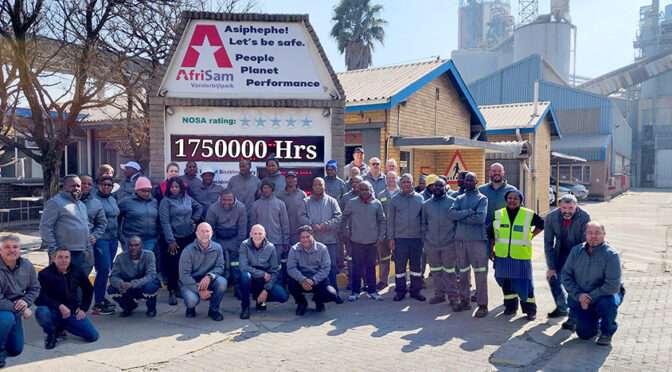
Leading construction material supplier, AfriSam celebrated a significant milestone at the company’s Vanderbijlpark Slagment Operation when it achieved 1,75 million Lost Time Injury (LTI) Free hours earlier this year, demonstrating the high safety standards upheld at this plant. This means that the plant has been injury free for nine years.

As one of the leading players in the supply of aggregates, cement and concrete readymix, AfriSam is committed to safe operation at all its facilities. A strong commitment to ongoing training of its people as well as visible felt leadership underpins the company’s approach to safety and has clearly borne fruit at the Slagment Operation.

AfriSam’s Vanderbijlpark Slagment Operation has the capacity to produce over 700 000 tonnes of slagment per year.

The origin of this operation, situated in the industrial area on the outskirts of Vanderbijlpark, dates back to the 1950s when Dr Niko Stutterheim thoroughly researched the suitability of South African slag for manufacturing cement and for use in concrete. His conclusion that the slag was eminently suitable led to the establishment of the company Building Binders Ltd, which was subsequently registered as Slagment Limited in 1960.

Today, this operation still produces slagment and supplies the product to operations within AfriSam as well as to other customers for the manufacture of blended cementitious products.

Slagment is the registered trade name for Ground Granulated Blast Furnace Slag (GGBFS) and is a by-product of the iron- and steel production process. It is a latent hydraulic binder that is used in concrete and other construction applications as a partial cement replacement material. Due to its cementitious properties and depending on the application, slagment can replace up to 70% of Portland cement in concrete, enhancing quality in both fresh and hardened states.
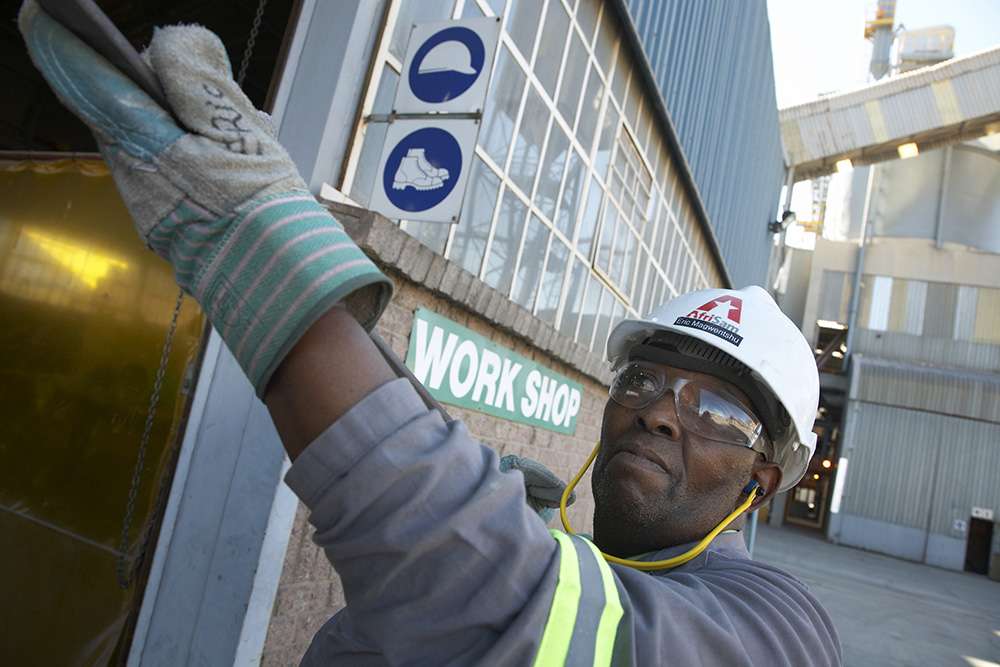
AfriSam is committed to safe operation at all its facilities.

AfriSam’s Vanderbijlpark Slagment Operation has provided slagment for over five decades for the construction of major structures including buildings, dams, bridges, roads and water-retaining structures. The factory has the capacity to produce in excess of 700 000 tons of slagment as well as over 200 000 tons per annum of blended cementitious products.

Some noteworthy projects built with slagment from AfriSam include the Ben Schoeman Highway, the South African Reserve Bank and the Gariep Dam on the Orange River.

AfriSam has long been at the forefront of initiatives to reduce carbon emissions, and this has included leveraging extenders in its composite cements, leading to a substantial reduction in its clinker factor without any compromise on product quality. David Labuschagne, AfriSam Slagment Plant Manager says that key among these extenders is blast furnace slag, a by-product of the steel industry.

“Clinker substitution is not new, but there is a growing trend within South Africa to use more environmentally friendly concrete design mixes that use fly ash or slag.,” he says. Interestingly, the Association of Cementitious Material Producers (ACMP) noted that clinker substitution rose from 12% in 1990 to 41% in 2009, with the industry aiming for a 60% rise by 2030.

AfriSam’s Slagment Operation played a pioneering role in introducing separately ground slag for construction applications, and this plant continues to produce slag. The company sources its raw material from ArcelorMittal South Africa, strategically located near the plant.

The benefits of using blast furnace slag are numerous. It offers enhanced strength and durability and is beneficial in decreasing limestone mining and clinker production, thereby reducing carbon emissions.

“By using a finely tuned mechanical activation method, AfriSam has obtained a more reactive product, enabling the progressive replacement of clinker while maintaining high cementitious quality and strength performance,” Labuschagne says.

With its ongoing commitment to sustainability and innovative strategies, AfriSam continues to pave the way in creating eco-friendly products without compromising on quality.
MURRAY & ROBERTS CEMENTATION REACHES MONUMENTAL MILESTONE ON PMC VENT SHAFT

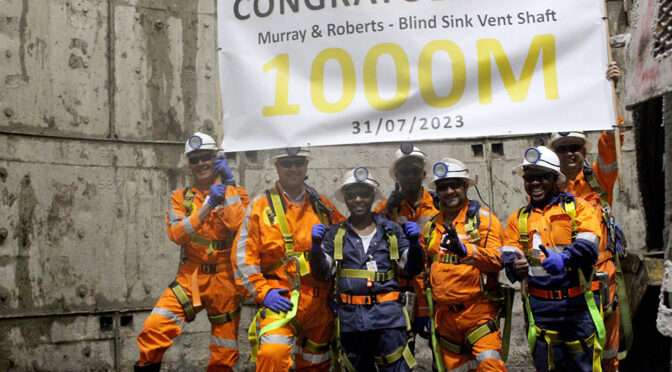
Leading underground mining contracting company, Murray & Roberts Cementation achieved a remarkable milestone at the end of July 2023 when it successfully reached the 1000 metre mark on its contract to sink the 1200 metre ventilation shaft at PMC’s Lift II expansion. This significant feat stands as a testament to the company’s exceptional capabilities and dedication to safety.

The Palabora Mining Company Lift II expansion project is a crucial endeavour for PMC, aimed at enhancing the efficiency and capacity of their operations. The 8.5 metre diameter ventilation shaft will serve the Lift II block cave and plays a pivotal role in the overall mining infrastructure.

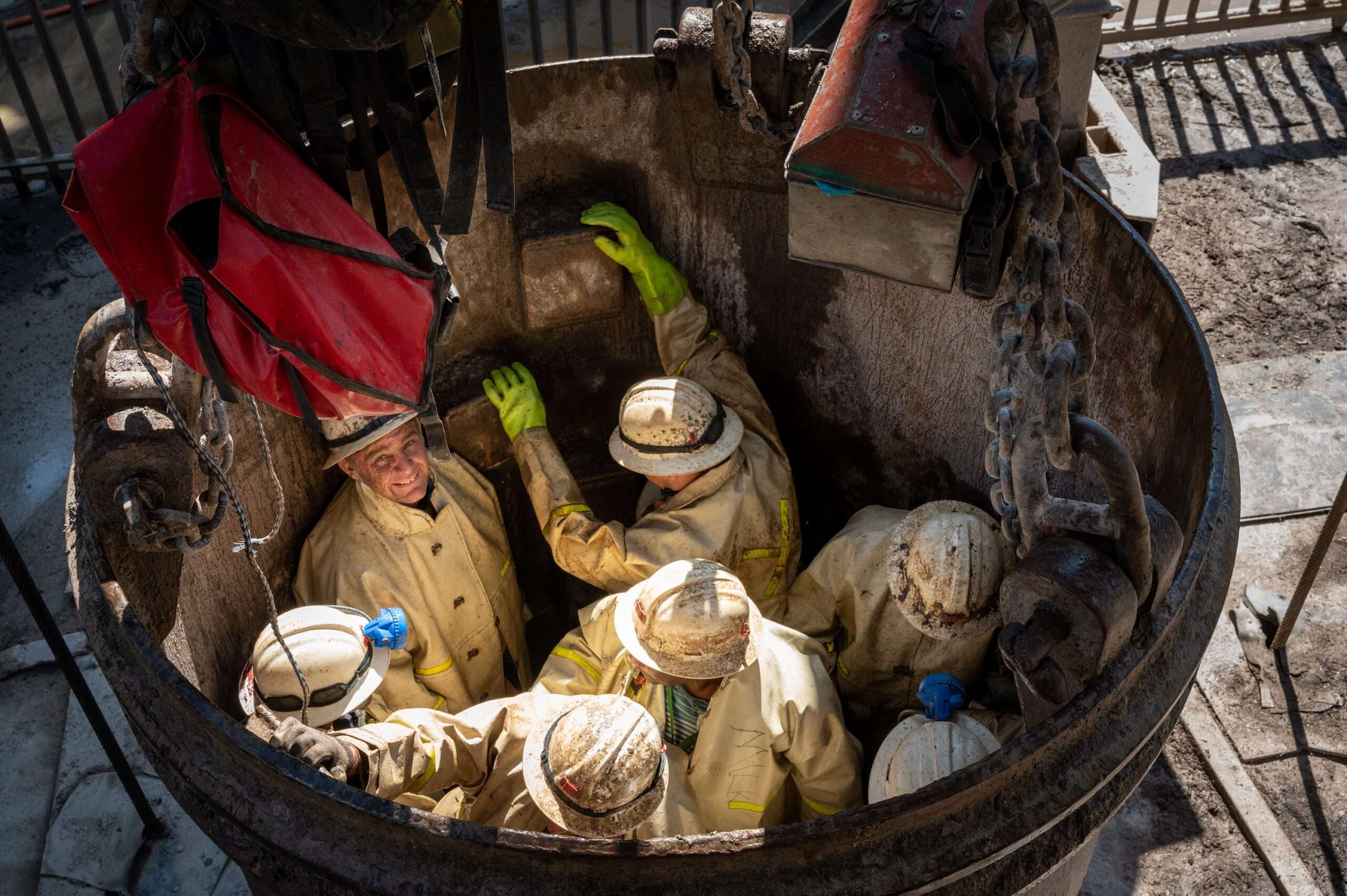
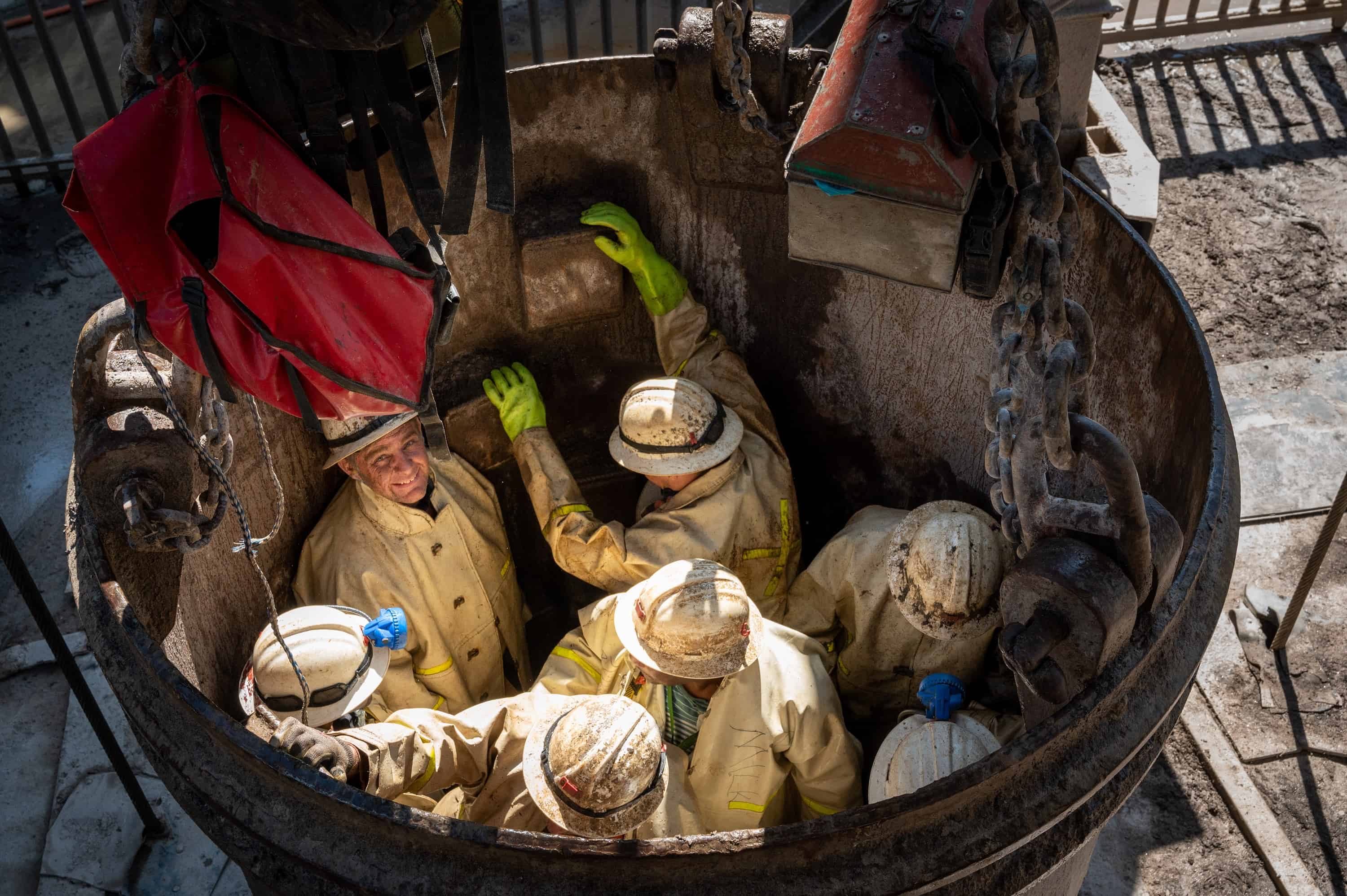
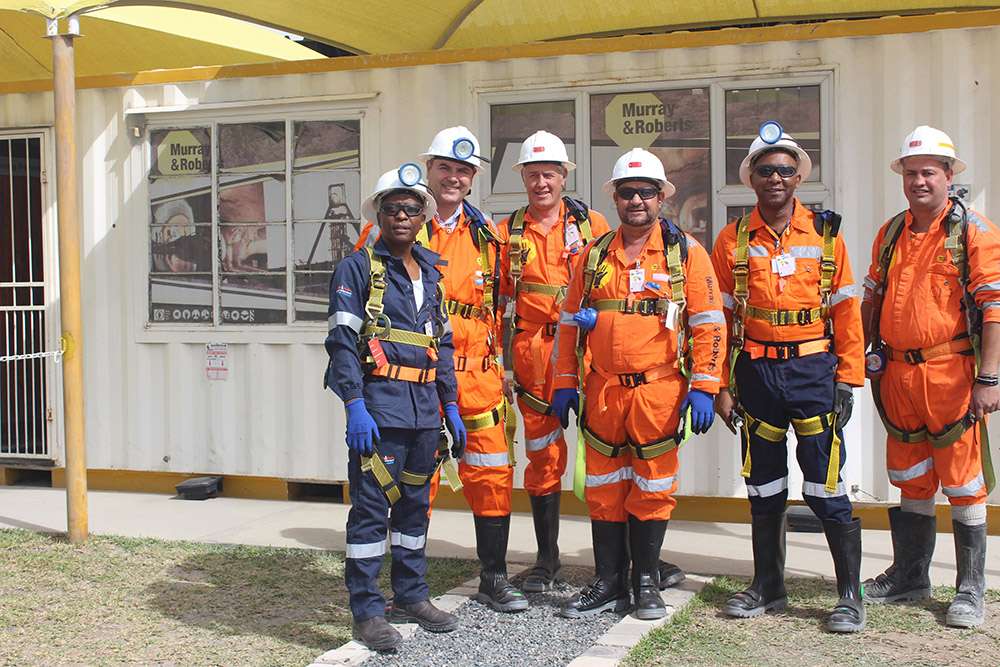
Some of the Murray & Roberts Cementation team celebrating reaching the 1000 metres mark on the ventilation shaft sink at PMC.

Reaching a depth of 1000 metres in the ventilation shaft is a major accomplishment, highlighting the expertise and commitment of Murray & Roberts Cementation in tackling complex mining projects. The company’s ability to execute such a technically challenging task underscores their reputation as a reliable and competent partner in the mining industry.

Fred Durand, Murray & Roberts Cementation’s Senior Project Manager, says one of the most remarkable aspects of this project is the unwavering focus on safety. “Despite the immense challenges involved in underground mining and especially blind sinking, we have maintained an impeccable safety record throughout the Lift II expansion project. The team’s relentless dedication to safety protocols and best practices resulted in an impressive milestone earlier this year of 574 consecutive days without a Lost Time Injury (LTI).”

He says that the achievement of this remarkable safety milestone showcases the company’s commitment to ensuring the wellbeing and safety of its workforce. It demonstrates that, alongside its technical competency, Murray & Roberts Cementation prioritises the welfare of its employees and strives for a Zero Harm work environment.

“As the ventilation shaft project enters its final stages, the excitement and anticipation among all stakeholders, including PMC and Murray & Roberts Cementation, are palpable. The successful completion of this project will not only mark a significant engineering feat but will also have a profound impact on PMC’s mining capabilities,” Durand concludes.

Aidan Schoonbee, Senior Manager for PMC’s Lift II Construction, Concentrator and Vent Shaft congratulated the Murray & Roberts Cementation team and praised the collaboration that had been achieved between employer and contractor. Murray & Roberts Cementation has aligned with the owner’s team to display technical excellence, professional management and passionate safety leadership from the day site establishment commenced in October 2019, he says.

AUTOMATING FOR EFFICIENCY WITH MAXOLUTION

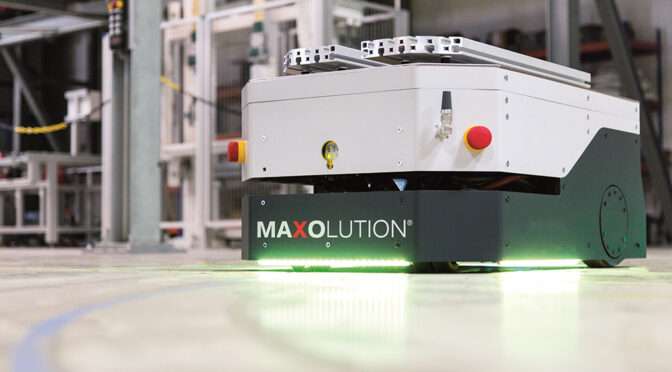
Well known for its drive technology, SEW-EURODRIVE partners with customers to design and implement automation projects for their plants, factories and warehouses – using its powerful Maxolution® offering.

According to Werner Engelbrecht, Works Manager Mechatronics at SEW-EURODRIVE, this process is focused on combining all aspects of production including hardware and software. Rather than a customer having to develop their own software infrastructure from scratch, says Engelbrecht, Maxolution® has its own pre-defined application modules that have been developed from years of experience in the field.

Werner Engelbrecht, Works Manager Mechatronics at SEW-EURODRIVE.

“With our specialised software, we can simulate material flow in industrial systems, helping customers to achieve greater efficiency through multiple integrations of systems,” he says. “The Maxolution® portfolio allows applications in the customer’s facility to be incorporated into a single network.”

This creates the foundation for a complete system to work in synergy; it also opens the door to integrate new systems and to allow existing systems to adapt to product changes. Maxolution® can offer cost effective adaptability for product variations in a production line due to its easily programmable application modules.

The system has already been installed to help automate the factories of leading South African car manufacturers. However, he argues that Maxolution® has significant potential in other local sectors, helping to raise efficiencies, productivity and output.

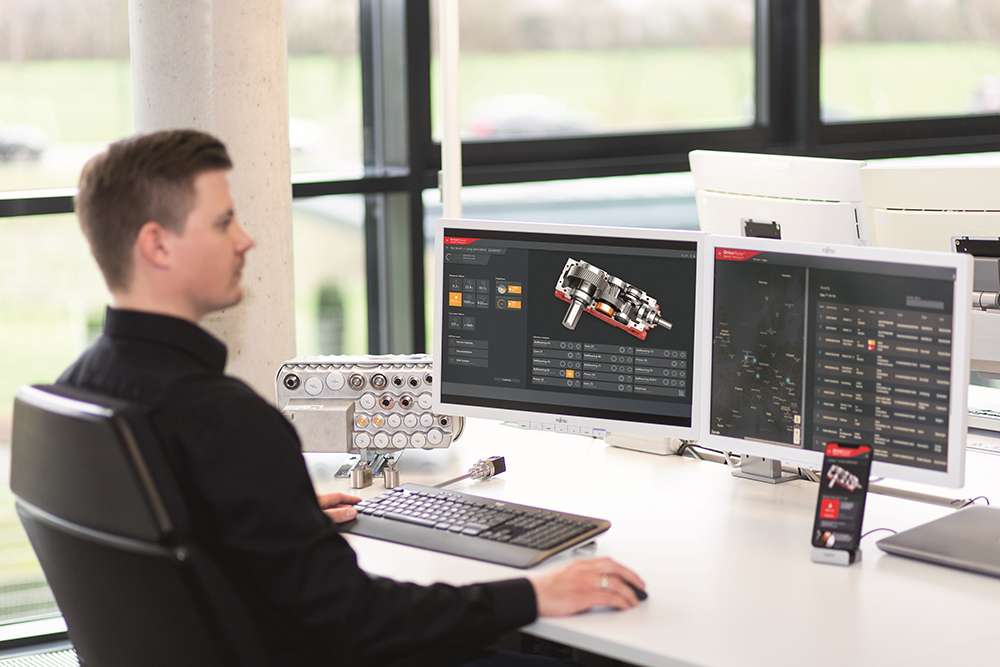
SEW-EURODRIVE's condition monitoring solution - DriveRadar.
SEW-EURODRIVE’s condition monitoring solution – DriveRadar.

“With our experience and the proven technology, we can use Maxolution® to implement automation plans cost-effectively and quickly,” he says. “These solutions also save energy through the use of energy management systems and energy efficient IE4 and IE5 mechatronic decentralised solutions and motors.”

He highlights that the Maxolution® offering is an important way that SEW-EURODRIVE differentiates itself as not only an equipment supplier, but as a partner in project planning, commissioning, after-sales service and support. Customers can even enrol staff for training at SEW-EURODRIVE’s state-of-the-art Drive Academy near Johannesburg.

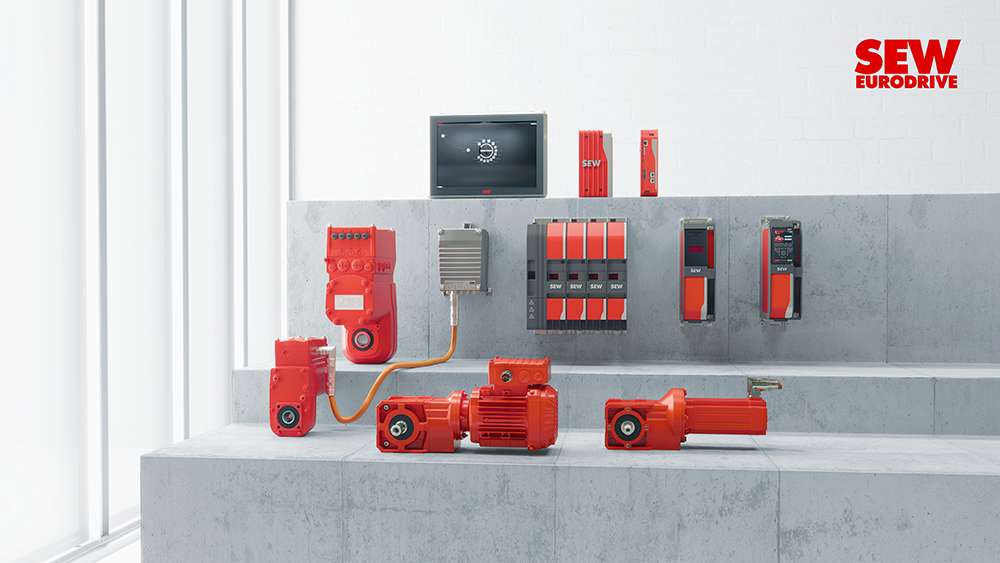
The new MoviC with a suite of products.

THE MUTUAL BENEFITS OF REGISTERING WITH THE BCCEI

Registration with the Bargaining Council for the Civil Engineering Industry (BCCEI) is not only compulsory but also incredibly advantageous for both companies and their employees. The operations manager at the BCCEI, Lindie Fourie, strongly believes that company registration promotes a more balanced and sustainable sector for all parties involved.

Lindie Fourie, Operations Manager at the Bargaining Council for the Civil Engineering Industry (BCCEI).

Membership with the BCCEI transforms a company into an active participant in the civil engineering industry. The BCCEI plays a pivotal role in facilitating collective bargaining concerning wages and general terms of employment, consequently leading to fairer outcomes for everyone involved.

Fourie underscores the advantage of this process, stating, “Being part of the BCCEI makes a company an active participant, able to leverage our national footprint and information sharing abilities including the opportunity, through party representatives, to lobby stakeholders in the industry.”

Collective bargaining outcomes benefit both employers, especially those lacking the resources for prolonged negotiations, and employees, who may not be adequately organised to present their demands at the company level. Not only does it facilitate a fairer outcome, but it also minimises disruptions in the working environment, allowing resources and energy to be channelled where most needed.

Furthermore, certain minimum allowances which employees are entitled to, under the conditions of employment for the civil engineering sector, often go unnoticed by both parties.

Fourie points out that registration with the BCCEI can help clarify these conditions, ensuring that both employers and employees understand their rights and obligations. In addition, this does lead to a levelling of the playing field in some respects encouraging contractors to compete fairly against each and end the practice of under cutting minimum wages in an attempt to secure contracts at the detriment of employees.

“Registration with the BCCEI presents an opportunity for companies to actively contribute to the civil engineering sector’s stability and sustainability. The mutual benefits for both employers and employees resulting from the BCCEI’s involvement cannot be overstated, making it a win-win for all,” Fourie concludes.

CAPE INTERCHANGE UPGRADE GETS AFRISAM TREATMENT

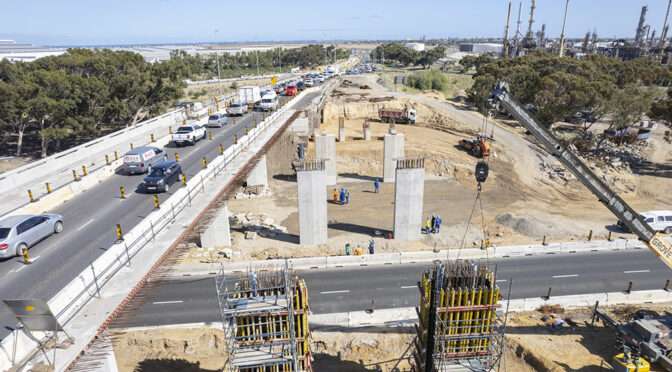
Since July 2021, well-established Cape contractor Haw & Inglis Construction has been proceeding apace on the upgrade of Cape Town’s Refinery interchange, supported by construction materials from AfriSam.

Apart from extending the width of the bridge, the height has also been raised.

The project is due for completion in early 2024, delivering two new higher and wider bridges over the busy N7 highway – a new road-over-rail bridge alongside the existing bridge which receives rehabilitation works and the upgraded access ramps among the key achievements.

Leiton Chan, Construction Manager at Haw & Inglis Construction, highlights that due to capacity and height limitations of the existing bridge, the new bridges double the capacity and provide an additional 1,7 m clearance from the existing bridge for vehicles travelling on the N7. To accommodate existing traffic, the westbound carriageway was constructed alongside the existing eastbound carriageway. Once completed, the traffic was diverted onto the new carriageway to complete the eastbound carriageway. The existing bridge was demolished in December 2022 to make space for the new bridge – currently under construction.

The readymix is supplied from AfriSam’s Contermanskloof plant, with back-up plants nearby in Woodstock and Belville.

“Each bridge deck over the N7 was cast in two, consisting of a dual spine, post tensioned structure,” explains Chan. “The project is currently on schedule, with the estimated completion date for the East bound carriageway bridge over the N7 being August 2023.”

AfriSam is providing around 6,300 m3 of readymix concrete as well as material for layer works, according to Bradley Thomas, Territory Sales Manager at AfriSam. The company is also supplying some 15,000 t of aggregate to the project’s asphalt supplier, Much Asphalt.

“An important application of our readymix was for the piling under the bridges, which required almost 1,500 m3 of high strength 40MPa concrete for this purpose,” says Thomas. “A priority here was to avoid any jointing in the piles, so it was essential that each pour – about 3,5 m3 per pile – was continuous.”

One other element of the project is the realignment of the interchange’s five access ramps to suit them to the upgrade bridge structure.

He notes that the decks on the two main bridges over the N7 also require continuous pours, amounting to substantial volumes of 500 m3 of W50 MPa concrete per deck. Placement is carried out using a high capacity 36 m boom placer. The readymix is supplied from AfriSam’s Contermanskloof plant in Durbanville, located 8 km from the site, with support from the company’s other nearby plants at Woodstock and Bellville.

The spreading of supply sources allows for further mitigation of project risk related to readymix deliveries, says Thomas. For instance, large continuous pours leave little room for error, and unforeseen events such as traffic congestion have to be factored into the resource planning.

“On the smaller scale aspects of the project’s readymix requirements, our flexibility also allows us to effectively supply the smaller sub-contractors on the project,” he adds. “We have therefore also been able to play a role in enterprise development, supplying the kerb mix to SMME contractors installing the precast kerbs.”

For the road work, AfriSam is supplying about 50,000 t of aggregate for layer works from its Contermanskloof quarry. According to Chan, Haw & Inglis Construction has been able to incorporate a considerable amount of recycled material in the road fill. He points out that the westbound carriageway fill was made up of in-situ G7 sand material excavated from the bridge and mixed with recycled asphalt product (RAP). The RAP is milled material from the various road contracts conducted by the Western Cape government.

In addition to carefully facilitating the traffic flow through the interchange during construction, the project has also had to navigate underground and overhead services from high voltage power lines and diesel pipes to sewer networks and optical fibre lines, he says. A further environmental priority was not to disturb two small wetlands within the road reserve.

THE POWER OF A PROPER WARRANTY

The real rockstar carries a real warranty, and when properly executed, has the potential to revolutionise customer relationships. It not only instils trust and reliability but also differentiates a company from its competitors in the crowded market. One such example of a robust warranty is Metso and Pilot Crushtec’s five-year or 10,000 hour EPS warranty on its equipment, including the standout Lokotrack® LT120™ crusher.

Francois Marais, Sales and Marketing Director at Pilot Crushtec.

“A warranty is much more than just a promise – it’s a demonstration of a company’s confidence in its products, and for us at Pilot Crushtec it is also a testament to the product’s durability and our commitment to stand by the equipment’s performance,” says Francois Marais, Sales and Marketing Director at this leading supplier of crushing and screening equipment.

“Take the Metso Lokotrack LT120 crusher as an example,” he says. “The assurance of a significant warranty such as the one we provide gives customers the peace of mind they need to invest in the product and use it to its fullest potential.”

The Lokotrack® LT120™, a mobile jaw crusher specially designed for aggregate production, has become the go-to choice for mining and quarrying applications. Built to last and designed for efficiency, the LT120™ provides high capacity crushing in an easily transportable form. However, while its features are impressive, it is the warranty that truly makes the difference.

With over 93 000 wear and spare parts in stock, Pilot Crushtec ensure minimum downtime when it comes to maintenance or break-down repairs.

Pilot Crushtec’s EPS warranty covers a span of five years or 10,000 hours of operation, whichever comes first. Marais says that this level of support is unparalleled in the industry, setting Pilot Crushtec apart from the competition.

“In a sector where downtime can result in substantial financial losses, this warranty’s importance cannot be overstated,” Marais continues.

This extended warranty reflects Pilot Crushtec’s confidence in their product’s quality, reliability and longevity. It shows the company’s belief in the LT120™’s design, the robustness of the Nordberg® C120™ crushing unit and the efficiency of the engine powering the crusher. It also demonstrates the company’s commitment to their customers’ success and their willingness to stand behind their products.

“With this comprehensive warranty, customers can purchase and operate the Lokotrack® LT120™ with peace of mind. It assures that should anything go wrong within the warranty period, Pilot Crushtec will be there to assist, reducing downtime and ensuring the continuation of operations,” he says. This assurance helps build a strong relationship between Pilot Crushtec and its customers, fostering long term loyalty and customer satisfaction.

In conclusion, the power of a robust warranty should not be underestimated. It not only showcases a company’s confidence in its products but also its commitment to customer satisfaction.

“In the case of Pilot Crushtec and its Lokotrack® LT120 crusher, the five-year or 10,000-hour EPS warranty is a significant differentiator, setting a new industry standard for support and assurance. It is not just about selling a product – it is about providing a service, a promise, and ultimately, peace of mind,” Marais concludes.

PALABORA’S VENT SHAFT A TRIUMPH OF COLLABORATION

The sinking of a 1,200 metre ventilation shaft as part of the Palabora Mining Company (PMC) Lift 2 expansion is proving to be a partnership success story, based on an unshakeable commitment to safety.

PMC commissioned this new ventilation shaft – which measures 8,5 metres in diameter – to service its Lift 2 block cave, awarding the project to Murray & Roberts Cementation in February 2019. Now in its final phases, the project has earned an impeccable safety record; it has been fatality-free, and last year achieved 574 days without a Lost Time Injury (LTI).

An excavator busy lashing at the shaft bottom with shaft lining being carried out on the face.

“Feasibility studies indicated that a blind sink was the optimal method, despite its higher cost and longer timeframe,” says Jas Malherbe, Murray & Roberts Cementation’s Project Manager. “Ground conditions were among the reasons why raiseboring was not an option, as the side walls needed immediate support to prevent scaling.”

Traditionally, the shaft would be lined to within 12 metres to 18 metres of the shaft bottom, with the sidewalls being temporarily supported with split sets and mesh. However, the difficult ground conditions led to high levels of scaling that made this practice unviable.

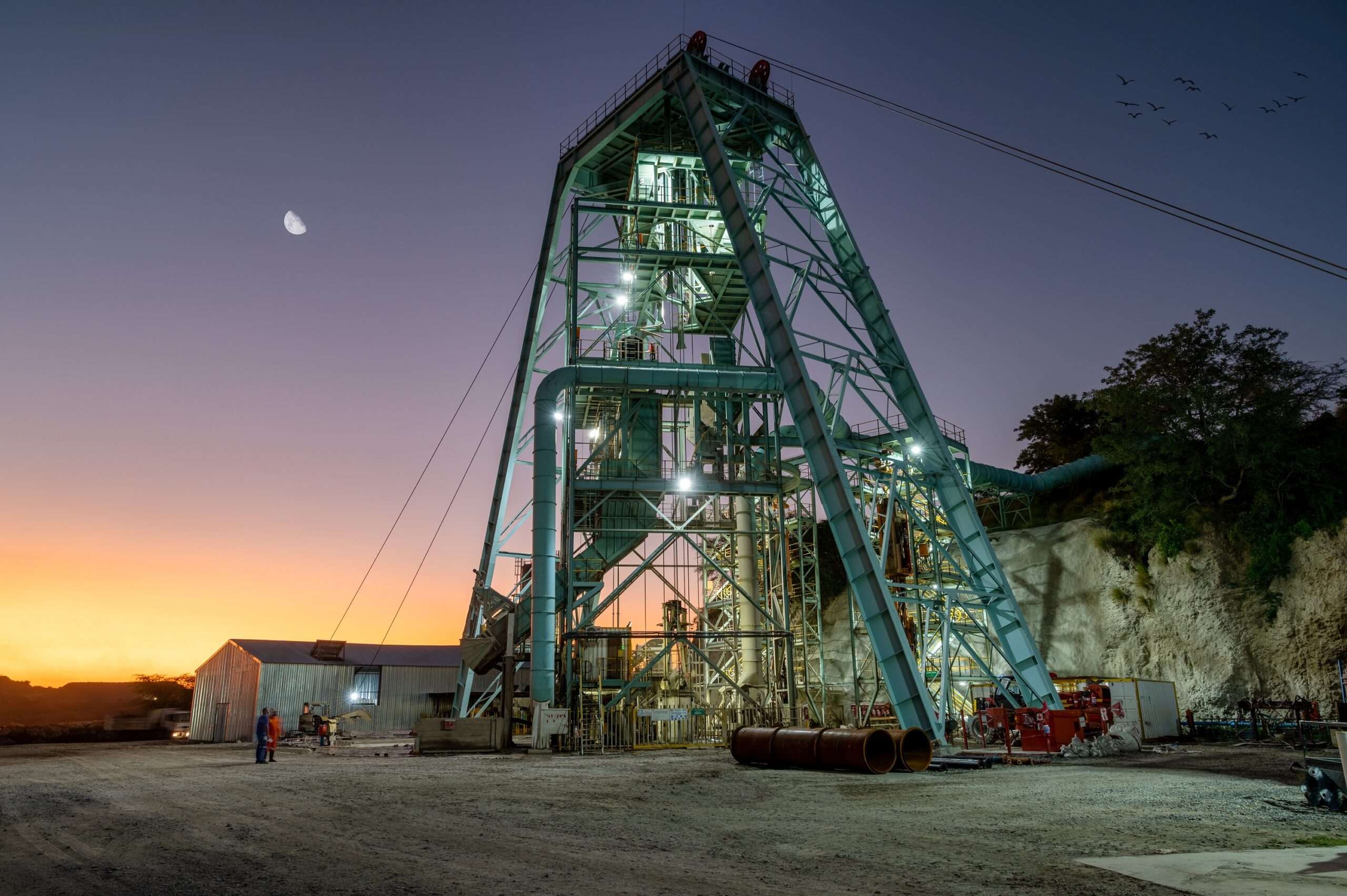
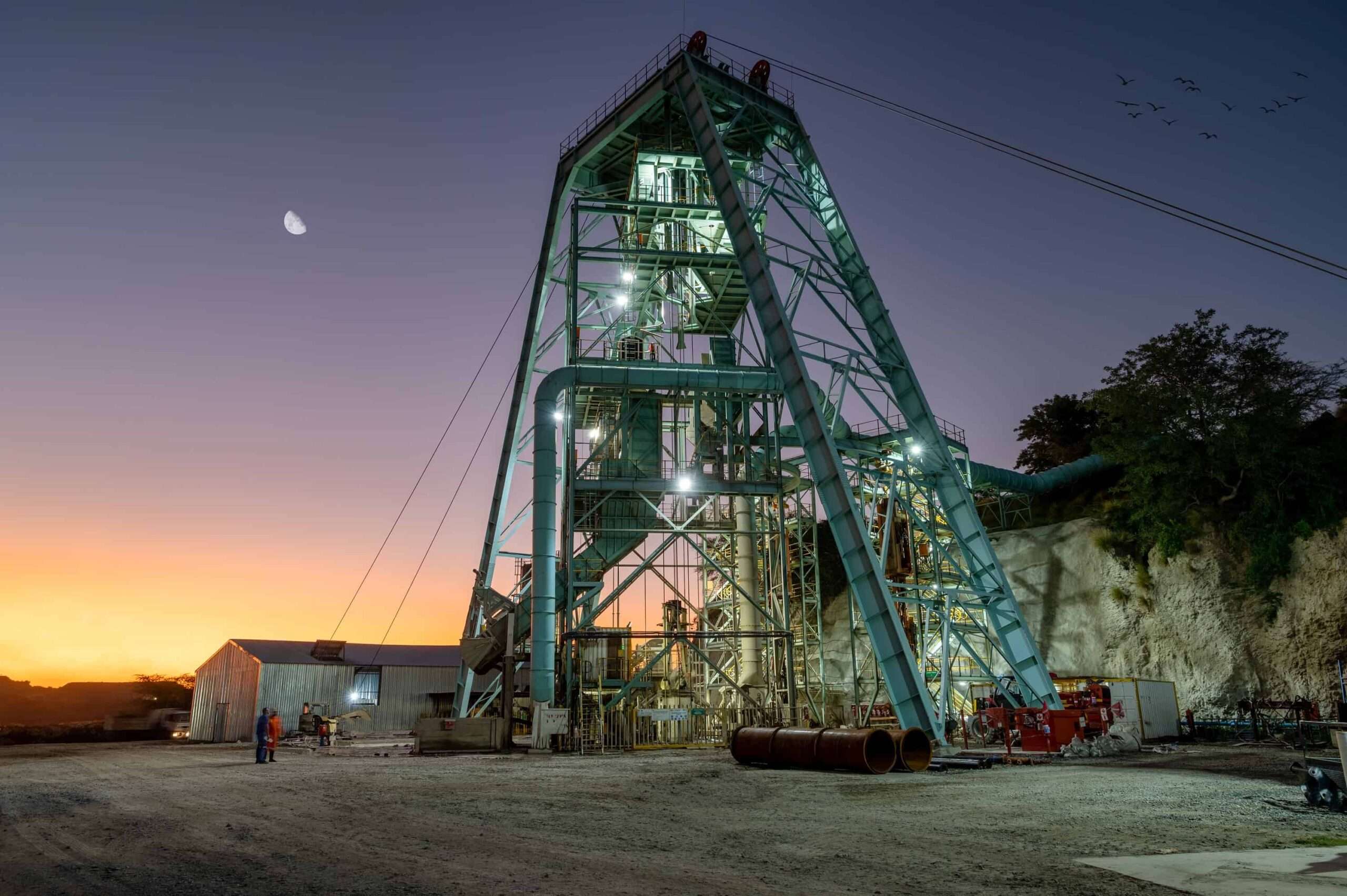
Murray & Roberts Cementation was awarded the contract to sink and line a ventilation shaft at PMC.

“With ground conditions being such a key challenge on the project, we responded in an innovative way by taking the shaft lining right down to the blasted face,” he says. “The shaft sinking methodology in this project is therefore based on the Canadian shaft sinking method pioneered by Murray & Roberts Cementation – but has been adapted to ‘the PMC way’. This has involved lining the shaft to within 1,5 metres of the shaft bottom, after mucking out the waste.”

Murray & Roberts Cementation use a specialised concrete mix for rapid setting and early strength which hardens to 3 MPa within four hours – and this would be in place for at least eight hours before blasting. This solution requires that the blast is conducted while the shutters are still in place – so the shutters are strengthened and a toe added that would better handle the blast. The exposed concrete above the shutter is able to withstand the blast, as it has already cured for 48 hours.

PMC took a deliberate decision to prioritise safety in the sinking of the ventilation shaft.

Malherbe explains that drilling is undertaken by two twin-boom electro-hydraulic jumbo drill rigs. These are slung down the shaft from surface and nested in the four-deck stage for drilling the shaft bottom, a procedure which is repeated for each 48 hour blast-to-blast cycle. Waste rock is lashed using an excavator with a 0,36 cubic metre bucket, which is lowered from surface through the stage to shaft bottom.

After blasting, an excavator is used for loading rock from the shaft bottom, which is safer than the conventional cactus grab. Ground conditions lend themselves to the generation of large rocks during blasting, which can be difficult to handle. These are broken up using an hydraulic breaker, which can be coupled to the excavator. An 11-tonne kibble transports the waste rock to surface.

“Lashing a shaft with an excavator is not a new idea, but it is usually a back-up method to the cactus grab,” he says. “In this project, we decided that the excavator would be the primary lashing method, to further enhance safety on site.”

Steps have also been taken towards automating the headgear, to avoid the safety hazards of manually hooking the kibble to tip out the waste rock. This includes the winding engine driver being able to use a camera to check for correct hooking.

“We also opted to use electric actuators in this project, rather than the traditional pneumatic and hydraulic cylinders on equipment such as the bank doors, swing chutes and tipping chutes,” he continues. “This has allowed us to mitigate the risks such as hearing loss from the noise of certain actuators, and contamination from oil leaks.”

According to Sechaba Letaba, PMC’s Package Manager on the project, PMC took a deliberate decision to prioritise safety in the sinking of this ventilation shaft.

“By taking the PMC way, we have accepted that the pace of sinking would have to be compromised,” says Letaba. “This has proved to be a positive approach, as we have an outstanding safety record on the project. This is in stark contrast to the history of shaft sinking, which would often claim lives and cause injuries. We are therefore very proud of what we have achieved to date.”

He highlights the pivotal roles played by Sam Ngidi, PMC Senior Manager Operation & Lift 2 Project, and Aidan Schoonbee, Senior Project Manager Construction – in driving the project and ensuring its success.

Fred Durand, Murray & Roberts Cementation’s Senior Project Manager, points out that unexpected challenges tend to have an impact on scheduling, so the strong relationship of trust with PMC was vital to solving any issues as they arose.

“Our approach has always been to work closely with customers on solutions, and to ensure they are regularly updated on progress,” says Durand. “As a team, for instance, we decided that the rock breaker was the right solution for the issue of oversized rocks, and it was accepted that this would have an impact on the cycle times.”

Similarly, encountering more challenging ground conditions than expected required a significant mind-set change about how the team approached the project.

“With the supportive relationship between PMC and Murray & Roberts Cementation, we were able to agree on the necessary remedies and adjust the timeframe to suit our priority – which was safety,” he says.

Letaba emphasises that relationships between the client, the contractor, suppliers, employees and surrounding communities are vital to success. This project is testament to this fact, he says, and to the professionalism of Murray & Roberts Cementation.

“It is a pleasure to be serviced by a company like this, who proactively put world class safety measures in place,” he says. “We look forward to completing the final phases of the shaft in the same safe manner.”

Malherbe concludes that, for Murray & Roberts Cementation, the lessons learnt on this project have shown the industry a viable alternative method of shaft sinking that takes safety to a new level.

PALABORA’S VENT SHAFT A TRIUMPH OF COLLABORATION

The sinking of a 1,200 metre ventilation shaft as part of the Palabora Mining Company (PMC) Lift 2 expansion is proving to be a partnership success story, based on an unshakeable commitment to safety. 

PMC commissioned this new ventilation shaft – which measures 8,5 metres in diameter – to service its Lift 2 block cave, awarding the project to Murray & Roberts Cementation in February 2019. Now in its final phases, the project has earned an impeccable safety record; it has been fatality-free, and last year achieved 574 days without a Lost Time Injury (LTI).

An excavator busy lashing at the shaft bottom with shaft lining being carried out on the face.

“Feasibility studies indicated that a blind sink was the optimal method, despite its higher cost and longer timeframe,” says Jas Malherbe, Murray & Roberts Cementation’s Project Manager. “Ground conditions were among the reasons why raiseboring was not an option, as the side walls needed immediate support to prevent scaling.”

Traditionally, the shaft would be lined to within 12 metres to 18 metres of the shaft bottom, with the sidewalls being temporarily supported with split sets and mesh. However, the difficult ground conditions led to high levels of scaling that made this practice unviable.

“With ground conditions being such a key challenge on the project, we responded in an innovative way by taking the shaft lining right down to the blasted face,” he says. “The shaft sinking methodology in this project is therefore based on the Canadian shaft sinking method pioneered by Murray & Roberts Cementation – but has been adapted to ‘the PMC way’. This has involved lining the shaft to within 1,5 metres of the shaft bottom, after mucking out the waste.”

Murray & Roberts Cementation use a specialised concrete mix for rapid setting and early strength which hardens to 3 MPa within four hours – and this would be in place for at least eight hours before blasting. This solution requires that the blast is conducted while the shutters are still in place – so the shutters are strengthened and a toe added that would better handle the blast. The exposed concrete above the shutter is able to withstand the blast, as it has already cured for 48 hours.

Murray & Roberts Cementation was awarded the contract to sink and line a ventilation shaft at PMC.

Malherbe explains that drilling is undertaken by two twin-boom electro-hydraulic jumbo drill rigs. These are slung down the shaft from surface and nested in the four-deck stage for drilling the shaft bottom, a procedure which is repeated for each 48 hour blast-to-blast cycle. Waste rock is lashed using an excavator with a 0,36 cubic metre bucket, which is lowered from surface through the stage to shaft bottom. 

After blasting, an excavator is used for loading rock from the shaft bottom, which is safer than the conventional cactus grab. Ground conditions lend themselves to the generation of large rocks during blasting, which can be difficult to handle. These are broken up using an hydraulic breaker, which can be coupled to the excavator. An 11-tonne kibble transports the waste rock to surface.

“Lashing a shaft with an excavator is not a new idea, but it is usually a back-up method to the cactus grab,” he says. “In this project, we decided that the excavator would be the primary lashing method, to further enhance safety on site.”

Steps have also been taken towards automating the headgear, to avoid the safety hazards of manually hooking the kibble to tip out the waste rock. This includes the winding engine driver being able to use a camera to check for correct hooking. 

“We also opted to use electric actuators in this project, rather than the traditional pneumatic and hydraulic cylinders on equipment such as the bank doors, swing chutes and tipping chutes,” he continues. “This has allowed us to mitigate the risks such as hearing loss from the noise of certain actuators, and contamination from oil leaks.”

According to Sechaba Letaba, PMC’s Package Manager on the project, PMC took a deliberate decision to prioritise safety in the sinking of this ventilation shaft.

PMC took a deliberate decision to prioritise safety in the sinking of the ventilation shaft.

“By taking the PMC way, we have accepted that the pace of sinking would have to be compromised,” says Letaba. “This has proved to be a positive approach, as we have an outstanding safety record on the project. This is in stark contrast to the history of shaft sinking, which would often claim lives and cause injuries. We are therefore very proud of what we have achieved to date.”

He highlights the pivotal roles played by Sam Ngidi, PMC Senior Manager Operation & Lift 2 Project, and Aidan Schoonbee, Senior Project Manager Construction – in driving the project and ensuring its success. 

Fred Durand, Murray & Roberts Cementation’s Senior Project Manager, points out that unexpected challenges tend to have an impact on scheduling, so the strong relationship of trust with PMC was vital to solving any issues as they arose. 

“Our approach has always been to work closely with customers on solutions, and to ensure they are regularly updated on progress,” says Durand. “As a team, for instance, we decided that the rock breaker was the right solution for the issue of oversized rocks, and it was accepted that this would have an impact on the cycle times.”

Similarly, encountering more challenging ground conditions than expected required a significant mind-set change about how the team approached the project. 

“With the supportive relationship between PMC and Murray & Roberts Cementation, we were able to agree on the necessary remedies and adjust the timeframe to suit our priority – which was safety,” he says.

Letaba emphasises that relationships between the client, the contractor, suppliers, employees and surrounding communities are vital to success. This project is testament to this fact, he says, and to the professionalism of Murray & Roberts Cementation. 

“It is a pleasure to be serviced by a company like this, who proactively put world class safety measures in place,” he says. “We look forward to completing the final phases of the shaft in the same safe manner.”

Malherbe concludes that, for Murray & Roberts Cementation, the lessons learnt on this project have shown the industry a viable alternative method of shaft sinking that takes safety to a new level.

HOW BOOYCO PDS OPENS DOOR TO DIGITAL TWIN TECHNOLOGY

Long respected for its contribution to mine safety, Proximity Detection System (PDS) specialist Booyco Electronics has highlighted how data can be leveraged to improve safety on mines while making it more productive and efficient. 

“For many years, our PDS have allowed customers to collect data on the movements of their mobile trackless machinery and their personnel,” says Graeme Jardine, Chief Sales Officer at Booyco Electronics. “As the mining sector embraces the power of the digital twin approach, the value of this data is further enhanced as it can now be used to virtually model the optimisation options on a surface mine.”

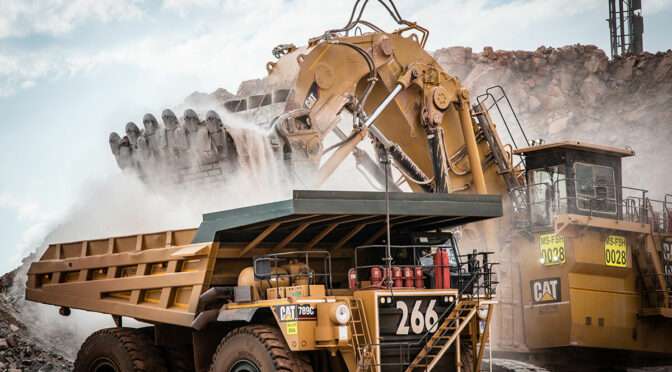
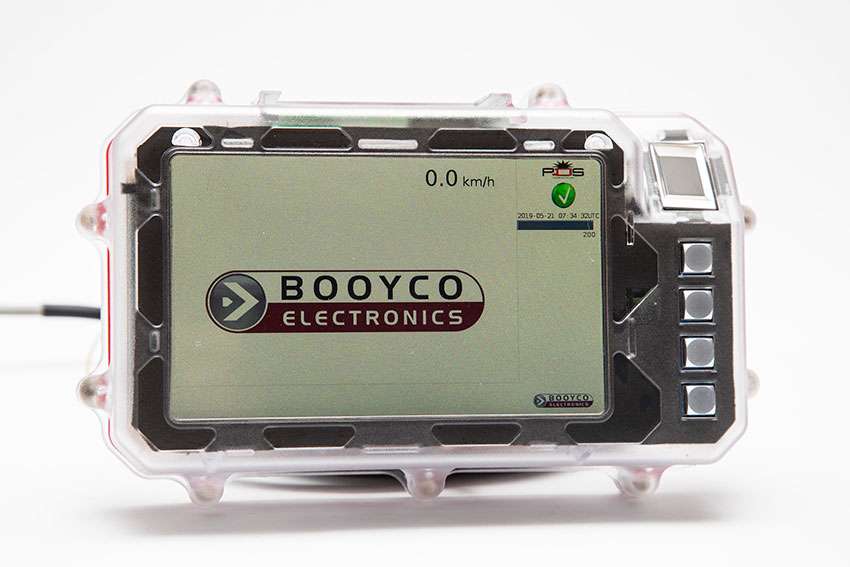
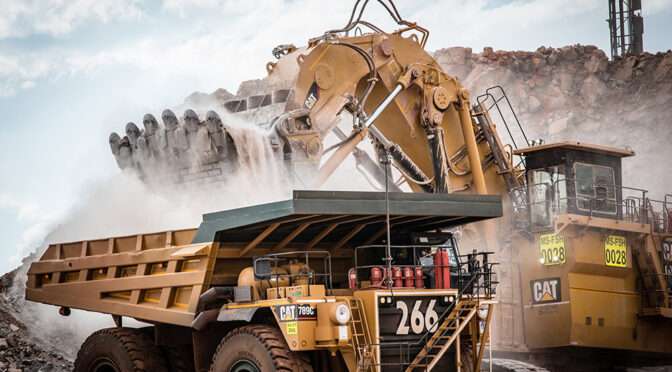
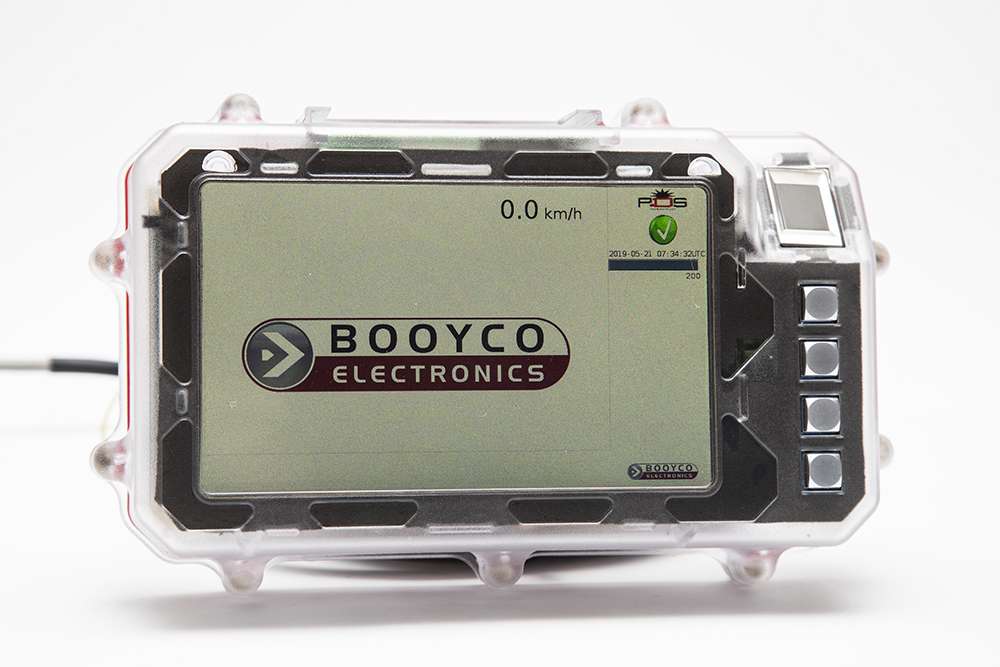
The Booyco PDS has become synonymous with ensuring safety on surface mining sites.

Jardine explains that modelling allows the benefits of any operational improvements on a mine to be evaluated in advance of implementing them. Changes to existing systems and processes can introduce risks and costs, so it is important for mines to pre-test options as far as possible – quantifying their potential  benefits in advance. 

“Using a digital twin – the virtual equivalent of the machine in the field – mines can model a number of proposed scenarios and choose the one that is optimal for their operation,” he says. To illustrate this point, he uses the example that through heat maps created via Booyco’s Electronics Asset Management System (BEAMS) software suite a scenario depicting  haul trucks experiencing excessive standing time waiting to be loaded. The mine can use digital twin modelling to investigate the detailed implications and costs of diverting some trucks to an added excavator or shovel. By quantifying costs and benefits more accurately, an informed  decision can be made, making the best use of the available capital and resources – and positively impacting the bottom line.

For Booyco Electronics customers, their years of collected data through PDS and the Booyco Electronics Asset Management System (BEAMS) software suite, which is a central information hub linking the proximity detection hardware products with monitoring devices, e.g. control room environment. positions them well to advance with digital twin technology – as this data can now be used to populate a modelling system.

“The modelling process may require an extended period’s worth of data to be input, before the results can be regarded as representative and meaningful,” says Jardine. This means that they will not have to wait months or years to generate the necessary data from scratch. As a leader in this field since 2006, Booyco Electronics is able to leverage its technology to harness the potential of digital twin modelling .

“We have taken many mines through the process of applying PDS technology, and are now well positioned to walk a similar journey with them towards a digital twin value add,” he says. 

HOW BOOYCO PDS OPENS DOOR TO DIGITAL TWIN TECHNOLOGY

Long respected for its contribution to mine safety, Proximity Detection System (PDS) specialist Booyco Electronics has highlighted how data can be leveraged to improve safety on mines while making it more productive and efficient.

“For many years, our PDS have allowed customers to collect data on the movements of their mobile trackless machinery and their personnel,” says Graeme Jardine, Chief Sales Officer at Booyco Electronics. “As the mining sector embraces the power of the digital twin approach, the value of this data is further enhanced as it can now be used to virtually model the optimisation options on a surface mine.”

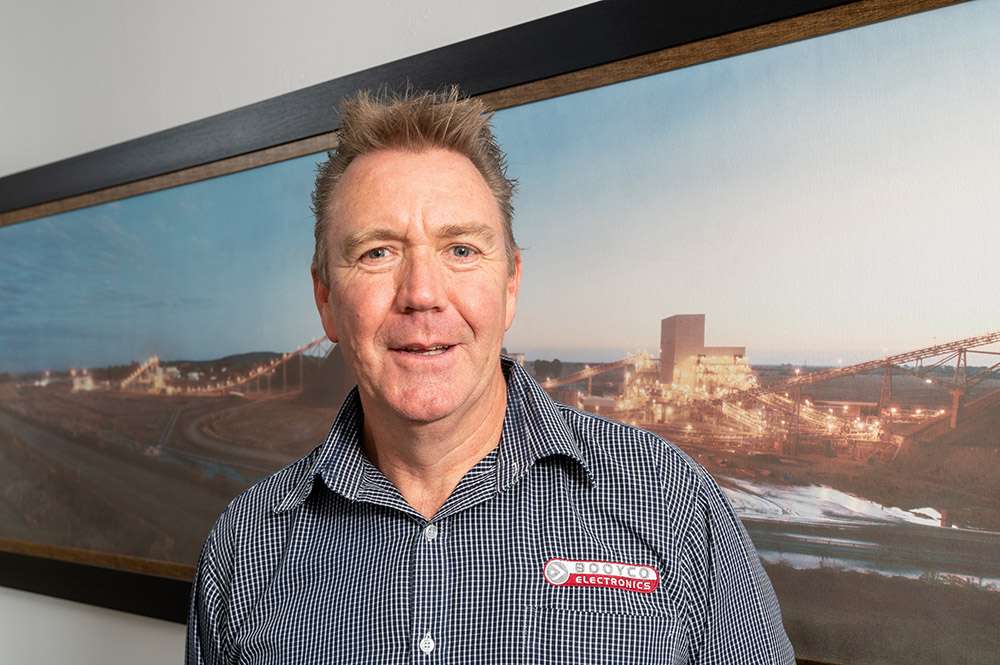
Graeme Jardine, Chief Sales Officer at Booyco Electronics.

Jardine explains that modelling allows the benefits of any operational improvements on a mine to be evaluated in advance of implementing them. Changes to existing systems and processes can introduce risks and costs, so it is important for mines to pre-test options as far as possible – quantifying their potential  benefits in advance.

“Using a digital twin – the virtual equivalent of the machine in the field – mines can model a number of proposed scenarios and choose the one that is optimal for their operation,” he says. To illustrate this point, he uses the example that through heat maps created via Booyco’s Electronics Asset Management System (BEAMS) software suite a scenario depicting  haul trucks experiencing excessive standing time waiting to be loaded. The mine can use digital twin modelling to investigate the detailed implications and costs of diverting some trucks to an added excavator or shovel. By quantifying costs and benefits more accurately, an informed  decision can be made, making the best use of the available capital and resources – and positively impacting the bottom line.

Booyco Electronics has an extensive footprint of customers facilitating harnessing of technology for digital twin modelling.

For Booyco Electronics customers, their years of collected data through PDS and the Booyco Electronics Asset Management System (BEAMS) software suite, which is a central information hub linking the proximity detection hardware products with monitoring devices, e.g. control room environment. positions them well to advance with digital twin technology – as this data can now be used to populate a modelling system.

“The modelling process may require an extended period’s worth of data to be input, before the results can be regarded as representative and meaningful,” says Jardine. This means that they will not have to wait months or years to generate the necessary data from scratch. As a leader in this field since 2006, Booyco Electronics is able to leverage its technology to harness the potential of digital twin modelling .

“We have taken many mines through the process of applying PDS technology, and are now well positioned to walk a similar journey with them towards a digital twin value add,” he says.